Follow Us on Google
From Taiwo Oluwadare, Ibadan
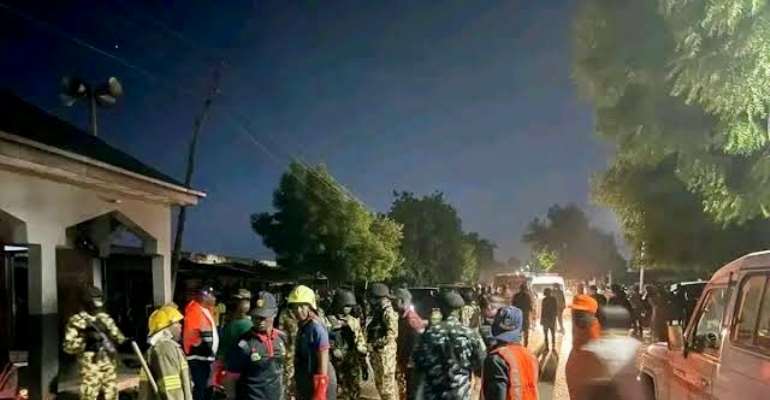
Two prominent Nigerian scholars, Professors Mobolaji Olufunke Okome and Chidi Odinkalu, have criticised the Bola Tinubu-led Federal Government over what they described as a disturbing lack of accountability following the Christmas day bombing carried out on alleged terrorist locations in Nigeria, reportedly in collaboration with the United States.
The scholars, who spoke during a webinar titled: “The Christmas day reckoning: Tracking justice and change since the US airstrikes in Nigeria,” accused key democratic institutions of failing Nigerians by remaining largely silent on the attacks, their consequences, and the reported civilian casualties.
The webinar was organised by the Conflict Research Network, West Africa (CORN) and The Africa Disruptions Lab (TADLab), and moderated by CORN West Africa Director, Dr. Timipere Allison.
Professor Okome, a political science professor at Brooklyn College and Professor of Practice at Tufts University, and Odinkalu, former chairman of the National Human Rights Commission, argued that Nigerians deserve clear explanations from the federal government on how a so-called “precision bombing” ended up striking locations that were not originally identified as targets.
They stressed that President Bola Tinubu as Commander-in-Chief has a non-delegable responsibility to guarantee the safety of lives and property, and to directly address the nation on incidents of such magnitude.
Odinkalu was particularly scathing in his assessment of the presidency, saying the President’s silence on the bombing spoke volumes.
“Every aspect of the presidency can be delegated except the role of Commander-in-Chief. When it comes to military activities and public safety, there is only one person responsible.
“A president that cared would have acknowledged this incident. President Tinubu chose not to, even though he issued statements on other personal and foreign tragedies. That tells me we have a president who does not care.”
Other News
He further argued that the government’s attitude reflects a broader problem in Nigeria’s political system, especially the absence of a strong and credible opposition capable of holding those in power to account.
“The only thing more disappointing than the fact that Nigeria has a visiting president is that it has no opposition worthy of the name. There are no strikers willing to shoot on the political opposition side.”
Professor Okome extended the criticism beyond the presidency, accusing the National Assembly and other constitutional institutions of dereliction of duty.
“Judging from the president’s behaviour and the silence of the National Assembly, the message being sent is that they do not care,” she said. “Institutions that are constitutionally mandated to prioritise the security and wellbeing of Nigerians have failed to act.”
Both scholars called for justice for civilian victims of the bombings and demanded transparency in assessing the damage and supporting affected communities. They also cautioned Nigerians against uncritical reliance on foreign military intervention, warning that such involvement could come with hidden geopolitical interests.
Okome questioned why Nigerians have largely remained silent in the face of the incident.
“If nobody else cares, we should care. Why is it acceptable that on Christmas Day, bombs are dropped in Nigeria in your name and people celebrate?” she asked, urging citizens to speak out and demand accountability.
The panelists concluded by charging Nigerians to become more active in civic engagement, insist on transparency from government, and hold both the ruling party and the political opposition accountable for the continued erosion of public trust and democratic responsibility in the country.