Follow Us on Google
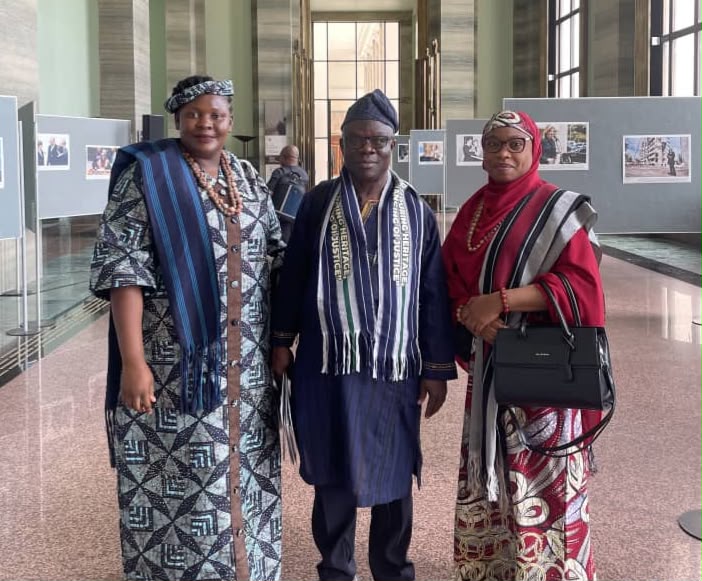
The Resource Centre for Human Rights and Civic Education (CHRICED) has called on the United Nations Expert Mechanism on the Rights of Indigenous Peoples (EMRIP) to intervene in what it described as the worsening human rights situation of the Indigenous Peoples of Nigeria’s Federal Capital Territory (FCT), Abuja.
Delivering a presentation at the 19th Session of EMRIP at the Palais des Nations in Geneva on Monday, CHRICED Executive Director, Dr. Ibrahim M. Zikirullahi, said more than two million Original Inhabitants (OIs) of the FCT continue to face systematic land dispossession, political exclusion and cultural erasure, with conditions deteriorating significantly over the past year.
Zikirullahi, who attended the session alongside three Indigenous delegates with support from the John D. and Catherine T. MacArthur Foundation, alleged that repeated demolitions of Indigenous communities had left many families homeless, destroyed ancestral homes and farms, disrupted livelihoods and inflicted psychological trauma on affected communities.
He argued that although Abuja is widely regarded as a peaceful administrative capital, its Indigenous Peoples are living through a “silent conflict” driven by forced displacement, land appropriation and political marginalisation rather than armed violence.
According to him, Abuja’s Original Inhabitants remain trapped in a prolonged post-conflict situation due to the absence of restitution for lands acquired under Military Decree No. 6 of 1976, failure to implement Supreme Court judgments on compensation and resettlement, and continued denial of political representation, including the inability to elect a governor or state legislature.
The CHRICED Executive Director also cautioned that the rapid advancement of Artificial Intelligence (AI) could further marginalise Indigenous communities if data is collected without their free, prior and informed consent or if AI systems reinforce existing biases and exclusion. He urged global stakeholders to promote Indigenous data sovereignty by ensuring community ownership of data and the ethical deployment of AI to preserve Indigenous languages, history and cultural knowledge.
Zikirullahi further warned that several Indigenous languages spoken in the FCT, including Gbagyi, Bassa, Gwandara, Koro and Ganagana, face the risk of extinction due to displacement, urbanisation and inadequate government support. He called on the Nigerian government to recognise the languages as national heritage, integrate them into local education and support digital preservation initiatives in line with the International Decade of Indigenous Languages.
CHRICED urged EMRIP, member states and the international community to pressure the Nigerian government to halt forced evictions, legally recognise Abuja’s Original Inhabitants as Indigenous Peoples, guarantee political participation, adopt conflict-sensitive development policies, preserve Indigenous cultures and languages, uphold ethical AI standards, and establish disaggregated national data systems reflecting the realities of Indigenous communities.
Concluding his address, Zikirullahi said Abuja’s Original Inhabitants continue to endure demolitions, displacement and denial of fundamental rights, stressing that development should never come at the expense of Indigenous Peoples. He called on the UN mechanism to act urgently, declaring that “justice delayed is dignity denied.”