Follow Us on Google
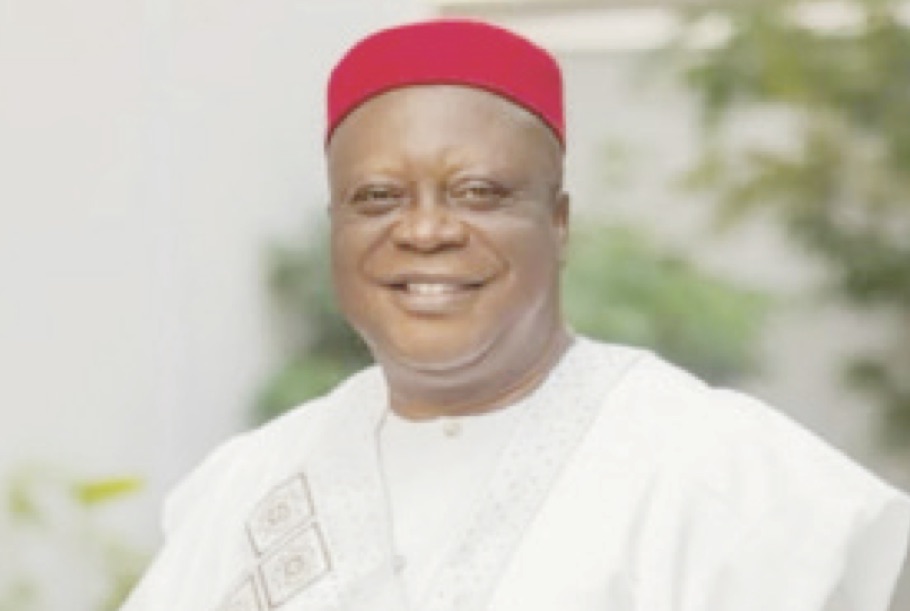
By Kunle Somorin
There are birthdays, and then there are milestones. Turning 60 places a man at the threshold of his seventh decade – a point from which the past can be surveyed with clarity and the future contemplated with sober hope.
For Chief Success Obioma Akagburuonye, whose name has long sounded both prophecy and burden, this February 22 is far more than a calendar entry; it is a moment of reckoning, celebration, and renewal.
Born in the heart of Abo Mbaise, in Ogbor Uvuru, Imo State, his early years unfolded to the modest rhythms of rural life. Even then, friends recall a boy who asked the questions others dared not: “Why?” and “How could it be better?”
An old schoolmate sums it up: “He was never contented to accept things as they were; he wanted to know why, and he wanted to know how they could be improved.”
That curiosity became the seed of ambition. Education was his ladder, and he climbed it with tenacity, earning degrees in civil engineering and law—disciplines that rarely converge in a single individual. The dual training furnished him with both the precision of a builder and the discernment of an advocate, a rare combination that would shape his destiny.
By the 1990s, Nigeria’s urban centres were expanding, and real estate had become the canvass of modern aspiration. While many saw only parcels of land, Chief Success perceived untapped potential: emerging cities hungry for housing, the need for commercial hubs, and the promise of community uplift. He founded Praco Limited, launching a journey that would reshape skylines and neighbourhoods. His projects were never merely bricks and mortar; they were statements of intent, embodying his philosophy that success must serve the many, not just the few.
The world of land and property is fraught with complexity. His involvement in Abuja land matters attracted the attention of the EFCC, and for many, such scrutiny would have left a scar. For him, it became a crucible. He has spoken candidly about those years, framing them as lessons in transparency and resilience: “You cannot lead without being tested. The test is what refines you.”
Political alliances and rivalries have also marked his path, including a fraught relationship with Senator Rochas Okorocha, from whom he alleged suspected assassination plots. In Nigeria’s shifting political sands, such entanglements are inevitable. What matters is his navigation: he positions himself not as a partisan figure but as a champion of equity, aligning his aspirations with the Imo Charter of Equity, which calls for a fair rotation of power among Orlu, Okigwe, and Owerri zones. With Owerri’s turn slated for 2027, his candidacy is framed less as personal ambition than as a claim rooted in justice.
Perhaps his most enduring impact lies closer to his roots. In Uvuru, his philanthropy has altered the landscape: roads have been built, churches renovated or newly erected, scholarships awarded, and homes provided for families unable to afford them. The ultra‑modern Noah’s Ark Church stands as a testament to his belief that faith and development are mutually reinforcing. For the people of Uvuru, he is not merely a benefactor; he is a son who remembers his people. His title, Akaraogu, – “one who has brought wealth back home” – captures this sentiment perfectly.
As he turns 60, celebrations at his country home will draw national and international leaders, underscoring his stature. A novelty football match – ex‑Super Eagles legend Segun Odegbami versus “Friends of Akagburuonye” – will raise spirits, while the airport road to his hometown will be repaved and new churches and charity homes commissioned. Yet beyond speeches and ceremonies, the true measure of the man lies in quieter anecdotes: the student whose education he funded, the family whose home he built, the community whose security he strengthened. These stories give flesh to Michelle Obama’s dictum that success is not about money but about the difference one makes in people’s lives.
Philosophers speak of the “second mountain” – the stage when ambition yields to meaning, when achievement gives way to significance. Chief Success stands at that juncture. His first mountain has been climbed: an empire built, a name established, respect earned. The second mountain beckons: to lead with integrity, to mentor the young, to embody the equity his state so desperately needs.
Sixty is not an end but a beginning – a time of wisdom, tempered vision, and legacy. For Chief Success Akagburuonye, it is the moment to weave together the strands of his life – the engineer’s precision, the lawyer’s discernment, the developer’s vision, the philanthropist’s compassion, and the politician’s resolve – into a tapestry that will endure.
As the sun sets over Ogbor Uvuru on his birthday and dignitaries gather to honour him, one truth shines through: here is a man who has lived up to his name, not by accident but by design; not by luck but by labour; not by wealth alone but by the lives he has touched. His story reminds us that success, in its truest form, is not a destination but a journey – a journey that continues, with renewed rigour, into his seventh decade.
•Somorin writes from Abuja