Follow Us on Google
By Chinenye Anuforo [email protected]
Despite Nigeria’s appreciable telecoms revolution in recent decades, millions in rural areas are still starved of adequate mobile network coverage. A recent industry study highlighted that 27.91 million Nigerians in 97 locations nationwide remain either unserved or underserved, underscoring the persistent challenge of providing equitable access to information and communication technologies (ICTs) across the country.
Numerous initiatives have aimed to expand telecom coverage in underserved areas. Among these is the Universal Service Provision Fund (USPF), which offers subsidies to encourage network operators to deploy infrastructure in remote regions. Additionally, the now-stalled InfraCo project sought to establish a public-private partnership model for infrastructure development in these underserved areas.
The Federal Government’s plan to bridge the digital divide with a vast 90,000-kilometer fiber optic cable deployment faces significant hurdles, according to industry stakeholders. This project, intended to be executed through a Special Purpose Vehicle (SPV), is seen as crucial for achieving universal internet access and bolstering the nation’s digital economy. However, issues related to right-of-way (RoW) charges, multiple taxation, and project execution cast doubts on its feasibility.
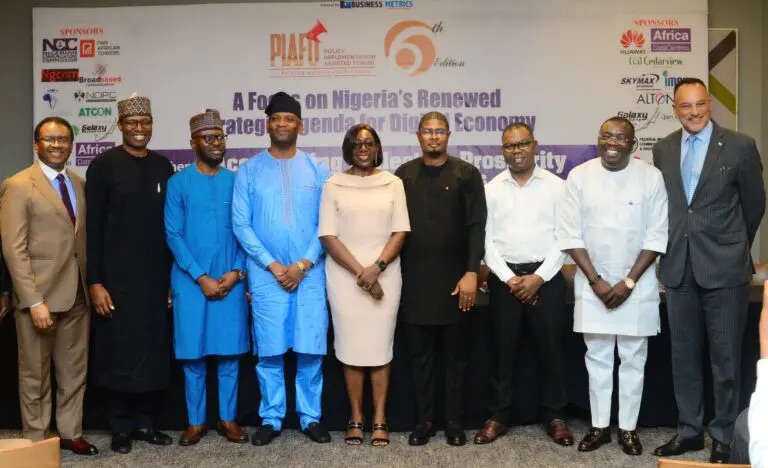
At the recent Policy Implementation Assisted Forum (PIAFo) in Lagos, stakeholders emphasized the need for state governments’ cooperation to ensure the project’s success. Engr. Gbenga Adebayo, Chairman of the Association of Licensed Telecommunications Operators of Nigeria (ALTON), stressed the need for a shift in perspective at the state level. He urged state governments to move beyond viewing RoW charges merely as revenue sources. Adebayo pointed to inconsistencies where some states offer “free” RoW but impose numerous levies that negate the initial benefit. This approach discourages telecommunications companies from investing in infrastructure rollout, thereby hindering progress toward universal connectivity.
Other News
Obtaining permits for infrastructure deployment is a significant bottleneck. Chidi Ajuzie, Group Chief Operating Officer of WTES Projects Limited, highlighted the dual challenge of navigating the complexities of formal RoW channels and the additional burden of informal charges levied by local actors. He stressed the need for a streamlined and transparent RoW process, involving collaboration between federal and state governments to establish clear guidelines and ensure consistent application nationwide.
The World Bank’s expected contribution of up to $3 billion provides a substantial financial boost to the project. Dr. Ayotunde Coker, CEO of Open Access Data Centre (OADC), advocated for leveraging private sector expertise in project execution. He emphasized the importance of learning from past failed initiatives, such as the stalled InfraCo project, and incorporating those lessons into the current project for greater efficiency and sustainability. Private sector involvement would bring valuable experience and encourage a more commercially viable approach to infrastructure development.
Discussions at PIAFo highlighted the need to shift focus from merely achieving high theoretical internet speeds to delivering meaningful broadband penetration. This distinction is crucial, as high advertised speeds often mask disparities in actual user experience, particularly in underserved rural areas. Stakeholders emphasized ensuring that the deployed infrastructure facilitates widespread access to reliable and high-quality internet services.
Omobayo Azeez, convener of PIAFo, emphasized the importance of collaboration between public and private entities. He highlighted the need for a concerted effort to “accelerate our collective prosperity through technical efficiency.” This collaborative approach necessitates state governors embracing the project and working alongside the federal government and private sector to create an enabling environment for infrastructure development.
The success of Nigeria’s ambitious fibre optic project hinges on overcoming the identified challenges. By fostering cooperation between federal and state governments, streamlining the RoW process, leveraging private sector expertise, and prioritizing meaningful broadband penetration, Nigeria can take a significant step toward bridging the digital divide and unlocking the transformative potential of digital technologies for its citizens and economy.
Although not explicitly discussed at PIAFo, industry experts have raised concerns about the long-term financial sustainability of the project. Telecom companies grapple with foreign exchange volatility and high-interest rates, hindering their ability to invest in network expansion projects, especially in remote locations. Addressing these financial constraints is crucial to incentivize private sector participation and ensure the project’s long-term viability.