Follow Us on Google

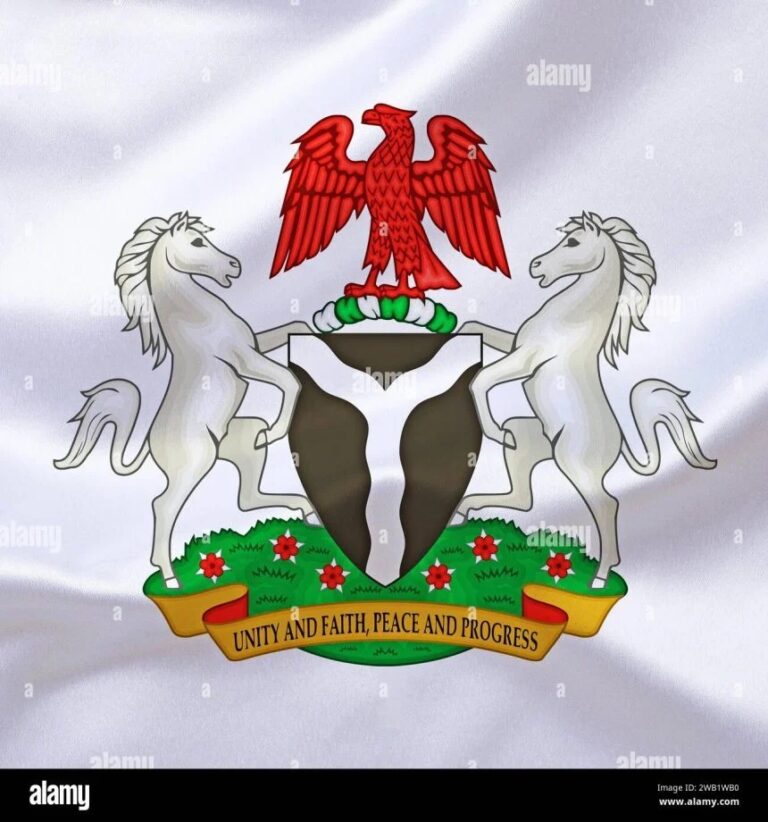
We join millions of people all over the world to wish the Federal Republic of Nigeria a happy 57th independence anniversary. Between October 1960 and today, Nigeria has become unrecognisable. In terms of physical development, we have moved from a country of less than 33 million people to a population of nearly 180 million; from a country of a dozen cities to that of hundreds. In educational development, we have moved from two universities – the University College, Ibadan, and the University of Nigeria, Nsukka, to at least 130 universities, and hundreds of polytechnics, technical colleges, and tertiary teacher training institutions.
At the primary and secondary levels, we have gone from a few choice secondary schools for the children of the elite to universal and compulsory free primary education and a reasonably affordable public secondary education system. The quality and standard of education, however, is a different matter and seem to have been affected by the law of large numbers. Indeed, the quality of education of a Standard Six certificate holder in 1960, the First School Leaving Certificate, would nearly compare with the Sixth Form or Higher School Certificate of today.
In terms of infrastructure, we do not seem to have done well at all. Although 52,000 miles of paved roads of 1960 do not compare with hundreds of thousands of kilometers of roads of today, we still see signs of backwardness in terms of mass transit, the absence of a reliable rail system, and speed train service as well as our inability to maintain our roads. The resulting chaotic traffic system, the immobility created by tankers and articulated trucks in Lagos, the traffic snarl in many of our cities are estimated to cost the economy billions of naira daily in terms of man-hours and lost revenue. Our performance in terms of electricity supply is even more dismal. In spite of untold billions of dollars spent, our total electricity supply daily is sometimes not equivalent to the power consumption of some international airports abroad. And until 2001 when the electronics revolution ushered in the cell phone technology, telecommunication was beyond the reach of most Nigerians.
Needless to say, these shortcomings were the result of our national indifference to planning and the failure to follow through with the so-called development plans even when they exist. This also affected our economic development as the country got complacent with its traditional industries and agriculture; for as soon as petroleum became a significant revenue earner, we abandoned the groundnuts, the cocoa, the palm produce and rubber which were the mainstay of our economy, and on which the country depended in its first decade of independence.
Perhaps our greatest failure had been our stunted political development. It is traceable to the intrusion of the military into governance and its seizure of power for nearly three decades left us a legacy of civil strife, a fratricidal civil war, military dictatorship, autocracy and tyranny. The absence of the rule of law meant the persistence of abuse of power, which naturally bred corruption and often led to impunity. Over seventeen years after the end of military dictatorship, the shadows of the military still haunt the country and sometimes appear to continue to dog its existence.
Fifty-seven years in the history of a nation is like an evening past. Yet we cannot but look outside our borders to see the enormous progress other countries have made, nations which achieved independence when we did. Countries like Malaysia, Singapore, and others have joined the club of the developed countries. Our medical facilities are so deficient that our leaders are almost always flown abroad for treatment. Our living standards are so poor that two-thirds of Nigerians are statistically considered to be living below the poverty line.
Our national life is still full of uncertainties with many unsettled issues. Many Nigerians still consider the parliamentary system to be our natural system and argue we should return to it. The presidential system, they argue, is too expensive and will continue to perpetuate corruption. Our bi-cameral legislature has been so expensive and our National Assembly is considered the most expensive in the world. Indeed, an overwhelming majority of opinion is that it should revert to a part-time job as it was in the First Republic.
Agitations are rife today because of failure of leadership. The economy is slow for the same reason and we still contend with many problems which other nations have leapfrogged. There is no doubt that the hope of our being counted among the 20 economies of the world in 2020 is a forlorn hope unless we take urgent proactive measures including economic diversification, political restructuring, creating social harmony, tackling the herdsmen issue, which has made farming practically impossible in many states, and ending the Boko Haram insurgency. If we sweep these issues under the carpet, Nigeria would remain the African giant with clay feet.