Follow Us on Google
From Adanna Nnamani, Abuja
The Central Bank of Nigeria (CBN) on Monday formally launched the Nigerian Overnight Financing Rate (NOFAR), a landmark financial market reform designed to strengthen monetary policy transmission, improve transparency, and deepen the country’s financial markets.
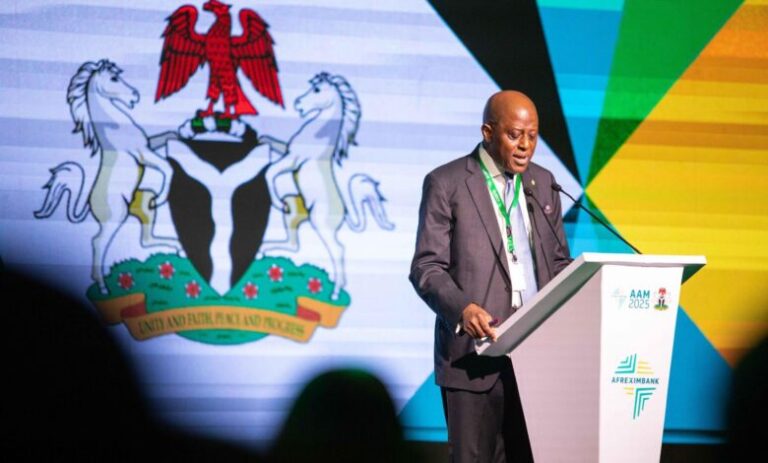
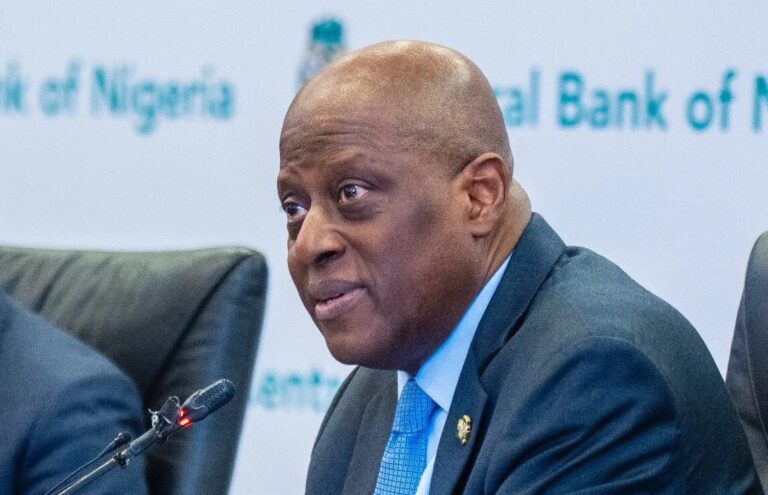
Speaking at the launch ceremony in Abuja, CBN Governor, Mr. Olayemi Cardoso, described the introduction of NOFAR as a significant milestone in the nation’s ongoing financial sector transformation and a key step towards building a more resilient, efficient, and credible financial system.
According to Cardoso, benchmark interest rates serve as the backbone of modern financial systems, providing reference points for pricing financial instruments, managing liquidity and risk, and supporting the effective transmission of monetary policy.
He explained that NOFAR was developed by the CBN in collaboration with the Financial Markets Dealers Association (FMDA) and with technical support from the European Bank for Reconstruction and Development (EBRD) as a transaction-based benchmark derived from actual market activities rather than subjective estimates.
The governor noted that global financial markets have increasingly shifted away from judgment-based benchmark rates following concerns over transparency and manipulation, prompting the adoption of transaction-based reference rates such as the Secured Overnight Financing Rate (SOFR) in the United States, SONIA in the United Kingdom, and €STR in the Eurozone.
He said NOFAR aligns Nigeria with these global best practices by reflecting the true cost of overnight secured funding in the country’s money market through observable transactions.
According to the CBN, the benchmark will enhance market integrity, improve price discovery, reduce reliance on subjective estimates, minimise manipulation risks, and strengthen confidence in Nigeria’s financial markets.
Cardoso added that the launch of NOFAR forms part of a broader reform agenda aimed at establishing stronger foundations for future financial innovation and ensuring Nigeria remains competitive in an increasingly digital and interconnected global financial system.
“The introduction of NOFAR represents a significant reform that reinforces the Central Bank of Nigeria’s commitment to building a more resilient, efficient, and credible financial services sector.
Other News
“For banks, investors and financial market participants, the introduction of NOFAR provides a transparent and reliable reference rate that can support treasury and liquidity management operations, pricing of financial contracts and securities, development of derivatives and structured products, and strengthening of risk management frameworks,” he said.
The governor further noted that NOFAR would contribute to a more effective monetary policy transmission mechanism, which remains critical to achieving the CBN’s price stability mandate.
Representing the Managing Director of Access Bank, Mr. Roosevelt Ogbonna, the Treasurer of Access Bank Plc and representative of the FMDA Technical Committee, Mr. David Enilolobo, described the launch as “not a ceremonial occasion, but a structural one” for Nigeria’s financial markets.
He said financial institutions had long relied on benchmark architectures built largely on market contributions rather than actual transactions, adding that NOFAR introduces a more credible and transparent system anchored on real market activity.
“That distinction is not technical, it is foundational. It is the difference between a rate the market can defend and a rate it has words to explain,” Ogbonna said.
He added that a credible benchmark would attract capital, reduce risks, improve investor confidence, and support Nigeria’s ambition to deepen its financial markets and increase participation in global capital flows.
Ogbonna also pledged Access Bank’s support for the initiative, stating that the bank would adopt NOFAR in pricing, trading, and reporting activities to help establish it as the market standard.