
 Follow Us on Google

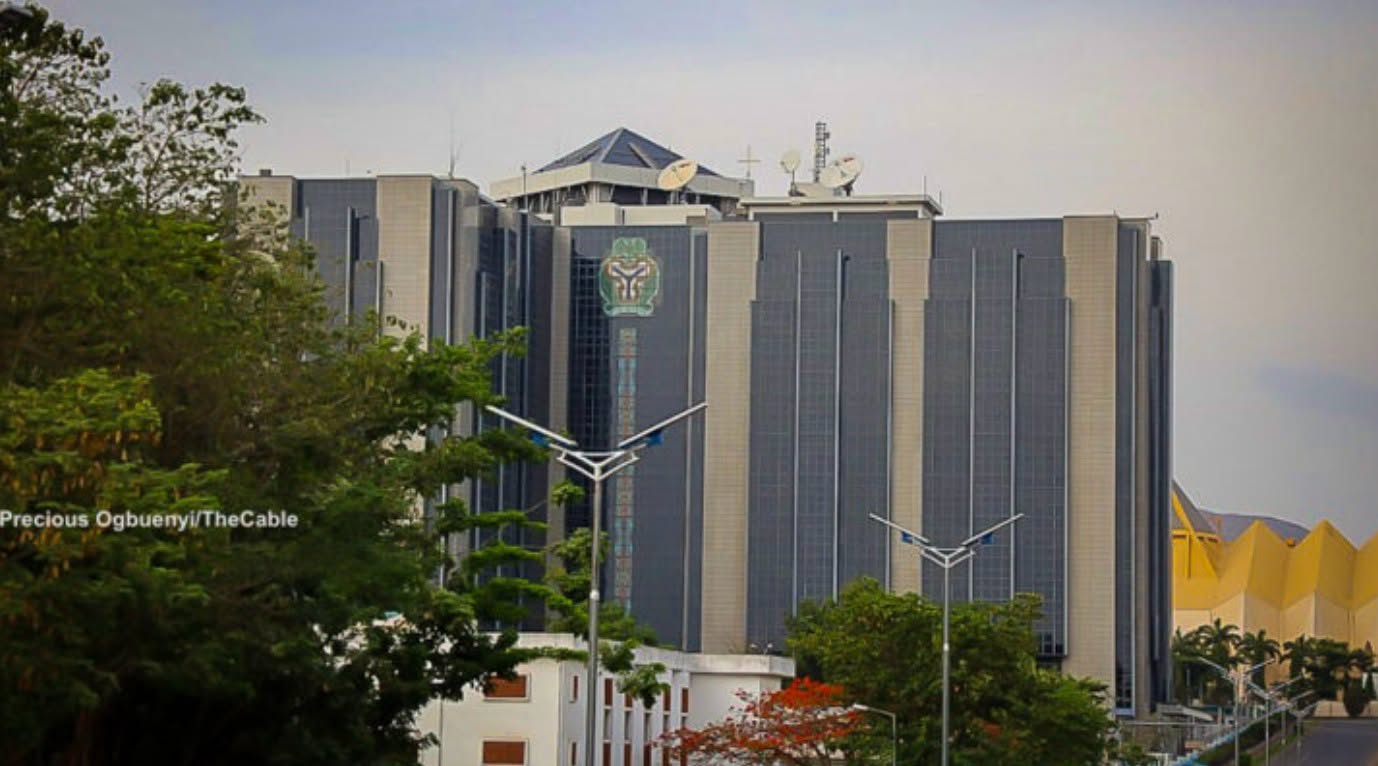
The Central Bank of Nigeria (CBN) has clarified that banks, fintechs and other payment operators may engage third-party providers, including cloud, infrastructure, processing and switching companies, to host or support payment transaction data.
However, the apex regulator says outsourcing does not shift legal or supervisory responsibility away from the regulated institution.
In an updated frequently asked questions on its data localisation circular, the CBN said third-party arrangements are permissible only where they preserve Nigerian control over payment data throughout its lifecycle.
“Third-party remote support is not automatically prohibited, but it requires CBN approval. Permissible activities may include troubleshooting, vendor-assisted maintenance, cybersecurity monitoring, incident response and technical support.
However, institutions must show that such access does not result in unauthorised offshore storage, replication, migration, synchronisation, retention or transmission of regulated payment data. The CBN expects governance arrangements, monitoring controls, access restrictions, audit trails, security safeguards and clear accountability mechanisms”, it said.
The CBN said third-party providers supporting regulated payment activities must operate within governance, operational, security and compliance arrangements that support the circular.
Institutions should ensure contracts preserve regulatory access and audit rights, while also addressing data localisation, cybersecurity, business continuity and operational resilience. The CBN said compliance evidence may include architecture diagrams, data-flow maps, cloud deployment records, vendor agreements, access-control records, monitoring logs, incident reports and business-continuity documentation. It reiterated that the January, 1 2027 compliance date remains in force and added that there is no automatic grace period, published transitional regime or formal grandfathering for legacy systems beyond the deadline.
The CBN confirmed that regulated institutions may use cloud service providers, infrastructure providers, outsourced technology firms, processing companies, switching companies and other third parties to support their operations.
It also adopted a technology-neutral position on cloud deployment. “Public cloud, private cloud, hybrid cloud, community cloud and multi-cloud models may be used, provided they meet the localisation, cybersecurity, resilience, auditability and regulatory-access requirements in the circular”, the apex bank said.
This means Nigerian payment firms are not required to build and operate every component of their technology stack in-house. They may rely on specialist vendors, provided the underlying payment transaction data remains stored and managed within the country.
Despite allowing outsourcing, the CBN was firm that regulated institutions remain “fully accountable” for compliance with applicable laws, regulations, circulars, guidelines and supervisory requirements.
Other News
In practical terms, a bank or fintech cannot argue that a cloud provider, software vendor or infrastructure operator is responsible for a breach of the data localisation rules. The institution that holds the regulatory licence or participates in the payments system remains answerable to the CBN.
The CBN said institutions must maintain robust vendor-governance frameworks, conduct comprehensive due diligence, put contractual safeguards in place, and retain audit and inspection rights. They must also monitor provider performance and validate compliance claims made by vendors.
The requirements extend beyond a core transaction database. The CBN said payment transaction data includes information generated, collected, processed or stored in connection with the initiation, authorisation, processing, clearing, settlement or reconciliation of a payment.
That covers transaction amounts, dates and times, references, payer and beneficiary details, account or wallet identifiers, payment channels, transaction status, and records used for verification, disputes or audits.
The FAQ also includes settlement records, transaction logs, audit trails, reporting databases, backup repositories, replicated datasets, disaster-recovery environments, archives, data warehouses, operational telemetry, diagnostic data, fraud-monitoring information and security logs.
According to the apex bank, local hosting of a primary system is not enough, adding that backup environments, disaster-recovery sites, archives, business-continuity repositories and replicated databases must also be located in Nigeria.
The regulator said data localisation cannot be achieved if regulated payment data is routinely retained outside Nigeria through backup, archival, replication or disaster-recovery arrangements.
Payment transaction data must also remain subject to Nigerian governance, operational control, security protections, accessibility requirements and regulatory oversight across collection, processing, storage, retention, archiving, retrieval and destruction.
For payment firms relying on offshore hyperscalers, global group infrastructure or multi-year cloud contracts, the message is clear: existing commercial arrangements do not exempt them from compliance.
The CBN’s position effectively turns vendor management into a core payment-system compliance function. Institutions may outsource infrastructure and technology services, but they must be able to prove, at any time, that Nigerian payment data remains under Nigerian control.