Follow Us on Google
Despite high borrowing costs which continued to limit the pace of fresh investment by businesses, Nigeria’s private sector credit stock rose to N472.02 trillion in the first half (H1) of 2026, Daily Sun analysis revealed at the weekend.
This is coming after data from the Central Bank of Nigeria (CBN) revealed that credit to the private sector (CPS) increased by 2.7 per cent month-on-month (m/m) to N83.26 trillion in June (May: N81.04 trillion).
The June figure represented an increase from the preceding month and was also higher than the level recorded a year earlier, indicating that lending has recovered somewhat from the softer conditions seen at the start of the year.
Still, the pace of expansion remains restrained by elevated interest rates, tighter financial conditions and a cautious banking sector that is still digesting the effects of regulatory adjustments.
Specifically, the path was uneven, (January figure: 75.24 trillion), but the overall direction was upward, with credit reaching N75.62 trillion in February, N76.27 trillion in March, N80.59 trillion in April and N81.04 trillion in May.
Thus, this suggests that the cumulative sum of the monthly outstanding credit stocks from January to June grew to N472.02 trillion and not new lending issued during the six-month period.
At the recent Monetary Policy Committee (MPC) held in Abuja, members chose to retain the monetary policy rate (MPR) at 26.5 per cent.
The committee also maintained the Cash Reserve Ratio (CRR) at 45 per cent for deposit money banks and 16 per cent for merchant banks, retained the 75 per cent CRR on non-Treasury Single Account public sector deposits and left the liquidity ratio unchanged at 30 per cent.
Following the decision, several analysts urged the apex bank to begin easing monetary policy if inflation continues to moderate, arguing that lower borrowing costs would stimulate investment and economic growth.
The current monetary environment presents a delicate balance. While bank lending remains essential for financing working capital, inventory replenishment, trade activities and payroll obligations, high lending rates continue to discourage many businesses, particularly small and medium-sized enterprises, from taking on additional debt.
In its weekly economic and market report, Cordros Research said credit growth is likely to remain subdued in the near term because the elevated interest rate environment will continue to restrict access to financing and weigh on private investment.
Other News
The firm said the CBN’s decision at its July policy meeting to hold rates at current levels would sustain tight financing conditions and keep loan demand under pressure.
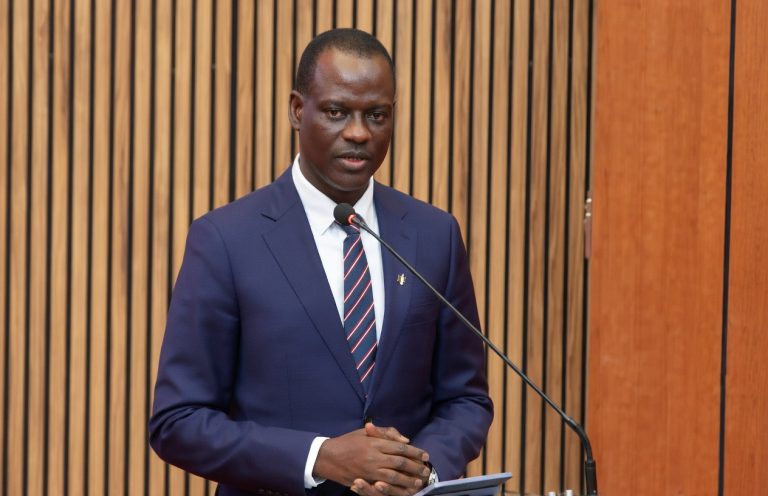
CBN Governor, Olayemi Cardoso has argued that the recent moderation in bank lending should not be mistaken for a structural weakness in the financial system.
Speaking at the recent policy meeting, he said it was important to distinguish between what is temporary and what is structural. According to Cardoso, the withdrawal of pandemic-era forbearance measures had forced banks to reassess and recalibrate their loan books.
He said those temporary relief measures, introduced during the COVID-19 shock, had outlived their usefulness and should no longer remain a feature of bank balance sheets.
In that adjustment process, Cardoso said, a temporary decline in outstanding risk assets and credit growth was natural and should not be viewed as a cause for concern.
He added that as banks complete recapitalisation and strengthen their capital buffers, lending capacity should improve and credit expansion should return to levels that reflect the size and strength of the institutions.
Cardoso also stressed that the banking system remains safe and sound, insisting that the shift underway is toward a more sustainable and higher-quality credit environment rather than a boom-bust cycle. In his view, the correction is designed to prevent the kind of hidden shocks that can accumulate when weak loans are carried for too long.
Nevertheless, previous MPC deliberations have highlighted concerns over whether private sector credit can expand rapidly enough to support economic growth without fuelling renewed inflationary pressures.
For businesses, however, the immediate concern remains the cost of borrowing. Many firms are delaying major capital investments while waiting for lending rates to decline to more affordable levels.
Although private sector credit is gradually recovering, the pace remains insufficient to trigger the broad-based investment expansion that many businesses have been anticipating.
Until borrowing costs ease significantly, companies are expected to remain cautious, prioritising liquidity management and operational survival over aggressive expansion.