Follow Us on Google

By Chinwendu Obienyi
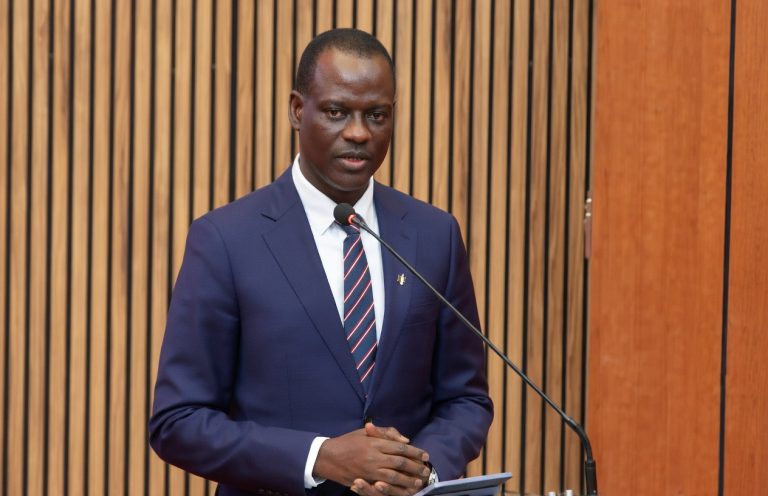
The Central Bank of Nigeria (CBN), under the leadership of Olayemi Cardoso, is fine-tuning its monetary policy instruments to strengthen the nation’s financial system.
This would engender resilience amid evolving economic challenges. Cardoso said strategic recalibration was a crucial step as the apex bank aims to foster stability, enhance liquidity management and bolster investor confidence in the economy.
Cardoso has consistently emphasised that a strong financial system is built on trust, while trust in itself is earned through integrity and compliance.
Upon assuming office, the CBN chief declared an end to business as usual, emphasising the need for elevated regulatory standards to safeguard Nigeria’s financial ecosystem and align it with global best practices.
He added that the CBN, on bjs watch, remains focused in its commitment to fortifying the nation’s financial sector by building a strong culture of compliance and strengthening risk management frameworks.
At the heart of this vision is the drive to protect Nigeria’s financial ecosystem, ensuring its stability, credibility and alignment with international best practices.
To realise these objectives, the apex bank has reinforced its dedication to maintaining a transparent and resilient financial system. This involves not only tightening regulatory compliance across financial institutions but also proactively addressing risks that could undermine the sector’s integrity. Through robust oversight, strategic policy recalibration, and continuous engagement with stakeholders, the CBN, Cardoso noted, seeks to bolster investor confidence, enhance financial stability and position Nigeria’s financial sector as a model of sound governance and sustainable growth.
The financial sector regulator recently hosted a high-level Mandatory Compliance and Anti-Money Laundering (AML) Training Workshop in collaboration with Citi, in Lagos.
Speaking at the event, Ms. Shola Phillips, Special Adviser to the CBN Governor on Compliance, underscored the critical importance of strict adherence to global banking standards. She emphasized that maintaining robust compliance frameworks is essential to upholding the integrity of Nigeria’s financial sector and sustaining investor confidence in an increasingly interconnected global economy.
“Regulators expect financial institutions to maintain dynamic, risk-based AML/CFT programmes that are responsive to the evolving financial environment. Proactive engagement with regulatory developments and the integration of innovative compliance solutions are essential for institutions to meet these expectations effectively,” Phillips stated.
The training, attended by compliance officers, trade operations specialists, and correspondent banking teams from various financial institutions, provided critical insights into global regulatory trends, emerging financial risks, and strategies for sustaining correspondent banking relationships.
Managing Director of Citi’s Correspondent Banking Group, Siobhan Ni Ealaithe, highlighted the critical role of robust governance frameworks in mitigating risks. She underscored the necessity of Know Your Customer (KYC), Know Your Business (KYB), and Know Your Transaction (KYT) protocols in preventing illicit financial activities.
Stephanie Bailey, Head of EMEA AML Risk Management for Foreign Correspondent Banking, provided a stark assessment of financial crime risks, noting that over $3 trillion in illicit funds flow through the global financial system annually. She urged financial institutions to strengthen due diligence measures, leverage technology-driven risk assessments, and uphold transparency in all transactions.
Speaking to a gathering of bankers, CBN Governor Olayemi Cardoso highlighted the ever-increasing scrutiny on the ethics and professionalism of bankers and treasurers, stressing the need for unwavering adherence to industry best practices.
He reaffirmed the apex bank’s commitment to regulatory integrity, noting that the introduction of the FX Global Code for all authorized dealers and market participants was designed to enforce full compliance and enhance transparency in foreign exchange operations.
Cardoso further urged the Chartered Institute of Bankers of Nigeria (CIBN) to champion the highest ethical and professional standards, setting a benchmark for excellence and reinforcing confidence in the financial sector.
“At the Central Bank, we have intensified surveillance of market activities to ensure compliance and eliminate bad actors who attempt to undermine the system. Together, we must build a market based on strong governance and transparency. As regulators, we will maintain a zero-tolerance approach to compliance violations,” he said.
Banking sector maintains strength and stability
Cardoso explained that within the banking sector, the sector remains robust with key indicators reflecting a resilient system.
“The non-performing loan ratio remains within the prudential benchmark of five per cent, showcasing strong credit risk management. The banking sector liquidity ratio comfortably exceeds the regulatory floor of 30 per cent, a level which ensures banks are maintaining adequate cash flow to meet the needs of customers and their operations. The recent stress test conducted also reaffirmed the continued strength of our banking system,” he said.
Continuing, he said: “To ensure that our banking system can effectively support the growth of our economy, efforts to strengthen banks’ capital buffers were announced in 2023 with a two-year implementation window.
“I am pleased to note that a significant number of banks have raised the required capital through right issues and public offerings well ahead of the 2026 deadline! I believe that the banking sector is in a strong position to support Nigeria’s economic recovery by enabling access to credit for MSMEs and supporting investment in critical sectors of our economy,” he said.
Similarly, Other Financial Institutions (OFIs) play a vital role in driving productivity and economic growth by expanding access to credit and financial services for underserved individuals and businesses.
To harness this potential, the CBN, Cardoso stated, is committed to strengthening key institutions, particularly Primary Mortgage Banks (PMBs) and Microfinance Banks (MFBs), to enhance their efficiency, resilience, and overall impact on the economy.
“Our strategy includes implementing model mortgage foreclosure laws to stimulate lending and reduce delinquency, integrating PMBs and MFBs into the GSI platform to minimize non-performing loans, and leveraging Development Finance Institutions (DFIs) more effectively to provide increased on lending facilities to well-managed OFIs,” he said.
Cardoso explained that the Nigerian payments ecosystem has been ahead of many advanced economies, yet has not always received the recognition it deserves.
He said that many innovations that other countries are only now experiencing have been part of our system for years. We must celebrate these successes, as they contribute to building our global reputation.
“Nigeria’s dynamic fintech ecosystem has driven financial inclusion and positioned the country as a hub of innovation in Africa. Despite a challenging external environment, Nigerian Fintechs continue to shine, attracting significant foreign investment and several have achieved global unicorn status this year. Their innovations, alongside other financial service providers, have fueled growth in transactions and made financial services more affordable and accessible for many more Nigerians,” he stated.
According to him, there is need to continually leverage on this channel to enhance access to finance and credit, particularly for under-served populations.
However, he urged fintech companies and banks to ensure their platforms are not exploited for fraudulent activities.
“Strengthening the KYC onboarding process is essential to prevent malicious actors from exploiting our financial system. Additionally, these institutions must prioritize improving transaction monitoring and bolstering consumer protection measures to ensure that digital channels remain safe, especially for the most vulnerable segments of our population,” he said.
Banking sector recapitalisation
Cardoso has repeatedly highlighted the far-reaching economic benefits of the ongoing bank recapitalisation exercise, noting that it will empower lenders to take on greater risks and extend financial services to underserved markets.
Speaking in Lagos at the 2nd International Financial Inclusion Conference 2024, themed “Inclusive Growth—Harnessing Financial Inclusion for Economic Development,” Cardoso reaffirmed the apex bank’s commitment to deepening financial inclusion. He explained that the introduction of new minimum capital requirements for banks aligns with this objective, ensuring a stronger, more resilient banking sector capable of driving sustainable economic growth.
He said: “This strategic move ensures that banks are well-capitalized, enabling them to take on greater risks, particularly in underserved markets. With stronger capital bases, banks can provide more loans and financial products to Micro Small and Medium Enterprises (MSMEs), rural communities, and other vulnerable segments that have previously struggled to access formal financial services”.
On March 28, 2024, the Central Bank of Nigeria (CBN) unveiled a two-year bank recapitalisation initiative, which took effect on April 1, 2024, and is set to conclude on March 31, 2026.
Under the new framework, commercial banks are required to meet revised minimum capital thresholds: N500 billion for those with international licenses, N200 billion for national banks, and N50 billion for regional banks.
He emphasised that beyond enhancing financial stability, the recapitalization policy serves as a catalyst for inclusive economic growth, empowering banks to expand their reach and support broader financial inclusion.
“By enabling banks to extend more credit to MSMEs, we enhance job creation and productivity. Furthermore, with increased capital, banks can invest in technology and innovation, crucial for driving digital financial services such as mobile money and agent banking. These technologies are key to breaking down geographic and economic barriers, bringing financial services to even the most remote areas,” he stated.
With less than 14 months to recapitalisation deadline, banks have stepped up preliminary consultations on the prospect of business combinations.
Analysts said there have been “more talks around mergers and acquisitions” as banks consider alternative options to fresh capital raising.
They said while the banks are expected to flood the market with offers, many of them have seen the inevitability of mergers and acquisitions.
The CBN had approved the first mergers and acquisition deal between Providus Bank and Unity Bank in 2024. Access Holdings Plc, Ecobank Nigeria and Jaiz Bank Plc have met the new minimum capital requirements.
The CBN is the final signatory in a tripartite capital verification committee that included the Securities and Exchange Commission (SEC) and Nigeria Deposit Insurance Corporation (NDIC).
Under the guidelines for the recapitalisation, capital verification is a major requirement before the clearance of the allotment proposal and release of the funds to the bank for onward completion of the offer process and addition of the new capital to its capital base.
Experts had estimated that banks could raise about N5 trillion within the two-year recapitalisation period.
e-payment transactions spike
Electronic payment transactions in Nigeria surged to an unprecedented $702.6 billion in the 12 months ending December 31, 2024, marking a historic milestone for the country’s digital payment ecosystem, according to a report by the Nigeria Interbank Settlement System (NIBSS).
For the first time, e-payment transactions crossed the quadrillion mark, underscoring the growing adoption of digital financial services. The NIBSS industry statistics reveal that the value recorded on the NIBSS Instant Payment (NIP) platform represents a remarkable 79.6 percent increase compared to the $400.5 billion recorded in 2023.
While e-payment transactions maintained a steady upward trajectory throughout the year, December 2024 recorded the highest transaction value, driven by heightened business activities and consumer spending during the festive period. In that single month alone, Nigerians spent a staggering $76.7 billion via electronic payment channels, setting a new all-time high monthly record on the NIBSS platform.
In addition to the surge in transaction value, the volume of e-payment transactions also witnessed significant growth. The number of transactions processed by NIBSS rose from 9.7 billion in 2023 to 11.2 billion in 2024, reflecting a 15.5 percent year-on-year increase.
Industry stakeholders attribute this sharp rise in e-payment adoption to the lingering effects of the recent cash crunch and the Central Bank of Nigeria’s (CBN) cashless policy, which imposes daily withdrawal limits to encourage digital transactions.
Electronic payments in Nigeria are facilitated through various channels, including cheques, Automated Teller Machines (ATMs), Point of Sale (PoS) terminals, m-Cash, CentralPay, Remita, Nigeria Interbank Instant Payment (NIBSS) Instant Payment (NIP), and mobile money platforms, among others.
The e-payment powers were conferred on the CBN by Sections 2 (d) and 47 (2) of the CBN Act, 2007, to promote and facilitate the development of efficient and effective systems for the settlement of transactions, including the development of electronic payment systems.
While pushing for the full use of the e-payment system, the CBN said for Nigeria to actively play at the world stage, “our payment system must be successfully benchmarked against the global best practices, as in most developed nations of the world”.
It said e-payment provides safe and efficient mechanisms for making and receiving payments with minimum risks to the CBN, payment service providers and end-users.
To make the e-payment vision a success, the CBN, in collaboration with key stakeholders in the payments community, developed the National Payments Systems Vision 2020 (NPSV 2020). The NPSV 2020 is a sub-set of the Financial Systems Strategy 2020 (FSS 2020).