Follow Us on Google
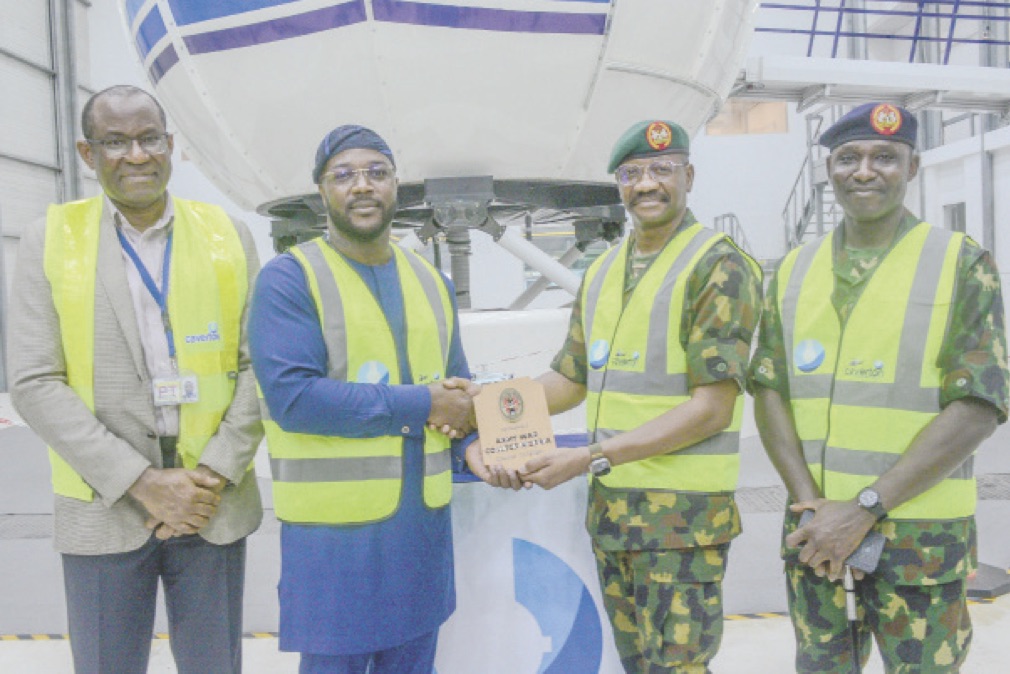
Caverton Offshore Support Group has highlighted its commitment to operational excellence and strategic contributions to key sectors of Nigeria’s economy, including aviation, oil and gas, agriculture, and technology, during a visit by participants of the Army War College Nigeria (AWCN) Course 10, 2026. Speaking on Tuesday, the company reiterated its readiness to partner with the Nigerian Army, other military institutions, and private organisations in deploying cutting-edge aviation solutions and training initiatives.
Welcoming a delegation that included senior officers from Nigeria, South Africa, and Cameroon, Rotimi Makanjuola, Chief Operating Officer of Caverton Offshore Support Group, provided a detailed presentation on the company’s operations. He emphasised Caverton’s role as a leading indigenous aviation and offshore logistics provider in West Africa and its strategic importance in national capacity building.
“Training is important and nothing beats having a facility on the ground for the training of pilots. Everybody likes to travel, but we have to think of the country first,” Makanjuola said. “With this simulator here, and with aircraft and helicopters coming in already, you need pilots and you also need back-ups. You can imagine having to send all those people abroad for training—the cost, foreign exchange losses, and man hours. This helps save time, money, and builds our capacity as a country.”
Makanjuola noted that one of Nigeria’s biggest challenges is not the lack of laws but the implementation of existing policies. He urged that operational efficiency and adherence to standards must be prioritised to unlock the country’s aviation potential.
The senior officers toured Caverton Aviation Training Center, the only certified simulator centre in Africa equipped with AW139 and AW109 simulators, alongside the company’s Maintenance, Repair, and Operations (MRO) unit. Caverton has collaborated with countries such as Ivory Coast, Mozambique, Benin, Senegal, and even India, while its Cameroon operations have been active for over a decade. Clients also include the Nigerian Navy, Nigerian Air Force, and other regional operators.
Beyond commercial aviation, Caverton positions itself as a critical player in national capacity building, particularly in pilot training, aircraft maintenance, and emerging aviation technologies. Makanjuola highlighted the group’s subsidiaries, Caverton Helicopters and Caverton Marine, which provide aviation and marine logistics services to multinational companies across Sub-Saharan Africa.
One highlight of the visit was a demonstration of the MRO facility located within a free trade zone. The facility enables operators to maintain aircraft without paying import duties on parts, making it an attractive hub for regional aviation support. Makanjuola also cited operational interventions that reflect Caverton’s technical capabilities, including resuscitating an aircraft grounded for nearly eight years and providing emergency technical support for a fault mid-journey from Mozambique to Turkey. “The ability to respond rapidly to operational challenges demonstrates the company’s commitment to aviation safety and efficiency across the continent,” Makanjuola said. Caverton has also maintained a strategic footprint in Cameroon, particularly in pipeline surveillance and security services, for over a decade.
A key investment highlighted during the visit is Caverton’s pilot training and human capacity development programme. The simulators allow pilots to conduct mandatory training, emergency scenario simulations, and instrument rating exercises locally, significantly reducing reliance on overseas training.
Beyond aviation, Caverton is pioneering drone and unmanned aerial systems (UAS) initiatives, deploying agricultural drones for crop monitoring, fertiliser distribution, and spraying. In partnership with the National Agency for Science and Engineering Infrastructure (NASENI), the company assembles drones locally and trains engineers to operate them.
A particularly notable programme trained ten female engineers to assemble and operate agricultural drones from scratch at the Nigerian Air Force Base in Kaduna, promoting both technological adoption and gender inclusion in STEM fields.
Addressing the delegation, Brigadier-General Olakunle Olayinka emphasised that the Army War College’s study tours expose senior military officers to strategic sectors of the national economy. “Engagements with companies like Caverton provide participants with insights into how private sector innovation contributes to national development and operational capability,” he said.
Similarly, Brigadier-General Bala Fakandu stressed the importance of collaboration between military institutions and indigenous industries, particularly in areas where national security intersects with technology, logistics, and rapid response capabilities.
Participants were guided through Caverton’s operational facilities, including the training centre, flight operations centre, and unmanned aerial vehicle laboratory, where they observed simulator technologies, aircraft maintenance procedures, and drone innovations designed to support agriculture and other sectors.
The visit underscored a broader strategic lesson for Nigeria: sustainable national development requires closer alignment between the military, government institutions, and indigenous private sector innovators. For the Army War College participants, the tour demonstrated how homegrown innovation can strengthen Nigeria’s strategic autonomy in aviation, logistics, and technology-driven services.
Makanjuola concluded, “Caverton is committed not just to business growth, but to building national capacity through innovation, technical excellence, and strategic partnerships. By investing in training, technology, and regional collaboration, we aim to make Nigeria a hub for aviation, offshore logistics, and unmanned systems across West Africa.”
The engagement between Caverton and AWCN Course 10, 2026, illustrates the growing recognition that private sector expertise is vital in enhancing operational readiness, advancing technology adoption, and creating sustainable growth pathways for the nation. By combining commercial operations with capacity-building initiatives, Caverton is positioning itself as a model for indigenous enterprise contributing directly to national development, security, and economic resilience.