Follow Us on Google
•Nigerians lament as economy airfare hits N300k •OPS seeks people-oriented policies
By Chinelo Obogo, Chinyere Anyanwu, Merit Ibe and Chukwuma Umeorah
There seem to be no respite in sight for Nigerians barely few days to Christmas as they continue to grapple with the challenge of cash scarcity.
This has cast a shadow of doubt on the possibility of blissful celebrations as frustration and increased hardship stare many families, traders, and businesses in the face.
Already small and medium-sized are finding themselves unable to meet the demands of the holiday season.
This year’s soaring cost of food coupled with the cash scarcity could perhaps leave many families hungry and for others, the season may certainly not be as merry.
Despite being compelled to embrace digital/electronic modes of payment, the unreliability of many electronic channels of payments amid perversive cash scarcity to enable purchases for Christmas and New Year has heightened the headaches of many households.
Amaka Onwugbulu, a business woman who lamented the impact of the current cash crunch said, “I was forced to do most of my Christmas shopping in a supermarket despite how expensive it is when compared to the open market.
This is because these supermarkets accept transfers and POS payments unlike most of the traders in the open market. You would not blame them, some of them have been scammed through fake alerts and all that.”
Another trader in Isolo market who identified herself as Jumoke said that the scarcity of cash had impacted not just her trade, but has made her unable to purchase all she wanted in preparation for the festive season.
“Everything have become expensive, people cannot afford them. Even the ones who can afford it, do not have cash to buy. If they don’t buy from me, how will I get money to buy what I need.”
Olajide Laide, a secondary school teacher lamented, “It is just too much. I wonder how they expect us to survive. No money, the cost of rice, tomato, chicken and every thing in the market have increased. Landlords don’t even send you; they too are increasing rent. And it is not as if salaries are being increased.”
The festive period in Nigeria is also a time when families unite, often traveling long distances to celebrate with loved ones in their various hometowns.
However, the soaring cost of transportation exacerbated by subsidy removal which raised the pump price of fuel to over N600/liter has kept many people from travelling.
Interstate motor operators continue to groan over the high cost of operations. A visit to Libmot and GIG bus terminals in Cele/Okota as well as other bus terminal on the stretch revealed that the cost of travelling from Lagos to Owerri/Aba soared to between N38,000 and N40,000 from an average of N25,000 for the same route in October.
Similarly the average price of Lagos to Abuja and some northern routes rose to between N43,000 and N45,000 for the same route in October.
One of the passengers who spoke to our correspondent said, “The reason I am travelling is because it is inevitable. I would have sat in my house here in Lagos.
The price is just too much.” Another passenger who identified as Uche, said that he had to break the tradition of travelling with his family to travel alone this year because he could not afford the high cost of transportation.
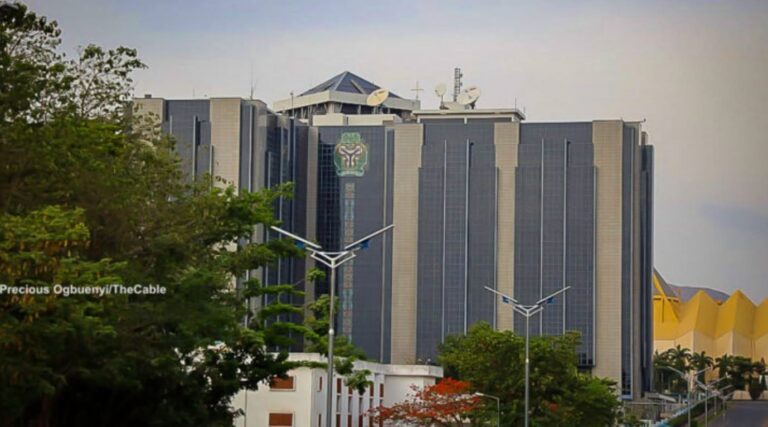
The cash crunch in banking halls, ATMS and other outlets across the country, seem to be a déjà vu from similar experience occasioned by the implementation of the currency redesign exercise by the Central Bank of Nigeria in 2022.
Daily Sun findings revealed that several banks were struggling to meet the cash demands of their customers, forcing them to ration the limited cash reserves they have, leaving customers frustrated and further straining the already tense situation.
Our correspondent who visited a Sterling bank branch in Allen, Ikeja on Tuesday was only able to withdraw a maximum of N10,000 which was paid in N100 denominations over the counter. A bank staff who spoke on grounds of anonymity said, “We do not have enough cash to go round. We have even resorted to paying customers with N100 and N200 notes with the little that we have, and with the look of this, we would soon exhaust the little that we have.”
The ATMs of Zenith Bank and Globus Bank along the same road were not dispensing cash, as customers were left to explore other means of getting cash to carry out their daily transactions.
Further findings revealed that UBA, Ecobank, Sterling bank, Fidelity and FCMB around Isolo and Okota/Cele axis on Wednesday had to limit Over the Counter (OTC) withdrawal to N5,000 per transaction and each customer was only allowed to perform a single transaction so as to service as many customers as possible. When asked, most of the bank staff simply said; “No cash.”
Though most of the ATMs in the area were dispensing, transactions were also limited to N5, 000 for every card.
Point of Sale (POS) operators were not able to save the day as they were facing their own set of challenges, many outlets were shut as their owners had gone out to scout for cash. Thus forcing them to increase their charges by over 500 per cent. This drastic measure is seen as a desperate attempt to cover the extra costs incurred in securing limited cash.
One POS operator who simply identified as Kemi, disclosed that she sourced her cash from fuels stations rather than bank and she has had to increase her charges from N100 to N500 for a N10,000 transaction to compensate for the charges she incurs. “Oga, there is no cash anywhere, even in banks, I get money from these filling stations guys. And they also charge me for it.”
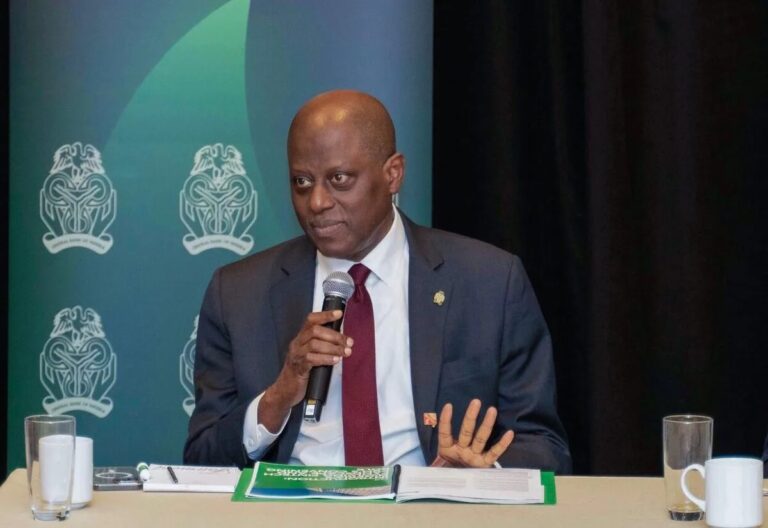
This issue of cash scarcity is coming despite assurances from the CBN that there was enough cash in circulation. The CBN, in response to complaints of widespread cash shortage had said that the seeming currency scarcity was occasioned by large volume withdrawals of cash from various CBN branches by deposit money banks, (DMBs). But this narrative seems to be different from the reality many Nigerians are facing.
Asides the cash crunch, Nigeria’s inflation currently at 28.20 per cent had plunged more Nigerians into poverty making them unable to afford the basics. Food items, accommodation, clothing, electricity, education fees and other prices have all hit the rooftop.
Perhaps this Christmas would be a ‘December to Remember’ as the hardship being experienced by Nigerians is not one to be forgotten in a hurry.
Christmas and new year celebrations are a few days ahead but consumers are sceptical about their ability to purchase needed food items owing to rising cost of such items.
Checks at some major markets around Lagos reveal that a 50kg bag of long grain foreign rice sells for N65,000 while the locally produced brand sells for N55,000. A 50kg bag of Oloyin beans is selling for N45,000 while a 100kg bag of Olo2 beans is selling for N85,000.
A 100kg bag of melon (egusi) is selling for N230,000; 20kg bag of yellow garri is selling for N20,000; a 20kg bag of white garri goes for N19,000 while a paint bucket of both yellow and white garri goes for N1,500.
A 20litre gallon of vegetable oil is selling for N37,000 while the 1.5litre bottle (big Eva bottle) is selling for N2,400. A 20litre gallon of red oil sells for N30,000 while the 1.5litre bottle of red oil goes for N2,000.
A carton of frozen chicken laps (Orobo) is selling for N31,000, while a carton of frozen turkey wings is selling for N50,000.
A bag of onions is currently going for N110,000; a medium sized basket of tomatoes is selling for N28,000, while a bag of pepper (rodo) is selling for N70,000.
The prices of all the listed food items have risen by about 25 per cent over the last few weeks, raising fears about average households experiencing an enjoyable yuletide celebration.
Mrs. Ulunma Orjiakor, a mother of six, while reacting to the high cost of food items and the possibility of having a fun-filled and exciting Christmas and new year celebrations, said, “with the seriously reduced purchasing power of many consumers and the galloping costs of items, the yuletide celebration is going to be on a very low key, no doubt. The costs of food items in the market have rubbished my Christmas budget but what can I do? I’ll spend within my m
Meanwhile, Daily Sun findings confirm that Economy flight ticket has already risen to N300, 000 on most routes.
This means that passengers travelling for the festive season will be paying as much as N300, 000 for an economy seat, depending on the destination, while the lowest rate anyone would pay to any destination across the country is N100, 000.
At the moment, those traveling to Anambra, Enugu, Owerri, Asaba, Port Harcourt are paying higher for economy seats due to high demand.
A look at the website of United Nigeria Airlines shows that an economy ticket to Anambra State for Friday, December 22 sells for N300, 000, while the same class of ticket from Abuja to Asaba and Owerri sells for N200, 000.
Despite the high cost of tickets, the passenger traffic has surged. At the departure lounges of the domestic terminal of Nnamdi Azikiwe Airport, Abuja and the Murtala Muhammed Aiport, Lagos, the crowd of passengers waiting to travel is huge and even on the websites of many of the airlines, most of the seats are already sold out. On Air Peace for instance, there are no available economy seats from Lagos to Anambra from Wednesday 20th to Sunday, December 31st. The seats available are from Monday, January 1, 2024 and it sells for N266, 800. On ValueJet, all the seats from Lagos to Port Harcourt up to Friday 22 were sold out at the time of publication. Economy tickets for Saturday 23, was selling for N118, 429, while economy ticket for Abuja to Lagos was selling for N102, 000.
On Dana Air website, an economy ticket from Lagos to Owerri, cost N250, 000, while on ValueJet, an economy ticket from Lagos to Abuja cost N103, 190. For Ibom Air, economy seats from Lagos to Enugu for Saturday, December 23 cost N151, 000, while flights to Uyo for December 23, cost N253, 000. On Arik Air, economy tickets from Abuja to Port Harcourt cost N142, 597, while for Rano Air, Lagos to Abuja cost N100, 000.
The president of the National Association of Nigeria Travel Agencies (NANTA), Susan Akporiaye, told Daily Sun that the cause of the high cost of air fare was basically the forces of demand and supply. She also pointed out that for many years, it has been a tradition among Nigerian airlines to hike fares during the last quarter of every year but that by January, the fare would drop as there would be a lower demand for travel.
“If you notice, from history, every last quarter of the year, local airlines increase fares for absolutely no reason. Did anything drastic change? Why have the tickets gone up? It means that the airlines deliberately increase fares every last quarter of the year starting from November but by January, the fares will come down. I want to look at it as an issue of demand and supply. They know that there is high demand during the last quarter of the year. They are not the only ones that do this, international airlines also do it because there is demand during peak periods and all the airlines add to their fares. They would tell you they are following the law of demand and supply.”
Chairman, National Association of Aircraft Pilots and Engineers (NAAPE), Dana Air chapter, Peter Duniya, told Daily Sun that a major cause of high ticket fare was the heavy taxes and levies airline operators are made to pay to different government agencies among other issues like naira devaluation, forex scarcity, cost of Jet A1 among others.
“If you consider the multiple charges and taxation on airlines, you would see that they are also not finding things easy. These charges are stifling them of the income they are earning. Another challenge is that the industry is run with dollars, then you have cost of jet A1 and high cost of maintenance. Many aviation companies make little profit yet the cost of operation is very high because of some of these issues I mentioned. Some of these taxes are taking over 50 percent of the ticket cost and at the end of the day, they struggle to make profit,” he said.
The situation in the country is getting difficult by the day for Nigerians and with the Christmas celebration inching closer, reactions have shown that businesses and individuals are feeling the pain of the country’s accelerating inflation, a consequence of a weakening naira, fuel and diesel price surge and escalating insecurity which has put a strain on agriculture output.
In the past months, the nation has seen rising inflation, commodity price instability, reduced industry capacity utilisation and dwindling purchasing power of Nigerians, all of which have further dragged many enterprises out of existence and Nigerians below the poverty lines.
Recently, the Consumer Price Index (CPI) data released by the National Bureau of Statistics (NBS) revealed that inflation continued its upward trend, rising to 28.20 per cent in November, which is the highest since August 2005 and reflects continued Naira depreciation, higher fuel and food prices.
Many believe that the recent reforms are already taking a toll on various aspects of the economy and threatening to keep many people out of business.
Consequently, the naira, which has faced fluctuations and depreciation in value, has led to higher import costs, making imported goods more expensive for consumers. Furthermore, dependence on imports for various products, including food, fuel, clothings, building materials and other consumer goods, has also contributed to higher prices due to transportation cost, tariffs and exchange rate fluctuations.
The operators pointed out that inadequate infrastructure, such as epileptic power supply and poor transportation networks increase the cost of goods and services, as businesses often have to bear the burden of additional expenses since they are not provided by the authority and they eventually pass these expenses to consumers so as to make profit and keep afloat..
Another challenge in this season of spending is that those who have money in banks can’t access much. Customers, especially small businesses heavily reliant on cash transactions, face difficulties accessing funds for daily operations. Some banks have imposed limits on withdrawals, with amounts as low as N10,000, exacerbating customers’ challenges.
Due to the inability to carry out daily transactions a lot of the daily activities of businesses and individuals have been disrupted and their basic needs are unmet.
The CBN is yet to provide a comprehensive explanation for the cash shortage.
Also, the forced closure of some companies that were driven out of business by rising costs of operation, has worsened the unemployment situation in the country.
As the prices of items soar, Nigerians are now cutting back on purchases of non-essential items to survive amid the current economic hardship.
This, according to experts, has worsened the condition of the retail sector as consumers struggle to cope with high borrowing costs coupled with high food and fuel costs.
Inventory of unsold products in the manufacturing sector rose to N272 billion in the first half of 2023 from N187.1 billion in the same period of last year, the Manufacturer Association of Nigeria’s( MAN)half-yearly review report shows.
MAN attributed the increase in inventory to weakened consumer purchasing power, brought about by diminishing real household income resulting from the ongoing escalation of inflationary pressures and the aftermath of the subsidy removal.
In his comments, an ex chief of MAN, Frank Onyebu, noted that one of the reasons for the current high cost of living in Nigeria is lack of government foresight over the years, which obviously is at the heart of the matter.
“What is happening today is the result of decades of mismanagement of the economy. “
He noted that the situation could have been avoided if our governments over the years had given serious thought to good governance. “This whole scenario could have been avoided if we had fought that hydra-headed monster called corruption head on rather than dine and wine with it.
“This situation could have been avoided if we had planned to move away from consumption to production.
We made ourselves lazy by thinking that we are a rich nation simply because we have crude oil and other mineral resources. We paid and continue to pay lip service, to diversification of our economy. We crave for imported goods rather than support our local manufacturers. Collectively we crushed our local currency. We drove our Naira from one of the strongest currencies in the world to one of the weakest.
Our population keeps soaring while our production continues to decline. Our per capital income naturally declined. No wonder we are currently referred to as the poverty capital of the world.
The situation is not beyond redemption, though. The current government and all future governments, must make up their minds to create and implement deliberate policies to move our economy from consumption to production.
“We must work on reducing the cost of governance. Corruption must be fought from the top to the bottom. That’s the only way to show government’s commitment and thus get the people’s buy in.
I’m afraid that the situation will continue to deteriorate if urgent action is not taken. Cost of living will continue to soar if we are not producing enough for our rising population.
“The purchasing power will continue to decline if we are not creating employment.
On the other hand, if we embrace production, we create more jobs for our teaming population. Higher production will naturally grow the economy, drive down inflation and lower the cost of living. The government needs to act and act now.
On his part, an SMEs expert and member of the LCCI, Daniel Dickson-Okezie viewed that one of the reasons for the high cost of living which is still affecting households and businesses heavily cannot be unconnected with the removal of subsidy and the attendant rise in cost of petroleum which have led to high inflationary trends.
He lamented the high cost of running businesses presently, nothing that the cost of production is still high .
“we are not producing and those who are producing are experiencing high cost of production and definitely it will affect the selling price of goods
The high cost of living and high cost of things generally come from low supply like agricultural products. Insecurity is affecting the production and transportation of foods items like rice and it has affected the high cost of food.”
He noted that another monster is the shortage of cash which is affecting individuals and businesses this season.
“POS has increased charges. That is worrisome. It’s making life difficult.
Money is the center for buying and selling without it, there won’t be activities.
Prices are prohibiting..
Government can intervene by ensuring security for farmers so as to increase food production.
Government has to make money available.”