Follow Us on Google

By Lukman Olabiyi
The Corporate Accountability and Public Participation Africa (CAPPA) and the Africa Make Big Polluters Pay Coalition have warned that continued fossil fuel expansion, corporate influence and debt-driven climate financing could undermine Africa’s climate commitments and worsen the plight of vulnerable communities.
The organisations said African governments risked pursuing climate policies that prioritise corporate profits over environmental protection, energy access and the livelihoods of communities most affected by climate change.
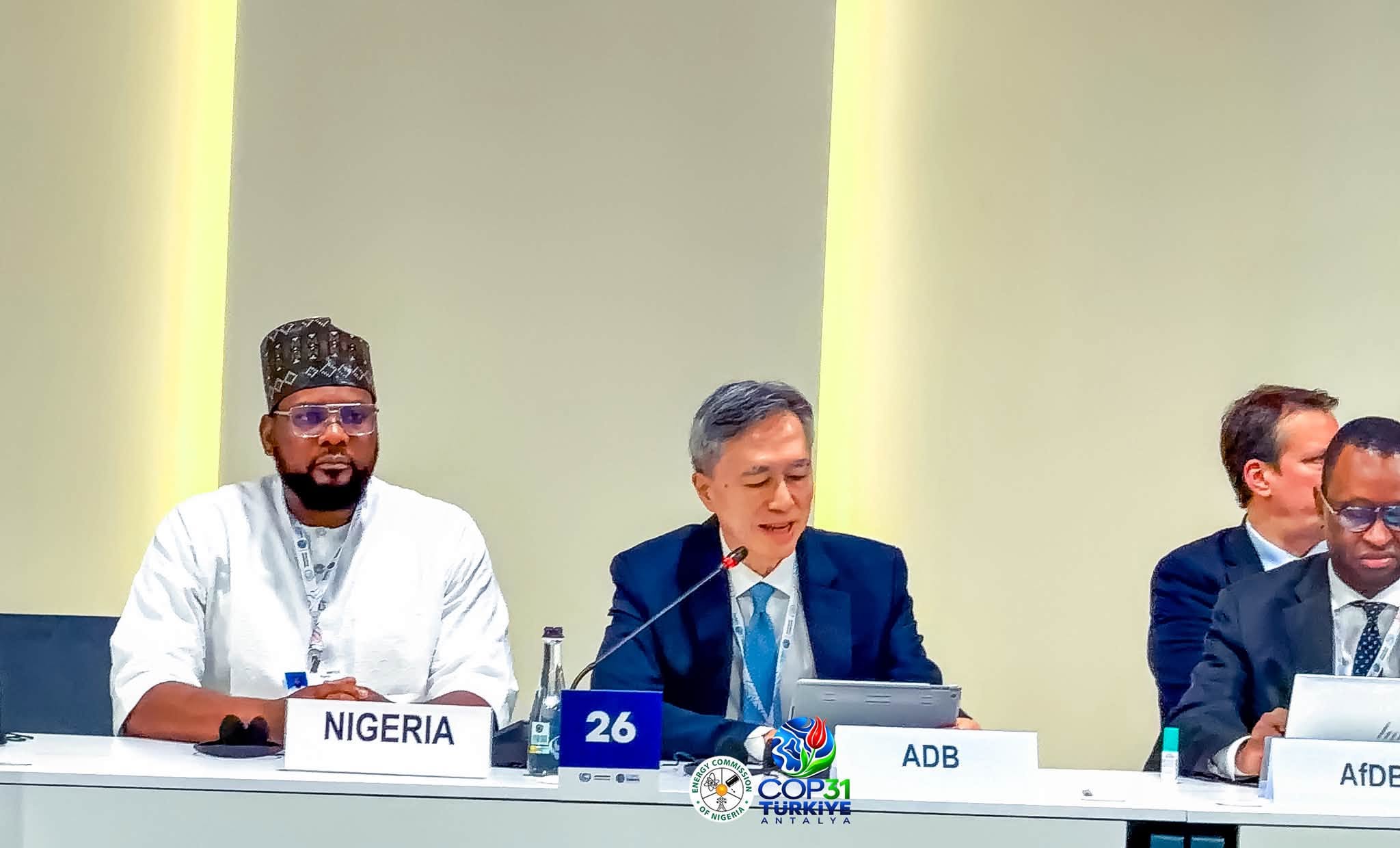
They raised the concerns at the launch and media presentation of reports assessing Nigeria’s Energy Transition Plan and the Nationally Determined Contributions (NDCs) of five African countries, on the sidelines of the 31st United Nations Climate Change Conference (COP31) in Antalya, Türkiye.
The reports, titled Four Years On: Examining Nigeria’s Just Transition Plan and Nationally Determined Contributions in Africa: A Five-Country Analysis, examined climate commitments, policies, financing mechanisms and social protections in Nigeria, Cameroon, South Africa, Togo and Uganda.
Speaking at the event, CAPPA’s Executive Director, Akinbode Oluwafemi, said Africa, despite contributing relatively little to historical greenhouse gas emissions, continued to bear a disproportionate share of the consequences through floods, extreme heat and drought.
He said Nigeria’s climate ambitions were being undermined by continued dependence on oil and gas, inadequate social protections and financing arrangements capable of deepening the country’s debt burden.
Oluwafemi also warned that corporate interests could exploit climate policies for profit while host communities continued to suffer environmental degradation and loss of livelihoods.
“The Nigeria Energy Transition Plan and the Five-Country NDCs Reports offer an opportunity to rethink how energy policies and climate commitments serve people and communities. These reports emphasise that equity, transparency and accountability must remain central in every plan, while ensuring that affected communities have a meaningful voice in decisions that shape their future,” he said.
Presenting the findings, CAPPA’s Assistant Executive Director, Zikorah Ibeh, acknowledged progress in climate policy development and renewable energy deployment but said these had yet to fundamentally change the economic structures sustaining fossil fuel dependence.
“Our assessment recognises progress in policy development and renewable energy deployment but finds that cleaner energy is being layered onto an economy still heavily focused on oil and gas, without sufficient change in the institutions and revenue systems that sustain that dependence,” Ibeh said.
The Nigeria assessment identified a major contradiction between the country’s climate commitments and its fossil fuel production ambitions.
It noted that while Nigeria had committed to achieving net-zero emissions by 2060, it retained an official target of producing three million barrels of crude oil daily by 2030.
The report also cited Cameroon’s decision to advance five oil exploration blocks into contract negotiations with Murphy West Africa and Octavia Energy as evidence of the conflict between climate commitments and continued fossil fuel development.
CAPPA also questioned the promotion of natural gas as a transition fuel, warning that methane, its principal component, accounted for nearly 30 per cent of global warming since the Industrial Revolution.
Ibeh said investments in gas infrastructure that could prolong fossil fuel dependence deserved closer scrutiny, particularly because of their environmental consequences and the public resources diverted from renewable energy development.
The reports further raised concerns about carbon markets and offsetting schemes, arguing that they could allow major polluters to evade direct emissions reductions by claiming compensation through projects elsewhere, including commercial forests and plantations.
Citing Uganda’s climate plan, CAPPA said the country projected significantly greater emissions reductions from commercial plantations than from its two natural-forest restoration measures.
It also referenced documentation by the Oakland Institute on forced evictions associated with a forestry and carbon-credit project in Kachung, Uganda, warning that poorly regulated carbon projects could dispossess rural communities of ancestral lands.
Other News
The organisation called for stronger safeguards to protect Indigenous Peoples, smallholder farmers, rural women and other vulnerable groups from land appropriation in the name of climate action.
On climate financing, CAPPA warned that reliance on loans rather than grants could leave African countries repaying more than they received to tackle a crisis they had contributed relatively little to creating.
“When countries must borrow to confront damage they have done little to cause, climate finance risks transferring the cost of historical pollution to its victims,” Ibeh said.
The report estimated that Nigeria would require $337bn between 2026 and 2035 to meet its climate commitments, with 80 per cent expected from international funding.
It also noted that Togo had made 69.9 per cent of its climate financing requirement conditional on international support, while about 80 per cent of the international financial support recorded for South Africa’s climate commitments in 2021 and 2022 came in the form of loans.
CAPPA cited research by Oxfam and the CARE Climate Justice Centre estimating that approximately $62bn in climate loans received by developing countries in 2022 could generate up to $88bn in repayments over their lifetime.
Beyond financing, the Nigeria assessment identified weak institutional coordination and inadequate social protection as major obstacles to achieving a just energy transition.
It said responsibility for implementing the country’s transition plan was fragmented across institutions, while financing depended heavily on anticipated investments. Workers and affected communities, it added, lacked sufficiently enforceable guarantees on income security, retraining and environmental restoration.
CAPPA maintained that a genuinely just transition must guarantee reliable and affordable electricity, protect livelihoods and restore environments damaged by decades of extraction, particularly in the Niger Delta.
Ibeh, citing World Bank figures, said more than 80 million Nigerians lacked access to electricity as of March 2025, stressing that climate action must deliver improved energy access alongside emissions reductions.
Also speaking, Ndivile Mokoena, Founder and Chief Executive of Yielding Intersectional Movements in South Africa, which participated in the five-country study, said climate commitments must translate into practical action, adequate financing and meaningful support for developing countries.
“The persistent gap between global climate commitments and local realities raises critical questions about political will and economic systems that continue to prioritise profit and growth over human well-being and ecological sustainability,” she said.
Similarly, Acola Amina, Executive Director of Nia Environment and Zero Carbon Alliance in Uganda, called for a climate agenda that reflected the experiences and needs of affected communities.
She said achieving a rights-based, ecofeminist climate agenda required inclusive participation and collective commitment.
As negotiations continued at COP31, CAPPA and its partners urged African governments and negotiators to reject carbon offsetting as a substitute for direct emissions reductions and to insist on safeguards against corporate interference in national climate policies.
They also called for enforceable protections for communal lands and livelihoods, particularly those of Indigenous Peoples, smallholder farmers, rural women and frontline communities threatened by commercial plantations and carbon projects.
The organisations demanded predictable, grant-based climate finance from historically high-emitting countries, arguing that African nations should not be pushed further into debt while addressing the consequences of a crisis they had contributed relatively little to creating.
They further advocated a planned and adequately funded phase-down of fossil fuel extraction, backed by investments in decentralised renewable energy, affordable electricity, workers’ income security, retraining, environmental remediation and livelihood restoration.