Follow Us on Google
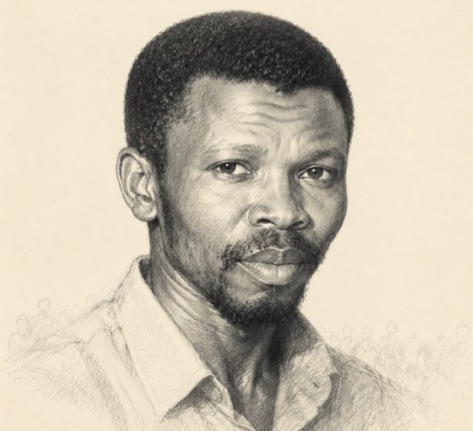
By Noah Nuhu Dallaji
I have no doubt in my mind that the idea behind this gathering is a noble one, a testament to the burning quest for answers to many issues of development and in different formations especially as they relate to enterprise and innovations. I think it is a good strategy which can only help to raise consciousness towards renewal and indeed transformation so that Africa is not left behind in a rapidly changing world. Once more, I salute the organizers for this thoughtful initiative.
I have been asked to speak on “Capacity Building and Skills Development: Preparing Africa’s Next Generation of Leaders” which I find interesting because the inherent issues are at the core of major thoughts and conversations not only in Africa but also around the world for some time now. These issues are currently dictating our realities and will surely shape the future in some very remarkable ways. In this regard, present and future African leaders especially those in business cannot afford to overlook the impact of globalization which describes “how trade and technology have made the world into a more connected and interdependent place”. Thus the net effect has equally made the whole environment so competitive requiring so much innovation to stay in business or stay ahead of competitors.
I actually spoke on the interrelated issues at the side event of the United Nations General Assembly in New York in 2019 and in 2002 when I interfaced with the Liberian Senate. Similarly, the issues engaged my attention at a forum in Ghana in 2021 and in Ethiopia in 2022. With these examples, I must tell you that I am very conversant with this topic. I remember that at the Ghana event, I raised the concern about the character of African leadership as constituting a major impediment to development in the continent. The topic then centered on “The Africa We Want” with the clear assertion that the Africa we want is anchored on a development-oriented leadership built on Afrocentricism.
However, the concern before me today in Kigali is a different one, even if related, within the context of capacity building and skills development in the preparation of the next generation of leaders in the continent.
Thus my framework here is to briefly identify the twin elements of the topic (capacity and skills and the next generation of leaders) and then delve into the nitty-gritty of what it will take in the preparation of the next generation of leaders with the challenging dictates of the 21st Century in an age of critical thinking and innovations.
Both skills and empowerment are allied components in practical terms since they are tailored towards equipping individuals, organizations or communities with the resources, skills and opportunities they need to improve their lives or businesses and achieve their goals for the betterment of societies. I want us to note that the basic empowerment we talk about here is majorly in the context of economic empowerment and the critical concern is the question of needed skills and the very important role it plays in the overall development process. Here we can look, for example, at job training, loans for starting a business, financial literacy, science and technology-based education, strong drive and enterprise, the right exposure and mentality, network or mentorship.
On the other hand, we examine the next generation of leaders as those who are interested and eager to increase their capacity to thrive in their individual lives or organizations, particularly those who are experiencing change, challenges and growth concerns. We have to understand that the next generation of leaders is not bound to a specific generation. Importantly, next generation of leaders challenge themselves to remain relevant, forward thinking and hungry to do better in an era we have so far seen as very competitive. For the above reasons, they seek to identify ways and means to equip themselves with relevant skills, knowledge and networks that will enable them operate more effectively in their chosen spheres of influence.
Having said that, however, and for the sake of my preference and convictions, I want to somewhat restrict the definition of who are the next generation of African leaders to the youths who are heavily tilted to this topic than any other age groups or demographics. I want to crave the indulgence of this esteemed gathering on this note. As President of the African Children Talent Discovery Foundation (ACTDF), I have had the pleasure of working closely with African youths and I can feel their pulse, challenges and aspirations. So, the youths constitute the bulk of the future leaders in Africa and we should see it as such and as a fundamental imperative to make every efforts to address their issues be it in policies and programmes.
With about 400 million population, dynamic energy and ambition, African youths stand at the forefront of shaping the future of the continent in diverse ways. It is estimated that these young people are between the ages of 15 to 35 (youngest continent in the world) and by 2050, one in four people on the planet will be African. In their burning desire for transformation, therefore, education and skill development are basic in equipping them to thrive. Even amidst challenges like poverty, poor access to education (I mean relevant and technology based education in the age of Artificial Intelligence AI and robotics), unemployment and underemployment and leadership constraints, the need for skilling and supporting emerging opportunities for Africa’s vibrant youths is now a major engagement and key to this topic. African youths want impact equity not aid. So let us join them to advance their hope and their ambitions and aspirations. We must emphasize that Africa’s youthful population offers vast potential for economic growth but to fully capitalize on this demographic advantage, it is crucial to provide young people with the necessary skills and meaningful job and investment opportunities. They surely need and deserve broad based incentives either at the level of government, private sector or just public spirited organizations and individuals. At the African Children Talent Discovery Foundation (ACTDF), this is exactly what we have been doing over the years by discovering and harnessing the potentials of the African youths which we nurture for individual development. Every year, we conduct a merit-based selection process to pick some really talented youths from the arts, music and entertainment and sports particularly football and basketball for camp training and practical orientation and development. We do this by engaging experts and legends in the various fields who serve as mentors and at the end of the day, assessment is done and they are empowered in various forms to pursue their individual interest. Many of them are now thriving and that is the joy we derive from these endeavours as an organization. I must add, too, that we have equally supported many brilliant students through educational scholarships in various institutions of higher learning at home and abroad. These are all our self-appointed responsibilities as philanthropic gestures and we believe the society is far better for it. Lest I forget that aside our successes and impact in Nigeria, ACTDF has also replicated this programme of youth empowerment in Liberia, Ethiopia, Congo and currently in Lusaka, Zambia and we hope to do more for the African youths.
So empowerment and skills development are basic to the preparation of the next generation of leaders in Africa and I quite agree with organizers of this forum in this perspective. But such empowerment programmes should be those that focus on creating lasting essential skills, economic opportunities and fostering a mindset of self-reliance which could help in tackling the root causes of poverty and inequality and must be sustainable in a rapidly changing world where innovation is the force driving most successful businesses.
We also emphasize natural abilities, determination to make a difference and that the youths must not give up because the future of the African continent is in their hands This is how we can have more of the youths doing better than what we see in their current remarkable innovative leadership like in the fintech business, industrial entrepreneurship, the thousands of startups in various areas especially in Nigeria, Ghana, South Africa, Morocco, Tunisia and Kenya and creating such other large scale businesses and making their marks .
As I round off on this topic, we should emphasize the vital roles of quality education and skill development, strong drive and enterprise, global exposure and networking, mentorship and entrepreneurial mindset and innovation which are key to the empowerment of the emerging African leaders.
• An address delivered recently by Engr. (Dr.) Noah Nuhu Dallaji, Chairman, African Children Talent Discovery Foundation (Actdf) at The 100 Most Notable Africans Business Investment Summit, in Kigali, Rwanda