Follow Us on Google
From Adesuwa Tsan, Abuja
The outcome of the recent by-elections may have done more than fill vacant seats in the National Assembly; it has redefined the power map of the senate in a way that could shape Nigeria’s governance trajectory for years.
With the All Progressives Congress (APC) securing victory in majority of the contests, the ruling party now edges closer to achieving two-thirds majority in the senate. The implications of this development, analysts say go beyond mere numbers. From the speed and scrutiny of bills to the complexion of executive-legislative relations and even the dynamics of the 2027 presidential elections, the ripple effects are expected to reverberate across the polity.
By-elections: What changed?
The by-elections held on August 16 were necessitated by the death, resignation, or judicial removal of some lawmakers. The configuration of political parties in the senate prior to the elections was APC – 70, PDP – 28, Labour – 5, SDP – 2, APGA – 1 and NNPP – 1, making a total of 107. Two seats were vacant; Edo Central and Anambra South.
Emmanuel Nwachukwu of the All Progressives Grand Alliance (APGA) won the Anambra South Senatorial District by-election decisively with support from Governor Chukwuma Soludo, scoring 90,408 votes to replace the late Senator Ifeanyi Ubah. Nwachukwu’s victory made him the first APGA senator from the zone. Similarly, the Governor Monday Okpebholo-backed candidate, Joseph Ikpea of the APC won the election to fill the Edo Central senatorial seat which he vacated when he won the gubernatorial election.
With these wins, the APC now commands 71 seats in the 109-member senate. However, Daily Sun gathered that the impending defection of another opposition senator to the APC will soon make the number 72. The constitution requires 73 seats for a two-thirds majority – just one seat shy. This margin is even more insignificant with the unfolding political realignments involving opposition senators.
The Senator Wadada factor and growing defections
In what could seal the deal in APC’s favour, Senator Aliyu Wadada of Nasarawa State, citing internal crisis, days ago resigned his membership of the Social Democratic Party (SDP). He is widely expected to formally announce his defection to the APC when the senate reconvenes from its annual recess on September 23. Wadada’s move is not an isolated event but part of a broader trend of defections driven by both political survival instincts and the allure of being aligned with the ruling party ahead of the 2027 general elections.
If Wadada joins the APC, the ruling party’s tally will rise to 72. But APC strategists are not stopping there. There are strong speculations that a handful of senators from the Peoples Democratic Party (PDP) and smaller parties are also considering jumping ship, citing intra-party crises, diminishing opposition influence, and promises of plum committee positions.
Why two-thirds majority matters
In legislative parlance, a two-thirds majority is more than just a superlative achievement, it is the threshold for making some of the most consequential decisions in a democracy. Daily Sun’s findings reveal that under Nigeria’s 1999 Constitution, amending the Constitution requires the approval of two-thirds of both chambers of the National Assembly, as well as two-thirds of the 36 state Houses of Assembly. For the senate, that means at least 73 votes.
A two-thirds majority also becomes critical in situations such as overriding a presidential veto on a bill or initiating impeachment proceedings against the president or vice president. For the APC, however, the immediate value of achieving such dominance lies in the ability to control the legislative agenda without any opposition pushback.
Senator Sani Musa (APC, Niger East) defended this development in an interview: “What Nigerians call dominance is what I see as stability. When one party commands a supermajority, there is clarity of direction. It reduces needless bickering and allows us to deliver laws that can support the president’s Renewed Hope Agenda.”
Implications for scrutiny of bills and motions
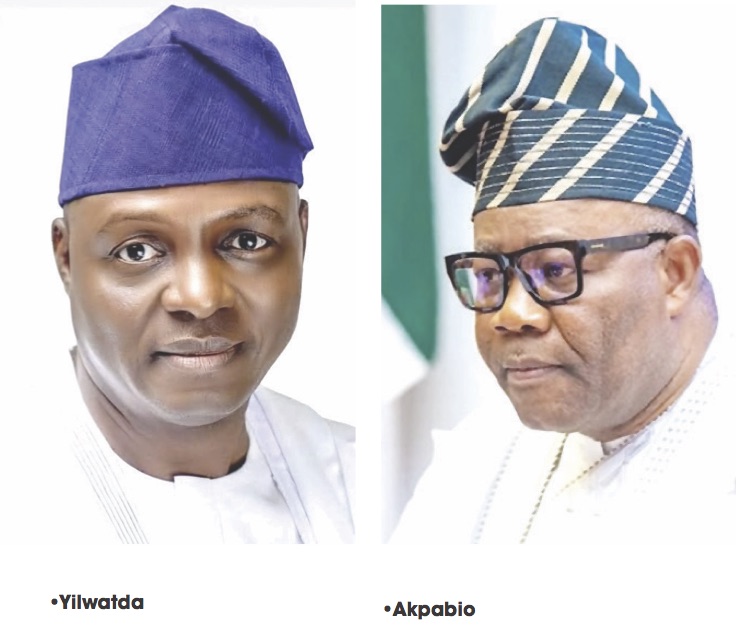
One of the cornerstones of legislative responsibility is to subject executive proposals to rigorous scrutiny. A Senate dominated by the APC to the tune of two-thirds will dilute this critical oversight function. While the current senate leadership under Senator Godswill Akpabio has maintained a cordial relationship with President Bola Tinubu, there have been instances where opposition voices forced debates on sensitive issues such as tax reforms and insecurity to be stepped down and compromises reached before they scaled through eventually. With an overwhelming majority, dissenting voices could become even more marginalised in the chamber. Critics fear this may lead to bills’ total submission to the authority of the Executive, leading to a situation where legislations are passed with minimal or no interrogation.
As Dr. Sam Amadi, a governance expert, observed in a recent interview: “Democracy thrives on checks and balances, not unanimity of purpose. When one party dominates to that extent, the quality of legislative scrutiny is often the first casualty.”
However, APC loyalists argue that having a two-thirds majority does not necessarily equate to legislative docility. They point to the possibility of intra-party dissent as a safeguard against blind conformity.
Senator Opeyemi Bamidele, Senate Leader, dismissed criticisms branding the senate as a rubber stamp: “Calling us rubber stamp is unfair and simplistic. We have rejected proposals from the Executive before, and we will do so again if necessary. What we have now is a partnership for progress, not subservience.”
Other News
Executive-legislative relations and governance
The relationship between the Executive and Legislature has historically oscillated between cooperation and confrontation. Under the current dispensation, President Tinubu has enjoyed relative peace with the National Assembly, a stark contrast to the turbulent era of Bukola Saraki’s Senate presidency.
A supermajority for the APC could further cement this harmony. For the Executive, this is a dream scenario– a legislature that aligns with its priorities, from budget passage to policy reforms. Such alignment could accelerate the implementation of Tinubu’s economic agenda, including the controversial fuel subsidy removal, unification of exchange rates, and tax reforms.
Senator Michael Opeyemi Bamidele explained this synergy: “Strong alignment between both arms means faster passage of key reforms. It does not mean we will not interrogate policies. It only means the country will not suffer gridlock like in the past.”
But the downside is the risk of legislative independence being compromised. A Senate too eager to please the Executive could fail to interrogate policies that have profound socio-economic consequences. Nigerians have vivid memories of how poorly scrutinised loans and contracts in previous administrations snowballed into debt crises and allegations of corruption.
Impact on Nigeria’s political landscape and 2027 presidential elections
rength in the Senate is the psychological boost it gives the party as it sets its sights on 2027, given that politics is a game of perception, and controlling the legislature enhances the ruling party’s visibility.
Senator Tokunbo Abiru (APC, Lagos East) framed it differently: “For us, it’s about providing the president with the tools to succeed. If the government fails, Nigerians won’t blame only Tinubu; they will blame the senate too. That’s why having a clear majority is in the interest of governance.”
With governors as key players in determining Senate seats, a two-thirds majority could also deepen APC’s hold at the subnational level. The senate is often a retirement home for outgoing governors, and the prospect of an APC-dominated chamber will likely influence alignments during the 2027 governorship elections.
More significantly, legislative dominance could provide the APC machinery with the institutional leverage to shape electoral reforms in its favour. The debate on electronic transmission of results, campaign finance limits, and internal party democracy could all tilt depending on the senate’s disposition.
For the opposition, the emerging scenario is alarming. The PDP, already battling internal fractures, risks further haemorrhage as ambitious politicians defect to the ruling party, Daily Sun further gathered. The Labour Party, while energised by urban youth support, investigations reveal, seems to lack the structure to significantly alter the equation in the senate, at least in the short term.
If the APC maintains its current trajectory and secures a two-thirds majority before 2027, the presidential election could become a contest of personalities rather than structures, a situation that historically favour’s the ruling party.
While APC basks in its recent gains, the opposition parties face an existential test. The PDP, which once prided itself as Africa’s largest party, is now a pale shadow of its former self, wracked by leadership tussles and defections. The Labour Party’s momentum after the 2023 elections appears to be waning, with several of its lawmakers reportedly frustrated by limited influence in a Senate dominated by APC and PDP heavyweights.
Political analyst, Jide Ojo captured the mood succinctly in a recent commentary: “The opposition in Nigeria is like a team that has lost its bench strength. Without internal cohesion and strategic alliances, they risk becoming mere spectators in a game they once dominated.”
A delicate balance of power
As the senate resumes from its recess on September 23, all eyes will be on defections and realignments. Senator Wadada’s anticipated move to the APC could be the wave that propels the ruling party to the coveted two-thirds threshold.
For now, the APC’s march towards legislative supremacy seems unstoppable. Yet, in the intricate dance of Nigerian politics, nothing is permanent. What is certain is that the coming months will redefine the balance of power, not just in the senate but across Nigeria’s entire political landscape.
But the question remains: Will a supermajority in the senate usher in an era of stability and rapid governance, or will it erode the very checks and balances that safeguard democracy? It seems only time will tell.