Follow Us on Google

Burkina Faso’s National Conference has authorised the ruling junta to hold power for three years, potentially setting the West African country on a collision course with international partners.
The junta seized power in a January coup against President Roch Kabore, blaming him for failing to contain surging violence by Islamist militants.
The putsch was led by Lt.-Col. Paul-Henri Damiba, who is now the interim president.
The charter was approved by the conference and signed by Damiba after a day-long debate in the capital Ouagadougou.
The new regime would establish a transitional government, made up of 25 ministers and a 71-member parliament.
The Economic Community of West African States (ECOWAS), which has imposed strict sanctions against other regional countries in response to military coups, did not respond to a request for comment about whether it found the three-year transitional period acceptable or not.
An African Union spokesperson referred a request for comment to ECOWAS.
Burkina Faso’s coup was the fourth in West Africa in 18 months, following two in Mali and one in Guinea.
The development raised concerns of a backslide in democracy in a region that had been shedding its reputation as the continent’s”coup belt”.
A commission that drafted the charter had proposed a two-and-a-half year transition, saying the junta needed about two years to stabilise the country and organise elections.
However, the national conference extended it to three years.
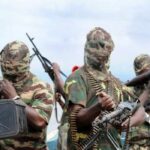
Burkina Faso, alongside neighbours Mali and Niger, was struggling to contain attacks by armed militants linked to al Qaeda and Islamic State who have killed thousands of people and displaced hundreds.
Eddie Komboigo, an opponent of Kabore and close ally of former president Blaise Compaore, who was ousted in a 2014 uprising, welcomed the charter.
“It is true that not everyone is going to be happy but it was the consensus that we reached,” Komboigo said.
He urged the junta to negotiate with international leaders to reach consensus on the length of the transition.
Burkina Faso was suspended from ECOWAS and the African Union’s decision-making bodiesafter the coup.
Both declined to impose additional sanctions, and ECOWAS said in February that the junta had shown willingness to work with it to organise elections.
The sanctions against Mali, which include closing borders with ECOWAS members and suspending non-essential financial transactions, have forced Mali to default on more than 100 million dollars in interest and capital payments on its debt. (Reuters/NAN)