Follow Us on Google


•Veritas varsity’s best graduate shares her emotional struggles
By Fred Ezeh
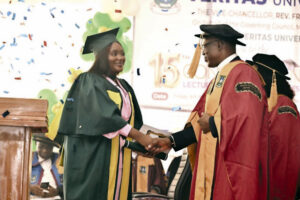
Olivia Anigbogu has emerged the overall best-graduating student 2026 of Veritas University, Abuja. She came out with a CGPA of 4.98 out of 5.00 in Software Engineering.
In this interview, she speaks about the emotional struggles behind her academic success, the sacrifices she made and the support system that keeps her going.
How does it feel to achieve this remarkable feat and what was your final CGPA?
Honestly, I feel fulfilled. It was wonderful to see four years of hard work, commitment and sacrifice culminate in this achievement. Beyond the recognition, I am grateful for the journey, the challenges I overcame and the personal growth I experienced along the way. My final CGPA is 4.98 out of 5.00, earning me first class honours in Software Engineering.
I am also honoured to have emerged as the valedictorian and overall best graduating student of Veritas University, Abuja, class of 2026. Above all, I am grateful to God for making this possible. I recognise that this achievement is not by my strength alone, and I deeply appreciate the support and opportunities I received throughout my university journey.
At what point did you realise you could emerge as the best graduate?
When I joined Veritas University in 2022, I had an ambitious goal: to graduate with a perfect CGPA of 5.00 out of 5.00. My first semester result was a GPA of 4.92, which was disappointing because it made my initial goal seem less attainable. However, I decided not to allow that setback to discourage me. Instead, I focused on improving my performance and maintaining a strong CGPA throughout my undergraduate years. That approach paid off. I went on to achieve a 5.00 GPA in six of my eight semesters.
I began to see the possibility of graduating as the best student during my final year, after receiving my first-semester results. I calculated my CGPA myself and realised that I was still very close to my original goal. That was when I became more conscious of the possibility. I knew I had worked consistently over the four years, but I also understood that I needed to remain focused until the final results were confirmed. Looking back, I am proud that I did not allow one disappointing result to define the rest of my academic journey.
What inspired you to study Software Engineering, and how was the experience compared with your initial expectations?
Initially, I wanted to study Computer Engineering. However, when I visited Veritas University to process my admission, one of the admission officers introduced me to Software Engineering, which was a relatively new programme at the time. I was encouraged to research it before making a decision.
After looking into the course, I realised it could be a better fit for me. I was attracted by its four-year duration, compared with the five years required for Computer Engineering. But more importantly, I recognised how well it aligned with my strengths. I had always enjoyed mathematics, numbers, analytical thinking and problem-solving. Software Engineering offered an opportunity to develop those abilities and apply them to real-world challenges.
My experience has gone beyond what I initially expected. While I have enjoyed learning how to develop software, I have also discovered interests in human-centred technology, innovation and technology policy. The experience has taught me that technology is not just about writing code. It is also about understanding people, identifying problems and creating solutions that make a meaningful difference.
What strategies helped you maintain such an impressive academic record?
My approach was built around consistency and active learning. One habit that helped me was taking notes during lectures. I found that writing things down helped me process and retain information better. I also enjoyed tutoring my classmates. Whenever someone asked me to explain a topic, I would take my time to work through it with the person. I noticed that teaching others strengthened my own understanding because I had to organise the information and explain it clearly.
I also took continuous assessments seriously because I understood that they contributed to my final results. I did not want to wait until examinations before putting in the work. In addition, I had a weekly revision routine. On Thursdays or Fridays, I tried to spend about two hours in the library reviewing everything we had covered during the week. If I could not make it to the library, I studied in my room instead. These habits helped me stay on top of my coursework and build a strong understanding of my subjects rather than having to learn everything from scratch during examination periods.
What were the most challenging courses you encountered and how did you overcome them?
One course that challenged me was Data Structures and Algorithms. I initially found some of the concepts difficult to understand and apply. But I kept working through them until I developed a better understanding. Interestingly, it eventually became one of my best courses, and I performed very well in it. That experience taught me not to equate initial difficulty with inability.
Sometimes, you simply need more time, practice and a different approach to understand something. Beyond individual courses, the demands of Software Engineering required a lot of commitment. Between lectures, practicals, projects and assignments, I also had competitions, exhibitions and other extracurricular activities to prepare.
Managing those competing responsibilities was a learning process. I had to become more intentional about planning my time and ensuring that my extracurricular involvement did not come at the expense of my academics.
Were there lecturers or mentors who significantly influenced your academic performance?
Absolutely. Several lecturers contributed to my academic journey through their teaching, guidance and encouragement. I would like to appreciate the late Supreme Okoh, Mr. Tio Stanley, Dr. Chibueze Ikpo, Miss Mary Kama, Mr. Dickson Dako, Dr. Emmanuel Mkpojiogu and Dr. Olajire Julius. I am especially grateful to Dr. Chibueze Ikpo, who supervised my final-year project and guided me throughout the process.
What I appreciated about these lecturers was that their contributions went beyond the classroom. Some of them took an interest in my development, encouraged me when I felt overwhelmed and reminded me of what I was capable of achieving. Having people who believe in you and are willing to support your growth can make a significant difference. I am genuinely grateful to have had that kind of encouragement during my time at Veritas.
Beyond academics, what personal sacrifices did you make to achieve this distinction?
I would say the biggest sacrifice was learning to prioritise my long-term goals over some of the things I enjoyed in the moment. For instance, I love sleeping, but there were times when I had to give up some sleep to complete assignments prepare for examinations or meet deadlines.
I also sometimes had to choose studying or preparing for an academic activity over social outings and other things I would have enjoyed. However, I would not say I gave up university life entirely. I still participated in extracurricular activities, built friendships and enjoyed the opportunities available to me.
I simply had to recognise when my academic responsibilities needed to come first. Ultimately, I learned that achieving a goal sometimes requires making deliberate choices about how you spend your time.
You mentioned making sacrifices. Were there moments when the academic pressure became overwhelming, to the point that you considered giving up? What kept you going?
Absolutely. There were moments when the demands of school and my other commitments became overwhelming. Sometimes, the pressure accumulated to the point where I would break down and cry. During those periods, my support system made a significant difference. I would pray, speak to God, call my family or reach out to close friends.
I remember having phone conversations that lasted three hours or even longer, simply talking about how I felt, sharing my frustrations and receiving encouragement. Sometimes, I did not need anyone to offer a solution. I just needed someone to listen and remind me that things would eventually be okay. I am grateful for the friendships I built during university.
My friends and family helped me through some difficult moments, and their presence made the journey easier. Those experiences taught me that strength does not mean never feeling overwhelmed. It also means recognising when you need support, allowing yourself to rest and finding the courage to continue.
How did you balance academic responsibilities with extracurricular activities, friendships and other aspects of university life?
One idea that has always guided me is the economic concept of a scale of preference. I enjoyed Economics in secondary school, and I remember learning about arranging needs and wants according to their importance. I have applied that principle to managing my time. Throughout university, I participated in competitions, exhibitions, leadership activities and projects while also making time for friendships and other aspects of university life.
I realised that balance does not necessarily mean giving everything equal attention. It means recognising what requires your attention at a particular time and adjusting accordingly. For instance, when I had an important examination approaching, I knew I needed to prioritise studying.
When my academic schedule was less demanding, I could dedicate more time to extracurricular activities and spending time with friends. That approach helped me enjoy the wider university experience without losing sight of my academic goals.
What role did your parents and family play in your becoming the best graduating student?
My parents played a huge role in my academic journey through their prayers, financial support and encouragement. Their financial support meant that I could focus on my studies and participate in different activities without constantly worrying about meeting my basic needs. Their prayers also gave me a sense of reassurance throughout my time in school.
Another thing I appreciate is how they encouraged academic excellence from a young age. From primary school through secondary school and university, whenever I came home with good results, they would reward me with gifts, sometimes things I genuinely wanted. That became something I looked forward to every semester. It motivated me to work hard, but more importantly, it made me feel that my efforts were recognised and celebrated.
When I look at this achievement, I know it is not mine alone. My parents’ prayers, sacrifices, encouragement and the values they instilled in me all contributed to the person I am today. I am deeply grateful to them.
You described your third year as particularly challenging. What made that period difficult and what lessons did you learn?
I would say my third year was probably the most challenging. I was doing well academically, but I was also preparing for competitions, including the University Duel Battle of the Best Brains and the Smart Challenge Competition. I have always enjoyed mathematics and problem-solving, but these competitions taught me that knowing an answer and having the confidence to give it under pressure are two different things.
There were moments when I knew the answer but hesitated to press the buzzer because I was afraid of getting it wrong. I sometimes second-guessed myself, which was frustrating because I knew I was capable of doing better. The preparation was also demanding.
We had to study topics ranging from general knowledge to data analytics and applied mathematics, while practising to answer questions within just eight seconds. All of these happened alongside our regular academic responsibilities.
I was fortunate to have amazing teammates, Benedict Osadolor and Ojie Abhulimen. We encouraged one another and worked hard together. During the Easter break, we spent days in school practising before travelling to Lagos for the competition.
That experience taught me the importance of trusting myself under pressure. It also showed me how much the right team can contribute to your growth. Having people who encourage you and believe in your abilities makes challenging experiences easier to navigate.
How would you assess the academic environment at Veritas University, and what specific opportunities contributed to your success?
I would describe the academic environment at Veritas University as very supportive. One thing I appreciated was that lecturers cared not only about students’ academic performance but also about their personal development. Their encouragement and willingness to offer guidance contributed significantly to my experience.
Another opportunity I would highlight is the Veritas Skills Booth. In my final year, I wanted to gain experience beyond my regular academic work. I saw an announcement on the university’s official Instagram page about opportunities for students to gain work experience. I was excited because it was exactly the kind of opportunity I had been looking for.
Through the internship, I learned a lot from mentors. I gained practical experience, developed new skills and got a better understanding of professional life outside the classroom. I believe opportunities like this are important because university should prepare students not just academically, but also for the practical realities of life after graduation.
The combination of supportive lecturers and opportunities such as the Veritas Skills Booth made my experience at Veritas more enriching. Veritas University places emphasis on discipline, moral values and character formation.
How has this influenced your personal development beyond academics?
Veritas University has helped me understand that success should not be measured only by what you achieve, but also by how you achieve it. The university’s emphasis on discipline, moral values and character formation reinforced the importance of integrity, responsibility, respect and service.
My leadership experience also helped me put these values into practice. As Financial Secretary of the Software Engineering Chapter of NACOS, I learned the importance of accountability and transparency when entrusted with responsibilities. I have also come to appreciate that education should equip people to contribute meaningfully to society, not just pursue personal success. Those are values I intend to carry with me beyond graduation.
What would you consider your most memorable experience at Veritas? Is there anything you would have done differently?
My most memorable moment was emerging as the Valedictorian and overall best graduating student of Veritas University, Abuja, Class of 2026. Looking back at four years of academic work, competitions, leadership responsibilities and personal growth, it is an incredible feeling to see everything culminate in this achievement.
I also have fond memories of participating in competitions and innovation activities, including winning the African Telecommunications Union, African Innovation Challenge and the FPDI Policy Challenge. Those experiences allowed me to explore interests beyond my academic programme and appreciate the wider opportunities university offers.
If I could do anything differently, I would have started exploring some of my interests outside the classroom earlier. I discovered my interest in areas such as technology policy, human-centred technology and digital transformation, and I would have loved to explore them sooner. Nevertheless, I am grateful for the journey because every experience contributed to who I am today.
What are your immediate plans after graduation? What advice would you give students aspiring to achieve similar academic excellence?
My immediate plans are to continue developing professionally and exploring opportunities at the intersection of technology, policy and innovation. With my background in Software Engineering, I am interested in how technology can address real-world challenges, especially in areas such as digital transformation, technology policy and inclusive innovation.
I also intend to pursue postgraduate studies in the next two to three years, with a strong interest in technology policy and human-centred approaches to technology. Beyond that, I hope to contribute to initiatives that create meaningful impact, especially those addressing challenges affecting businesses and underserved communities in Nigeria.
My advice to students aspiring to achieve academic excellence is to be consistent, take their academics seriously and trust God throughout the journey. Do not wait until examinations are approaching before you begin preparing. Make it a habit to understand what you are being taught, ask questions and take responsibility for your learning.
I would also encourage students to explore opportunities beyond the classroom. Participate in competitions, develop your skills, take on leadership responsibilities and discover what interests you. Most importantly, do not define your progress by other people’s achievements. Focus on becoming better than you were yesterday.
Academic excellence is not always about being the most naturally gifted person in the room. It is about making the most of the abilities God has given you, remaining disciplined and being willing to put in the work. And when you eventually achieve your goals, remember to remain grateful, humble and willing to help others.