Follow Us on Google
• Leaders in search for peaceful coexistence, mutual understanding at PIDAN retreat
From Jude Dangwam, Jos
Plateau State has continued to battle insecurity, communal divisions and the challenge of turning its vast natural resources into meaningful development for its people. The question of what will it take to build one Plateau was at the heart of the just concluded 2026 leadership retreat of the Plateau Initiative for the Development and Advancement of the Natives (PIDAN), the umbrella body of all the over 50 ethnic groups in the state.
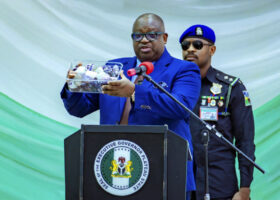
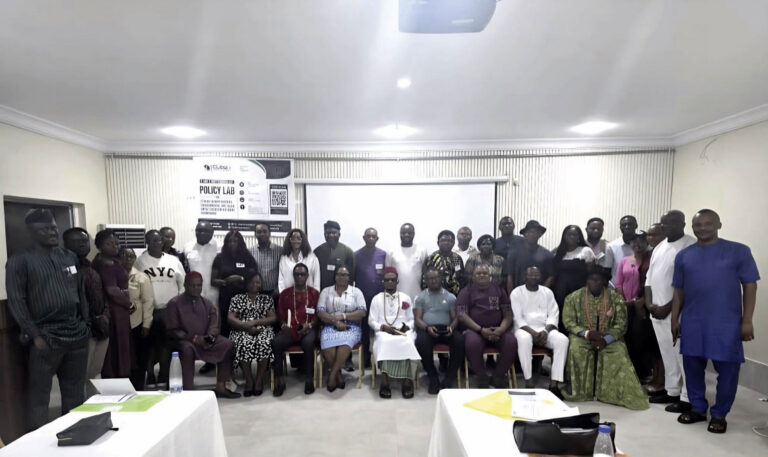
The retreat at Crispan, in Jos, the capital of the state, with the theme “Building a United Plateau: Harnessing Our Diversity and Mineral Wealth for Sustainable Peace and Development,” brought together government officials, traditional and religious leaders, civil society representatives and leaders of the state’s diverse ethnic nationalities.
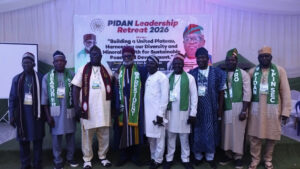
It was more than another gathering of stakeholders. The retreat opened up difficult conversations about the issues that have continued to hold Plateau back. Ethnicity, religion, political exclusion, historical grievances and competition over land and resources.
The message from the speakers was that the state’s diversity needed not be a source of conflict but has been manipulated, just as its mineral wealth should not become another opportunity squandered to the detriment of future generations.
PIDAN president, Ambassador Danjuma Nanpon Sheni, said the organisation had over the years built a reputation around dialogue, advocacy, research and constructive engagement.
He said the task before the present leadership was not simply to preserve the legacy of the organisation’s founding leaders but to strengthen the institution for those who would come after them. “Our responsibility today is not only to preserve the legacy of PIDAN but to strengthen it for the future,” Sheni said.
According to him, the organisation would continue to promote unity, community development, youth empowerment and the preservation of Plateau’s cultural heritage among which is the mineral deposits in the state.
Sheni reiterated that PIDAN’s non-partisan character has allowed it to engage governments, traditional institutions, religious leaders, civil society organisations and development partners in the search for peaceful coexistence and mutual understanding.
He also pointed to the organisation’s advocacy on security, constitutional rights and equitable development, as well as its efforts to research and document the history of Jos and the crises that has shaped Plateau State.
The retreat came against the backdrop of the spike in the security situation in some parts of the state, with speakers stressing that lasting peace and security remain central to Plateau’s economic and social progress.
The Plateau State Governor, Caleb Manasseh Mutfwang, a lawyer, re-echoed that unity is indispensable and described the retreat as timely, important to the growth and development of the state. He commended PIDAN for sustaining its advocacy for peaceful coexistence and for creating a platform for deeper discussions about the economic advancement of Plateau people.
Mutfwang said the state had opportunities beyond its mineral wealth, particularly in agriculture and livestock production, and urged citizens to embrace sectors capable of creating jobs and lifting families out of poverty.
“Our differences can become a source of assets that we can leverage upon to advance our people. We need a culture of collaboration in which leaders and citizens place the collective interest of Plateau above partisan considerations,” Mutfwang stated
He noted that unity was indispensable to the state’s progress, particularly at a time when Plateau was confronting security challenges while seeking to unlock its economic potential. “If there was a time that PIDAN was needed, I want to say the time is now. PIDAN has come to stay,” Mutfwang firmly stated
The governor added that his administration would continue to work with relevant stakeholders in community engagement, peacebuilding and the long-term development of the state.
The keynote speaker, Prof. Clement Dakas, a senior advocate of Nigeria and chairman of the Nigerian Law Reform Commission, took the conversation beyond the familiar calls for unity. For him, the word “building” in the retreat’s theme was deliberate.
He said building is not something achieved by mere wishes, it demands planning, sacrifice, determination, deploying the right tools and the firm resolve to finishe what has been started.
“You don’t build by wishful thinking, you must have a plan and a resolve. You don’t build by complaining, and you don’t build by failing to take responsibility,” he challenged leaders
The legal expert asked Plateau people to look inward and consider whether they were truly prepared to make the sacrifices required to build the state they want. “Are we prepared to make the effort to build a united Plateau? What exactly are we prepared to sacrifice to achieve the Plateau that we want?” he asked.
Dakas warned that a lasting unity could not be built on ethnic chauvinism, religious intolerance, tribalism, political exclusion, nepotism, corruption, impunity and mutual suspicion. Instead, Plateau must rest on justice, equity, inclusion, integrity, mutual respect, responsible leadership and a shared commitment to the common good.
“If Plateau stands on the solid rock of justice, equity, inclusion, integrity, mutual respect, responsible leadership and a shared commitment to the common good, then we have something that can stand the storms,” he posited
One of the sharpest points in Dakas’ address was his insistence that individuals must also take responsibility for the divisions around them. Rather than constantly blaming governments, ethnic groups or other communities, he challenged citizens to examine their own attitudes and actions, questioning: “Are you part of the problem, or are you part of the solution?”
He also challenged what he described as double standards in the way people interpreted justice and political developments. “Is it when your ethnic group benefits, do you call it justice? But when another ethnic group benefits, you call it marginalisation,” he asked.
Dakas questioned whether people were willing to stand up for justice when another community was suffering or whether concern only come when their own people are affected. Referring to the ongoing violent attacks in Mangu, Riyom and Bassa local government areas of the state, he warned that ignoring the suffering of others would eventually leave everyone vulnerable.
He also urged citizens to be more responsible in their use of social media, particularly by verifying inflammatory information before sharing it. “I am not here to tell you what you want to hear. I have a responsibility to tell you what you need to hear,” he stated
Dakas urged participants to move beyond echo chambers and be willing to listen to opposing views, acknowledge mistakes and confront genuine grievances without sacrificing the common good: “We can choose, at this retreat, to become voices of reason.”
For Dakas, peace meant more than the absence of gunshots. He said Plateau needs a kind of peace that allows people to wake up each day without fear and go about their lives with confidence. “We want peace that is sustainable, peace that creates an environment in which our people can wake up without fear.
“It should be a peace, where farmers can cultivate their land, traders can do business freely, children can go to school safely and investors can have confidence in the future,” he emphasized
The keynote speaker noted that communities should not have to live constantly looking over their shoulders. He argued that “peace is not the end of the journey, peace is an enabler, without it, development would remain difficult to achieve.
Plateau is home to numerous ethnic nationalities, languages, traditions, histories and religious communities. Over the years, that diversity has often been viewed through the prism of conflict. However, Dakas argued that diversity itself was not the problem. The question, he said, was how people chose to manage their differences.
“Diversity can become a fault line, or we can be deliberate about making sure that our diversity is an asset,” he asserted while challenging leaders and citizens to move beyond simply tolerating one another and begin genuinely valuing one another.
“How do we move from asking, ‘What is the need of my ethnic group?’ to asking, ‘What kind of Plateau are we going to bequeath to our children?’” According to Dakas, the theme of the retreat itself was an admission that Plateau was not yet as united as it ought to be.
He identified “ethnicity, religion, politics, competition over land and resources, struggles for political power and patronage, historical grievances and the manipulation of identity” as issues that require honest discussion. He asked whether the state had developed a strong sense of citizenship to rise above narrow ethnic and other identities.
The discussion also focused on turning Plateau’s mineral resources, which Dakas described as both a major opportunity and a potential source of conflict. He raised questions that, in his view, must be at the centre of any serious conversation about mining in the state.
“Who owns the resources? Who grants the licence? Who benefits? Who bears the environmental costs?” What becomes of host communities, where did mining revenues go, whether communities are properly consulted and compensated, and whether mining activities are carried out responsibly?”
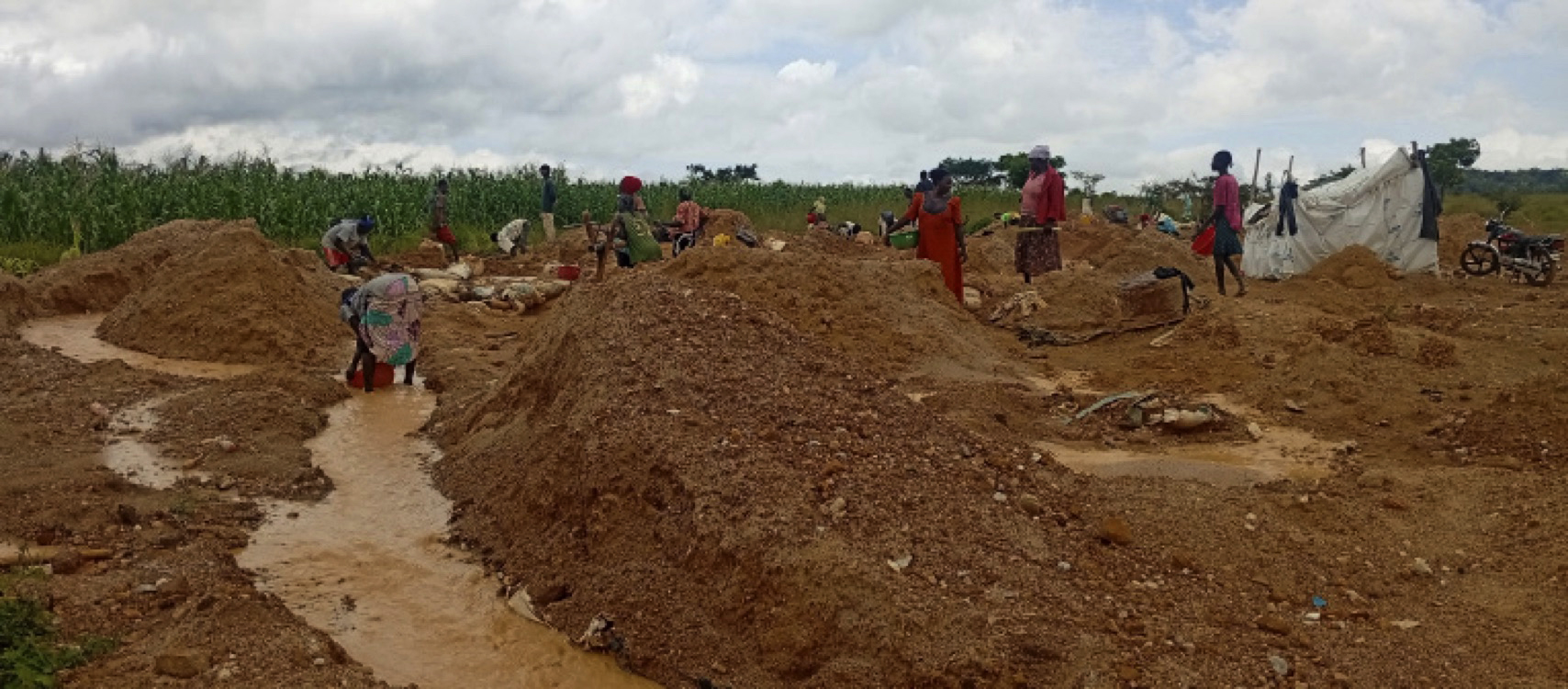
Those questions are particularly important in Plateau, where abandoned mining sites have become a growing environmental and safety concern. The Federal Government recently said more than 4,000 abandoned mining pits had been identified in the state, a reminder of the consequences of decades of poorly regulated mining activities in the state.
Dakas warned against an extractive system in which minerals were taken from communities while little meaningful development left behind, saying: “The objective must be to convert mineral wealth into human development.”
While welcoming efforts to reclaim abandoned mining sites and put them to productive use, he strongly maintained that communities must be involved from the beginning. Hence PIDAN has a role to play in ensuring that host communities were not reduced to spectators in decisions affecting their land and livelihoods.
Dakas also drew from his own experiences in public life to illustrate how questions of identity continue to shape political and social life in Plateau. He recalled that his appointment as Attorney-General and Commissioner for Justice of Plateau State was viewed differently by various groups because of questions surrounding ethnicity, ancestry and place of origin.
The experience, he said, showed how a person could be considered an insider in one context and an outsider in another, depending on which identity was being emphasised.
He warned against politicians who manipulate such sentiments for personal advantage. The solution, he said, was not to pretend that ethnicity did not matter, “Ethnicity is important, it is how we manage ethnicity and whether we deploy it as an asset or as a weapon against other people.”
Beyond the discussions and speeches, Dakas proposed practical steps for PIDAN. He suggested the establishment of a PIDAN Peace and Development Programme to focus on research, leadership training and policy advocacy in peacebuilding, natural resources governance and community development.
He also proposed a standing inter-ethnic dialogue and reconciliation council that could help facilitate early mediation and sustained engagement among indigenous communities. Other recommendations included a Plateau Youth Leadership and Entrepreneurship Programme, focusing on mining, agriculture, technology and civic responsibility.
Dakas also called for continued support for cultural and economic initiatives that would showcase Plateau’s heritage, tourism potential and investment opportunities.
He further urged collaboration with the University of Jos on the establishment of a Centre for Middle Belt Studies.
Another part of Dakas’ recommendations focused on the late J.D. Gomwalk, whom he described as one of the key figures in the development of the University of Jos. He recalled earlier efforts to secure a posthumous honorary doctorate for Gomwalk, noting that the proposal encountered objections linked to unresolved debates about his historical legacy.
Dakas said the time had come for a fresh conversation about how the university and the wider Plateau community could recognise Gomwalk’s contributions: “If an honorary doctorate was considered inappropriate, a major structure at the university could be named after him,” he suggested
As the retreat came to an end, Dakas returned to the central idea that had shaped his address: building Plateau’s future. He said building the state could not be left to government alone. Nor could it be the exclusive responsibility of political parties, ethnic groups or religious communities.
“The Plateau project must be a collective undertaking, not the project of the government in power, one ethnic group or one religious community. The builders are all of us. The Plateau that we need, the Plateau that we need to build will not happen by accident, and it must be built.
“Let this retreat mark the beginning of a renewed covenant, a covenant to build one Plateau, united in purpose, prosperous in opportunity and secure in peace, for the benefit of present and future generations,” Dakas declared.
The Senior Special Assistant to the President on Community Engagement, Dr. Mrs Abiodun Esiet, who was in attendance, reaffirmed the Federal Government’s commitment to closer engagement with communities, stressing that sustainable development could not thrive without peace and security.
She said community engagement must move beyond offices to direct interaction with affected communities so that their experiences, concerns and recommendations could inform government responses.
The Chairman and President Joint Traditional Council, Gbong Gwom Jos, Da Jacob Gyang Buba; His Royal Highness the Ngolong Ngas, Nde Jika Golit, religious leaders at the retreat similarly called for collective responsibility in rebuilding trust and strengthening social cohesion and healthy mining activities in the state.