Follow Us on Google
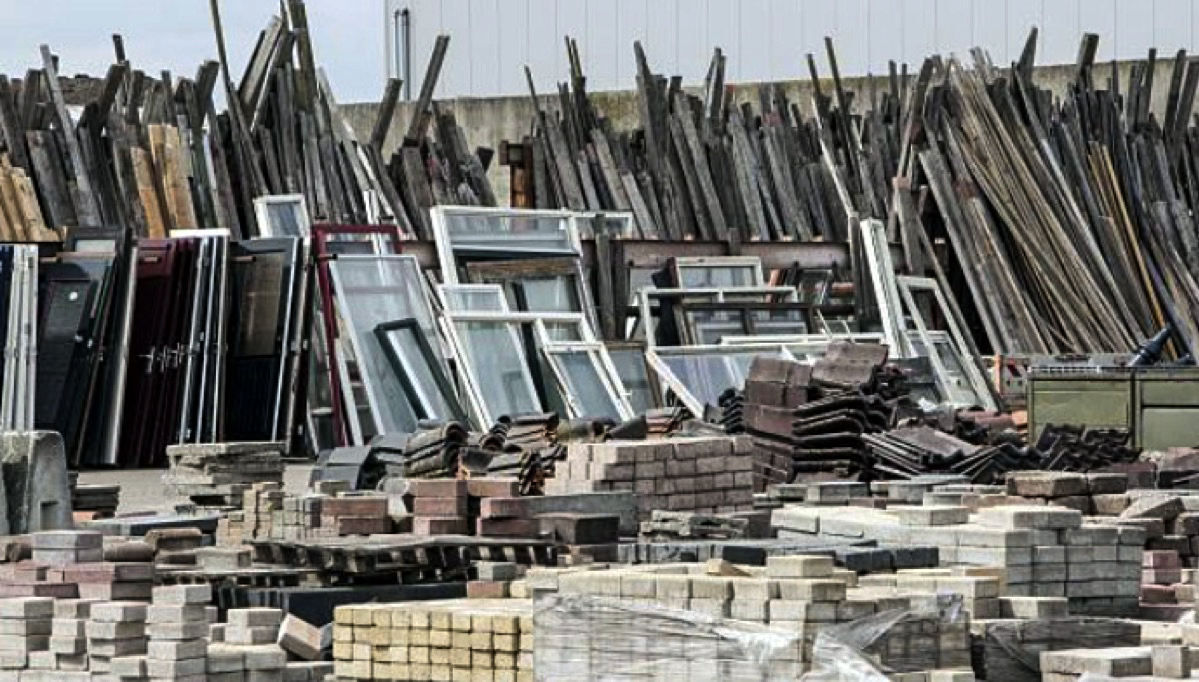
From cement and blocks to iron rods and roofing sheets, the costs of building materials in Nigeria have more than doubled in the last five years.
At the same time, the country’s housing deficit has ballooned to over 28 million units, creating a perfect storm in the real estate and construction sector.

There are growing concerns that if nothing is done urgently, millions of Nigerians will remain trapped in a cycle of high rent, overcrowding, and abandoned projects. This is because the high costs of building materials have continued to push up construction costs to record highs, pricing both developers and individual homeowners out of the market.
Stakeholders in the building sector say the ripple effects of high costs of building materials are already being felt, with both cost of building and rent rising sharply in major cities across the country.
‘65% of building cost is materials”: Experts blame import dependence, forex
Former chairman of the Nigeria Institute of Building and lecturer at Obafemi Awolowo University, Ile-Ife, Prof. Bolaji Wahab, explained that the problem of high cost of building materials in Nigeria is deeply rooted in the Nigerian building industry ecosystem. He added that there is an urgent need to consider this as a matter of national importance.
Prof. Wahab noted that building materials constitute 65 to 75 per cent of any building project cost. He pointed out that many materials or their inputs are mostly imported, making the sector vulnerable to exchange rate shocks.
The don posited that building project delivery cannot be executed without sourcing materials. He explained that the increase in the prices of building materials is about 420 per cent in the last five years.
“When they rise, the entire project becomes unaffordable, especially with the dollar rate. Importers pay more. Even locally produced goods are affected because their inputs are dollar-denominated,” he said.
Prof. Wahab also admitted that the crisis is not caused by one factor but by a web of economic and structural problems.
He explained further that the cost of production and energy remain a major factor. Generating power for cement plants, diesel for trucks, bad roads, and maintenance are also responsible for the sharp increase in the cost of building materials.
“Banks are charging up to 26.5 per cent interest. How can manufacturers access cheap funds to expand? Inflation is also biting producers and consumers. Multiple taxes, levies, and insecurity on highways add to logistics costs.
“Manufacturers, distributors, and the final consumers all bear the cost. That is why you see prices rising every quarter,” he added.
Known solutions, poor implementation
Prof Wahab explained that the solutions are known but there has always been a lack of implementation. He urged the government to look inwards and proffer better solutions to the problem.
“We have research institutes in this country. We have academics in universities and polytechnics who have done studies on how to solve the housing deficit and high cost of materials. But we don’t implement.
“Government must be ready to fund research so we can produce more materials locally. This will reduce dependence on forex and imports. If we produce tiles, roofing sheets, and fittings here in Nigeria, then prices will crash.
“We must also invest in skills and certification. The government must show enough commitment to encourage technical and vocational education and training, TVET, and the National Skills Qualifications Framework, NSQF.
“We have about 17 skills in the building industry. Students in universities, polytechnics, and technical colleges must be equipped. We also need a national framework to certify artisans. When artisans are certified, you reduce incidents of building collapse and improve quality.
“There’s a need for single-digit loans for manufacturers, tax waivers, and VAT removal on building materials, better roads, stable power, and faster land administration. The economy must be healthy. Producers cannot survive with 26.5 per cent interest rates and unstable inflation,” he said.
Price surge all over -from cement to nails
Adekunle Balogun, a building engineer, said the high cost of building materials has been a major challenge in the construction business. He highlighted current prices of some of the materials, noting that once the price of cement increases, everything else follows.
Other News
“Dredgers would increase the price of sand because of the high cost of diesel. Transporters would also increase their fares because of the high cost of petrol. In Nigeria, once the price goes up, it never comes down,” he said.
Balogun’s frustration points to an imminent national crisis because the price surge cuts across every material used on a construction site.
Cement
According to Balogun, in 2020, a 50kg bag of cement was sold for between ₦2,500 and ₦3,000. Today, it goes for between ₦12,500 and ₦13,000, or even ₦15,000 depending on location. Popular brands including Dangote, BUA, Elephant, and Lafarge have all reviewed prices upward multiple times in the last few months.
Blocks
A six-inch block used to be ₦150 to ₦200. Now stone dust blocks are ₦1,000 while sharp sand blocks are sold for ₦900. Nine-inch blocks were ₦300 to ₦350. Now, they are sold for between ₦900 and ₦1,200 depending on the area and material used.
Iron Rod
One tonne of 12mm iron rod was around ₦250,000 in 2020. Today, it sells for between ₦800,000 and ₦950,000. On a per-length basis, 8mm is ₦7,500, 10mm is ₦8,500, 12mm is ₦9,500, while imported TNT grade is ₦12,200. A 16mm rod goes for about ₦18,000, with the imported variant at ₦19,800.Roofing Sheets and Wood
A 0.4mm IBR sheet made by Nigerite now sells for ₦5,700 to ₦5,800 per length, while Top Right is ₦4,900 to ₦5,000. Aluminium roofing is sold per square metre at around ₦6,000, depending on gauge — 0.4mm, 0.45mm, 0.5mm and 0.55mm. A 2×4 wood is now ₦3,000 per length. Nails have also gone up, with smaller sizes like one inch and 1.5 inches now more expensive than three, four, and five inches.
Abandoned projects, rising rent, and a widening housing gap
Balogun pointed out that the rising cost of building materials has affected all stakeholders in the construction industry.
“Developers have scaled down, and individual builders are abandoning projects because of the increasing prices of building materials.
“When building materials go up, housing becomes scarce. When housing is scarce, rent goes up. That is how we got into this housing quagmire.
“In Lagos, Abuja, and Port Harcourt, a two-bedroom flat that rented for ₦1.2m in 2021, now goes for ₦3m and above. Agents also demand up to two years rent upfront. The result is thousands of abandoned buildings across the country and more Nigerians forced into overcrowded rooms.”
He said the only solution is for the government to support local production.“If government can support local production of materials like cement, iron and other things, it will help because forex is eating deep into our economy. Once the dollar goes up, local businesses suffer. Everybody knows what is going on. We quickly adapt. But adaptation is not a solution.
“Until the prices of basic building materials like cement, iron, blocks and roofing come down, Nigeria’s housing deficit will continue to widen. The government must do something reasonable to cushion the effects of high cost of building materials,” he said.
Engineers, traders count losses
Olusola Omoroke, an engineer, said the increase in the cost of building materials has been a major concern for Nigerians, especially those in the sector.
He said costs of building materials like granite, plastering sand, plumbing, and electrical fittings are extremely high. He added that forex remains a key determinant for the procurement of most building materials but regretted that the Nigerian economy has reduced the country to becoming an import-dependent nation.
“Most of these building materials are imported. Even the few ones that are produced here aren’t of good quality and are not even available.
“Producers and manufacturers are crying over the cost of production, and the attendant result is what we see and experience daily in the market. None of the prices is stable. If you buy cement today at a certain amount, by the time you go there tomorrow, the price goes up. That is how it is for every building material.
“So, government needs to address the problem holistically if they really want to save the construction sector from further distress,” he said.
Meanwhile, Mrs Ishola Khadeejat, owner of a popular sawmill along Ijebu Ode Road in Lagos, said prices of planks are not stable in the market.
According to her, there are different types of woods used for roofing. Mrs. Ishola stated further that the economic situation in the country has affected both the buyers and sellers of building materials, adding that none of the materials is spared.