Follow Us on Google
From Juliana Taiwo-Obalonye, Abuja
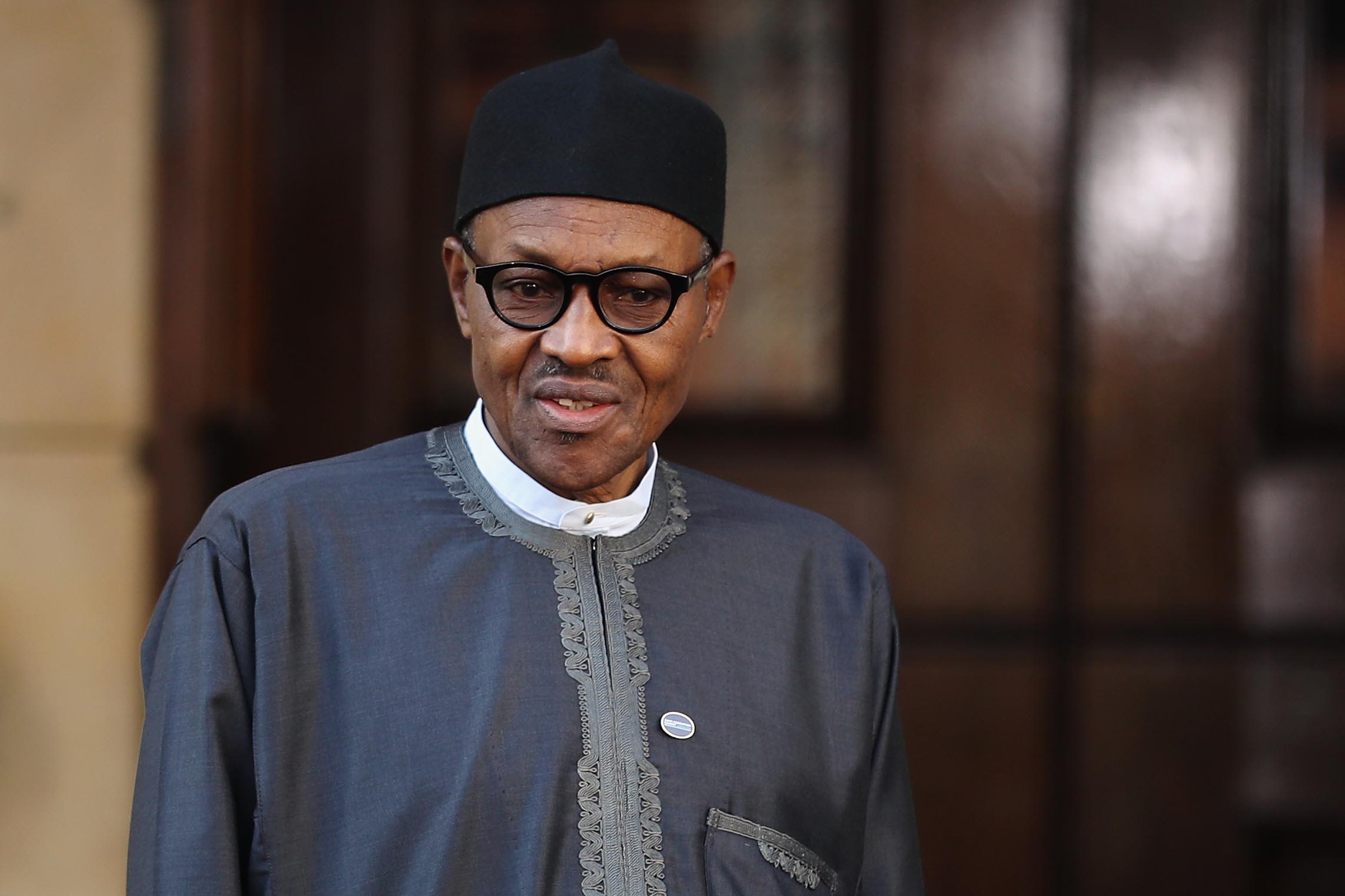
Muhammadu Buhari, Nigeria’s former military ruler turned democratic president, died on July 13, 2025, in London after a prolonged illness. Aged 82, his death closes a chapter marked by high expectations, persistent controversies, and a leadership style shaped by cautious decision-making and recurring ill health.
The Long Road to Victory
He made three attempts before the 2015 triumph. The late Buhari’s democratic journey was a testament to persistence. After ruling Nigeria as a military head of state from 1983 to 1985, he transformed to a civilian politician, contesting the presidency three times—in 2003, 2007, and 2011—before finally winning in 2015. His earlier attempts were marred by allegations of electoral fraud and manipulations, but his 2015 victory was historic: he became the first opposition candidate to unseat an incumbent president in Nigeria’s democratic history.
At his inauguration, Buhari pledged unity, famously stating, “I belong to everybody and I belong to nobody.” Yet, his presidency would soon reveal the complexities behind that promise.
A presidency overshadowed by ill health and slow appointments
Buhari’s time in office was frequently overshadowed by ill health. He undertook multiple medical trips abroad, primarily to London, sparking public concern about his ability to govern effectively. His prolonged absences, including a 104-day medical leave in 2017, raised constitutional questions and political uncertainty. Despite Vice President Yemi Osinbajo acting as president during these periods, Buhari was criticised for not formally handing over power, limiting the vice president’s authority to act decisively.
Alongside health challenges, Buhari was known for taking his time to make key appointments. After his 2015 inauguration, it took nearly six months before he constituted his cabinet, a delay that drew widespread criticism. The country faced insecurity, economic woes, and a plunging oil price during this period, yet operated rudderless without a Federal Executive Council.
Buhari defended the delay, saying the government intended to act “methodically and properly.” He later explained in 2019 that he was determined not to repeat the mistake of hastily appointing ministers he did not personally know, stating: “I’m under tremendous pressure on it. But the last cabinet which I headed, most of them, the majority of them I didn’t know. I had to accept the names and recommendations from the party and other individuals… This time around, I’m going to be quite me – in the sense that I will pick people I personally know.”
This cautious approach extended to ambassadorial appointments and replacements of ministers who resigned to contest elections, sometimes leaving key ministries without leadership for months, slowing government operations and frustrating investors.
Recognition of June 12 as Democracy Day and honouring MKO Abiola
One of Buhari’s notable legacies was his 2018 decision to move Nigeria’s Democracy Day from May 29 to June 12, a date widely regarded as more symbolic of Nigeria’s democratic aspirations. June 12, 1993, marks the day Nigerians participated in what Buhari called “the freest, fairest and most peaceful election since our independence,” which was annulled by the then military regime.
In a landmark move, Buhari posthumously honoured Chief Moshood Kashimawo Olawale (MKO) Abiola, the presumed winner of the annulled 1993 election, with the Grand Commander of the Federal Republic (GCFR), Nigeria’s highest national honour. His running mate, Ambassador BabaGana Kingibe, was also honoured, as was the late human rights activist Chief Gani Fawehinmi.
Buhari stated that “the fact that the outcome of that election was not upheld by the then military government does not distract from the democratic credentials of that process.” This gesture was widely seen as a step toward national reconciliation and recognition of the sacrifices made for democracy in Nigeria.
The arrest and extradition of Nnamdi Kanu
One of the decisive actions of Buhari’s administration was the arrest and extradition of Nnamdi Kanu, leader of the Indigenous People of Biafra (IPOB), a proscribed secessionist group. Kanu was first arrested in 2015 but released on bail in 2017 after a military raid on his home forced him to flee abroad. After years on the run, Buhari’s government, through collaborative efforts of Nigerian intelligence and security agencies, secured Kanu’s arrest in June 2021 and brought him back to Nigeria to face trial. The then Attorney-General and Minister of Justice, Abubakar Malami, SAN, disclosed that Kanu was “intercepted through the collaborative efforts of Nigerian Intelligence and Security Services” and brought back to continue facing charges of terrorism, treasonable felony, unlawful possession of firearms, and management of an unlawful society. Since his repatriation, Kanu has remained in detention, with his trial ongoing amid intense national and international attention.
The elusive war on corruption and insecurity
Buhari’s administration came to power on a platform of fighting corruption and defeating Boko Haram insurgents. He famously warned, “If we don’t kill corruption, corruption will kill Nigeria.” His government removed two chairmen of the Economic and Financial Crimes Commission (EFCC), amid controversies. The first was Ibrahim Lamorde, who was dismissed in November 2015 shortly after Buhari took office. No official reason was given for Lamorde’s removal, but it came amid allegations of mismanagement and diversion of recovered assets during his tenure. Lamorde had led the EFCC for four years before his dismissal.
Other News
Following Lamorde’s removal, Buhari appointed Ibrahim Magu as acting EFCC chairman in November 2015. Magu’s tenure was marked by vigorous anti-corruption efforts but also by controversie. In July 2020, Magu was suspended and later removed following corruption allegations, including failure to properly account for funds and other misconduct. The suspension was directed by Buhari to allow an unhindered investigation by a presidential panel. Despite a confidential report later clearing Magu of some of the charges, his removal underscored internal conflicts within Buhari’s administration over the leadership of anti-corruption agencies.
These two removals reflected the challenges Buhari faced in maintaining a consistent and effective anti-corruption campaign, highlighting political and institutional tensions within his government.
Yet, critics argued the fight was selective and slow, with corruption remaining deeply entrenched.
Security challenges were even more persistent. Buhari declared, “Technically, we have won the war” against Boko Haram, but the insurgency continued to kill thousands and displace millions. Violence spread beyond the North-East, with banditry and kidnappings escalating in other regions, eroding public trust in his leadership.
Controversy over terrorist designations: IPOB vs. Boko Haram
Buhari’s government designated IPOB as a terrorist organisation and labelled Kanu a “terrorist,” justifying a crackdown that escalated violence and ethnic tensions in the South- East. This decision drew sharp criticism for inconsistency, as Boko Haram, responsible for far greater violence and terror, was never officially designated a terrorist group by Buhari’s administration. Critics accused the government of double standards and ethnic bias, deepening regional divisions.
The rift with the South -East and accusations of nepotism
During a visit to the United States in July 2015, shortly after his election, the late president, Muhammadu Buhari openly acknowledged the political reality of regional voting patterns when he stated: “the constituencies, for example, that gave me 97 percent cannot, in all honesty, be treated equally on some issues with constituencies that gave me 5perecent. I think these are political realities.”
The South- East, which largely rejected Buhari politically at the time, became a focal point of tension. His confrontational approach to IPOB and perceived favouritism toward his ethnic group, the Fulani, fuelled accusations of nepotism and exclusion. This perception undermined national unity and deepened resentment in the South- East and other regions.
Political ambiguity and the 2023 elections
As Buhari’s second term ended, his political influence remained significant but ambiguous. He notably refrained from endorsing a clear successor, including former Vice President Yemi Osinbajo, contributing to uncertainty within the ruling All Progressives Congress (APC). His indecision reflected his cautious style but also revealed fractures within his party and Nigeria’s political landscape.
A nation divided and a presidency marked by contrasts
Despite his stern public image and health struggles, Buhari was known for his wit and occasional humour. His jokes and sharp remarks often lightened tense moments, endearing him to supporters who saw him as disciplined yet approachable. This humanising trait added complexity to a leader often perceived as austere.
Buhari’s legacy is a study in contrasts. He inspired hope for a Nigeria free from corruption and insecurity but struggled to deliver fully on those promises. His failure to decisively reform the economy, inability to end Boko Haram’s insurgency, and confrontational approach to ethnic dissent left many Nigerians disillusioned.
Yet, Buhari’s administration enacted important legislative reforms and invested in infrastructure, including railway modernisation and military upgrades. His anti-corruption campaign, though imperfect, raised awareness about accountability in governance.
Final Reflections
As Nigeria mourns Muhammadu Buhari, who once said, “I belong to everybody and I belong to nobody,” the nation is reminded of the complexities of leadership in a deeply divided society. His death invites sober reflection on the challenges of governing Nigeria, balancing firm leadership with inclusive democracy, and the enduring quest for unity amid diversity.
His life and presidency remain a reminder that Nigeria’s journey towards stability and prosperity are fraught with difficulties but driven by the resilience of its people and the hope for better governance.