Follow Us on Google

With the 2022 budget of N17.13trillion, the Lagos Chamber of Commerce and Industry (LCCI) has called on government to watch the rising recurrent expenditure and empower the private sector to create more jobs.
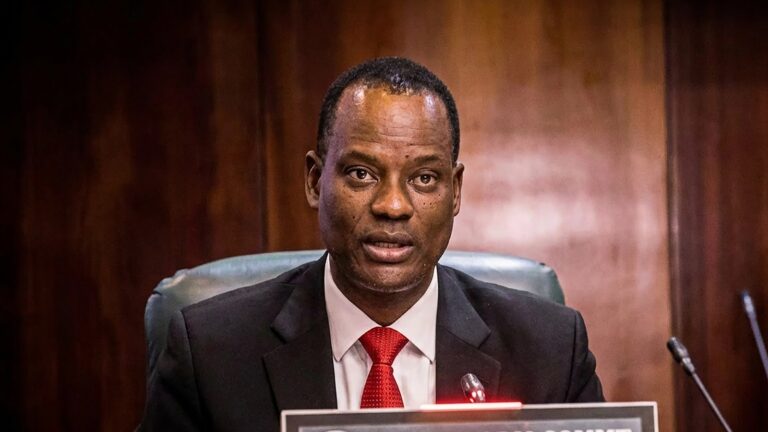
Its President, Michael Olawale- Cole, who gave the advice at the 2022 Budget Analysis Session organised by the Chamber, reasoned that with the 2022 aggregate expenditure of N17.13 trillion, recurrent (non-debt) spending estimated at N6.91 trillion, which is 40 per cent of total expenditure and 20 per cent higher than the 2021 budget, it will be more sustainable to empower the private sector while the government creates a thriving business environment.
The session, themed as “Budget Analysis for Business Intelligence”, with emphasis on what the figures and policy statements mean for businesses, was to provide insight on the implications of the 2022 Budget of the Federal Government for businesses, policymakers and investors.
The LCCI boss explained that the 2022 Federal Government Budget tagged “Budget of Economic Growth and Sustainability”, was signed into law on December 31, 2021, in continuation of the Federal Government’s efforts to normalise the January-to-December budget cycle, adding that the Federal Government plans to spend N17.13 trillion in 2022, an 18-per cent increase from the N13.59 trillion planned for 2021.
“This budget size reaffirms the commitment of government to pursuing an expansionary fiscal policy to stabilise growth and deepen the diversification of the Nigerian economy.”
Analysing the budget, Olawale- Cole said the capital expenditure of N5.96 trillion is 35 per cent of total expenditure, while the debt service provision of N3.61 trillion is 21 per cent of total expenditure and 34 per cent of total revenues.
“This leaves us with a deficit of N6.39 trillion, representing 3.46 per cent of our GDP.”
With the deficit financing to come from borrowing, he noted that the Chamber wishes to reiterate its concerns about debt costs. “We need to re-assess our debt sources to borrow at lower rates or access more zero-interest loans like the Sukuk.
“The revenue and capital expenditure performance of the 2021 budget indicates the fiscal resilience of the Nigerian economy. This should be consolidated for better outcomes in the 2022 fiscal year.”
“A higher non-oil revenue projection in comparison to oil revenue, if effectively implemented and actualised, will minimise the impact of external shocks, arising from oil volatility, on the economy.