Follow Us on Google
From Scholastica Hir, Makurdi
In the wake of the recent 16 Days of Activism against Gender-Based Violence (GBV), the streets of Makurdi, Benue State capital, echoed with a familiar cry: “Enough is Enough!”
The state government, through the Ministry of Women Affairs in conjunction with local and international NGOs as well as civil society organisations (CSOs), rolled out campaigns to sensitise the public against all forms of violence against women and girls.
Yet, for many women like Aisha Abdullahi, Grace Amadi, and Janet Oche, all residents in Benue State, the brutal reality of sexual and gender-based violence (SGBV) persists. Despite the campaigns and sensitisation efforts, the beatings, molestation, and violence have continued unabated, leaving scars that may never fully heal.
Aisha Abdullahi (not her real name), a mother of five married for 20 years, recounted: “The only time I experienced love in my marriage was the first few months. It wasn’t long before my husband showed his true colours. He would slap and beat me at every little misunderstanding.
“I was going to leave the marriage but I thought about my children. Again, each time he beats me and leaves the house, he would return home sober, full of apologies, never to do it again. But he never stopped; it rather got worse,” Aisha lamented.
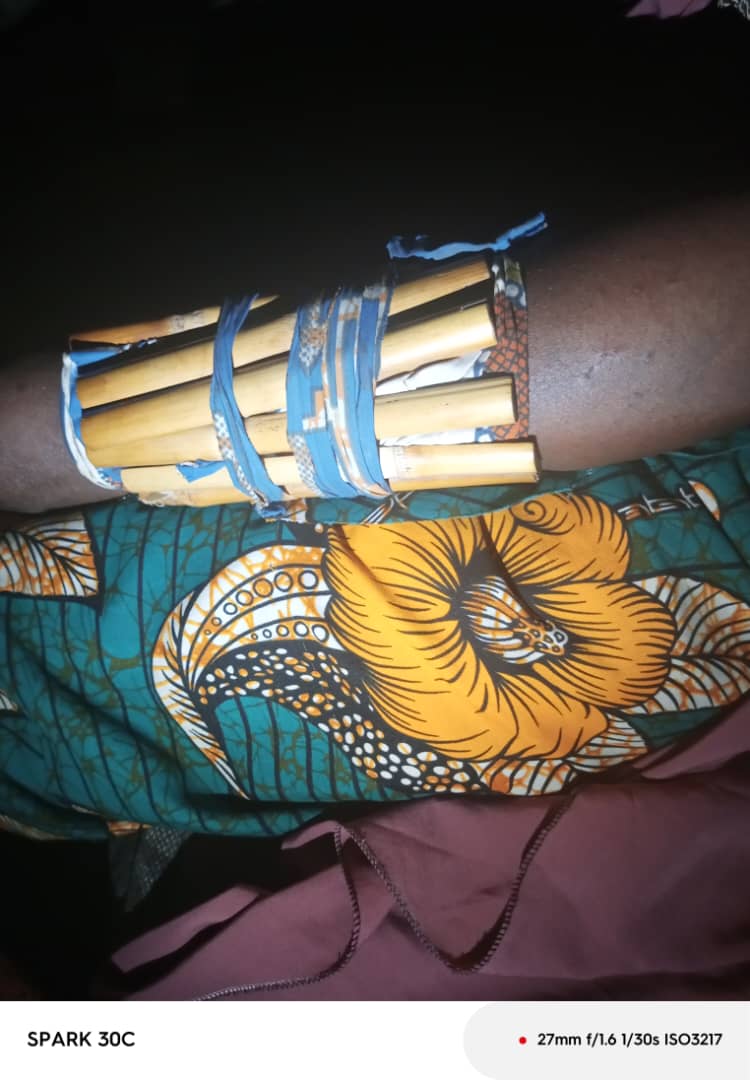
The last beating in November 2025 left Aisha with a broken arm, treated locally by a bone setter. Though the splint has been removed, she continues to experience significant pain. Her husband is currently on the run after the case was reported to the police, who have asked him to report to the station upon return.
The Chairperson of the Women’s Wing of Jama’atu Nasril Islam (JNI) in Benue State, Hajia Hauwa Isah, took up Aisha’s case. Hajia Isah, a case manager with the NGO First Step Action Initiative for Children, has handled numerous cases of violence and abuse.
In the last six months, her organisation has recorded countless GBV cases. In the last three months alone, 13 cases of abuse have been reported and are being handled. While some have been settled, others remain ongoing at the Human Rights Commission and the police, with one referred to the Sarkin Hausawa’s Palace in Wadata community.
In one case, a 58-year-old woman, Mrs Grace Amadi, reported that her husband seized the documents of their house, attempting to sell it, claiming the property was his. The woman had bought the land, while the husband built the house.
She reported the case to her church, but it remained unresolved for years. When reported to the Human Rights Commission, the documents were retrieved and returned to her.
In another case, Mrs Janet Oche, married with four daughters, faces harassment from her husband’s senior sister, who insists girls are not children and demands male heirs. The husband has reportedly absconded to his village in the East, where his mother allegedly found him a new wife.
His elder sister frequently harasses Mrs Oche and the children, demanding they leave the house. When they were eventually driven out, an NGO intervened, ensuring she regained her home and promising further support against harassment.
In yet another disturbing case, a young man has repeatedly impregnated a girl and forced abortions. Currently pregnant for the third time, the girl’s mother insisted on keeping the child.
The case was taken to the Human Rights Commission, which ordered the boy to pay N10,000 monthly for upkeep. He paid twice before stopping. The boy’s parents refuse marriage, claiming he is too young. The case has been referred to the new Sarkin Hausawa in Wadata, with hopes for fair judgment.
Hajia Isah also shared a case of incest in an IDP camp involving a father and his nine-year-old daughter, as well as instances of child marriage, urging survivors to speak out and utilise available support.
These cases highlight the need for greater support for survivors. Hajia Isah’s organisation provides assistance, but more must be done to address root causes.
The stories of Aisha and others testify to the unyielding spirit of women who refuse to be defined by their circumstances. Despite beatings, insults, and constant abuse, they found strength to speak out and seek help from supportive organisations.
Hajia Isah advises survivors to seek legal and emotional support. Pursuing cases is challenging due to societal pressure, threats of ostracism, or family interference, but community support, especially from women sharing testimonies, strengthens resolve.
A family physician at the Federal Medical Centre (FMC), Makurdi, Dr Ladi Swende, noted that 50 per cent of every 10 patients she attends to have cases linked to GBV.
She acknowledged speaking out as a key step and praised the Federation of Women Lawyers (FIDA) Benue State for prosecuting a recent GBV case she reported.
Dr Swende advocated supporting local organisations combating SGBV through volunteering as monitors, mentors, or peer supporters, or donating to services for survivors.