Follow Us on Google

From Adanna Nnamani, Abuja
More trouble looms as the Academic Staff Union of Universities (ASUU) has said it will not accept the Recommended Consolidated University Academic Salary Structure (CONUASS) presented by the federal government to the union.
ASUU said the proposed salary structure which was drafted by the National Salaries, Incomes and Wages Commission (NSIWC) did not follow the principle of collective bargaining.
It asked the federal government, through the Ministry of Education, to return to the New Draft Agreement of the 2009 FGN/ASUU Renegotiation Committee whose work spanned a total of five and half years as a demonstration of good faith.
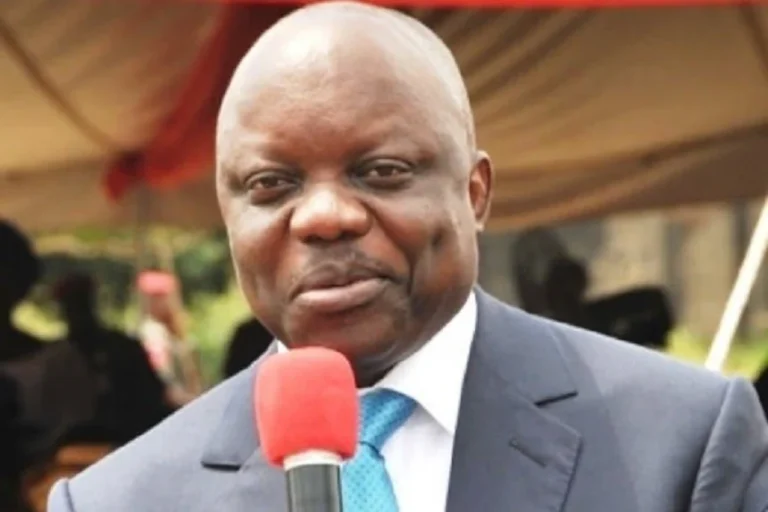
This was contained in a statement issued Thursday, by the union President, Emmanuel Osodeke.
“At the resumed meeting of the Federal Government of Nigeria (FGN) and the Academic Staff Union of Universities (ASUU) 2009 Agreement Re-negotiation Committee on Tuesday, 16th August 2022, the Government Team presented an ‘Award’ of a Recommended Consolidated University Academic Salary Structure (CONUASS) prepared by the National Salaries, Incomes and Wages Commission (NSIWC) to ASUU. ASUU firmly rejected and still rejects the ‘Award’.
“The 1981 FGN-ASUU Agreement, under Alhaji Shehu Shagari’s administration, established the principle of collective bargaining, based on the Wages Boards and Industrial Council’s Decree No 1 of 1973, the Trade Dispute Act (1976), ILO Conventions 49 (1948), 91(1950), 154 (1988) and recommendation 153 (1981), Udoji Commission Report of 1974, and Cookey Commission Report of 1981. It also provided a platform for resolving such important issues as special Salaries and Conditions of Service of University Staff, University Funding, roles of Pro Chancellors, Vice-Chancellors, and the National Universities Commission (NUC). A key outcome was a special salary scale for university staff known as University Salary Structure (USS).
“At the commencement of the renegotiation of the 2009 FGN/ASUU Agreement on 16th March 2017, both the federal government and ASUU Teams agreed to be guided by the following principles as their terms of reference: Reversal of the decay in the Nigerian University System, in order to reposition it for its responsibilities in national development; Reversal of the brain drain, not only by enhancing the remuneration of academic staff but also by disengaging them from the encumbrances of a unified civil service wage structure and restoration of Nigerian Universities, through immediate, massive and sustained financial intervention; as well as ensuring genuine university autonomy and academic freedom,” he stated.
Read also: Road to 2023: NNPP reaches out to members abroad
According to Osodeke, the government’s surreptitious move to set aside the principle of collective bargaining, is, no doubt, injurious to Nigeria’s aspiration to become an active player in the global knowledge industry as it processes the potential of damaging lecturers’ psyche and destroying commitment to the university system.
“Rejecting a salary package arrived at through collective bargaining is a repudiation of government’s pronouncements on reversing “brain drain”. It is common knowledge that more now than in the 1980s and 1990s, Nigerian scholars, especially in scarce areas like science and medicine, are migrating in droves to Europe, America and many parts of Africa such as South Africa, Rwanda, and Ghanaian with a supportive environment to ply their trades as well as competitive reward systems for intellectual efforts. Does the Nigerian government care about what becomes of public universities in another five or ten years if this trend continues?,” he queried.
The ASUU President further asserted that the government imposed the ongoing strike action on the union and that it has encouraged it to linger because of its provocative indifference
“The Munzali Jibril-led renegotiation committee submitted the first Draft Agreement in May 2021 but the government’s official response did not come until about one year later! Again,
“The “Award” presented by the Nimi Briggs-led Team came across in a manner of take-it-or-leave-it on a sheet of paper. No serious country in the world treats their scholars this way.
“Over the years, particularly since 1992, the Union has always argued for and negotiated a separate salary structure for academics for obvious reasons. ASUU does not accept any awarded salary as was the case in the administration of General Abdulsalam Abubakar. The separate salary structures in all FGN/ASUU Agreements were usually the outcome of Collective Bargaining processes.
“The major reason given by the federal government for the miserly offer, paucity of revenue, is not tenable. This is because of several reasons chief of which is poor management of the economy. This has given rise to leakages in the revenue of governments at all levels. There is wasteful spending, misappropriation of funds and outright stealing of our collective patrimony.
“ASUU believes that if the leakages in the management of the country’s resources are stopped, there will be more than enough to meet the nation’s revenue and expenditure targets without borrowing and plunging the country into a debt crisis as is the case now.
“The New Draft Agreement has other major recommendations for the funding of major components of the renegotiated 2009 FGN/ASUU Agreement. One of such recommendations is the tax on cellphone and communication lines. Ironically, the Federal Ministry of Finance, Budget and National Planning recently announced its readiness to implement ASUU’s recommendation, as a revenue source, but not for education, without acknowledging the Union!,” the union president noted.