Follow Us on Google
From Adesuwa Tsan, Abuja
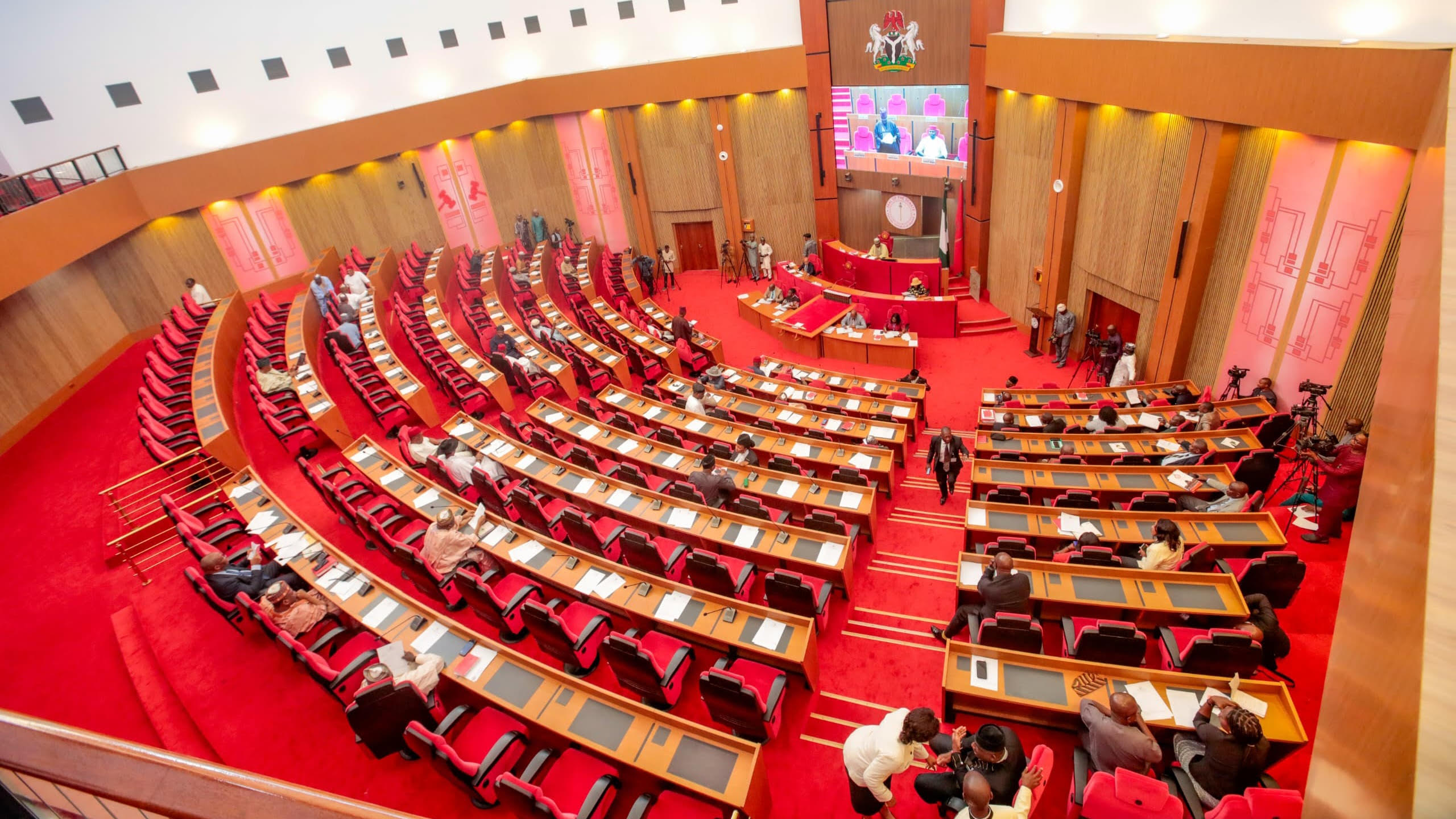
Efforts to tackle prolonged court delays and improve access to justice received a boost yesterday as the Senate passed for a second reading two judicial reform bills seeking to increase the number of judges in the Federal High Court and justices of the Court of Appeal.
If passed into law, the proposals will raise the number of Federal High Court judges from 70 to 90 and expand the Court of Appeal bench from 70 to 110 justices, a development that would help clear mounting case backlogs, speed up the resolution of disputes and strengthen public confidence in the judicial system.
The bills, sponsored by Senate Leader, Opeyemi Bamidele, are also expected to improve the handling of anti-corruption cases, commercial disputes and election-related litigation, while modernising court operations through the adoption of technology.
Leading debate on the Federal High Court (Amendment) Bill, Bamidele said the growing workload of the court had overstretched its existing capacity, resulting in delays that affect both citizens and businesses.
According to him, the Federal High Court handles a wide range of specialised matters, including anti-corruption and financial crime cases, banking disputes, telecommunications, aviation and maritime issues, making it imperative to strengthen its manpower.
“The bill seeks to reduce the backlog of pending cases across the various judicial divisions of the court,” he said.
Bamidele argued that increasing the number of judges would improve access to justice by ensuring quicker hearing and determination of cases, while enhancing the effectiveness of prosecutions involving corruption and financial crimes.
He further noted that timely resolution of commercial disputes would boost investor confidence and improve Nigeria’s business environment.
“The proposed increase under this bill is not merely an administrative adjustment; it is a strategic intervention aimed at strengthening the capacity of the Federal High Court,” he said.
Supporting the measure, Mohammed Tahir Monguno, a former chairman of the Senate Committee on Judiciary, Human Rights and Legal Matters, said the demand for additional judges had remained a longstanding concern within the judiciary.
“The Federal High Court has consistently clamoured for an increase in the number of judges presiding over its various jurisdictions,” Monguno said.
He added that the expansion would help bring justice closer to Nigerians and ensure quicker dispensation of cases.
“Justice delayed is justice denied, and justice should not only be done but should be seen manifestly to be done,” he stated.
The Senate also considered the Court of Appeal (Amendment) Bill, which seeks to increase the number of appellate justices from 70 to 110 and introduce reforms aimed at modernising the operations of the nation’s second-highest court.
Presenting the bill, Bamidele said the Court of Appeal had witnessed a sharp increase in workload over the years due to rising economic activities, electoral disputes, constitutional litigation and commercial transactions.
“Over the years, the Court of Appeal has experienced a significant increase in its workload arising from population growth, expansion of economic activities, increasing electoral disputes, constitutional litigation and commercial transactions,” he said.
Other News
He explained that the proposed expansion would ensure broader representation of states and the Federal Capital Territory on the appellate bench, while improving the court’s efficiency and capacity to determine cases within reasonable timeframes.
A key feature of the bill is the introduction of virtual proceedings and electronic court processes.
Bamidele said the reform would empower the court to conduct proceedings digitally in line with global best practices.
“One of the salient provisions of this bill is the introduction of virtual court proceedings, which many jurisdictions across the world have institutionalised because of their effectiveness and expediency,” he said.
The legislation also proposes the establishment of an Alternative Dispute Resolution Centre within the Court of Appeal to encourage out-of-court settlements and reduce pressure on the judicial system.
Contributing to the debate, Osita Izunaso noted that the increasing responsibilities of the Court of Appeal made the expansion necessary.
“Considering the workload before the Court of Appeal, there is a compelling need to increase the number of justices,” he said, adding that recent electoral reforms had conferred original jurisdiction on the appellate court in certain election matters, thereby increasing its burden.
“This will increase the court’s output and strengthen public confidence in the judiciary,” he added.
Following widespread support from lawmakers, both bills scaled second reading and were referred to the Senate Committee on Judiciary, Human Rights and Legal Matters for further legislative scrutiny and to report back within four weeks.
In his remarks, Senate President Godswill Akpabio described the proposals as landmark reforms capable of transforming the administration of justice in Nigeria.
He said the measures would help address the problem of congested court dockets and ensure quicker access to justice for ordinary Nigerians.
“These bills will help our judicial system in the dispensation of justice and ensure that we decongest the courts as quickly as possible,” Akpabio said.
He further argued that delays in the justice system had negatively affected Nigeria’s attractiveness to investors and businesses.
“Nigeria is not a very attractive destination for some investors and shippers because of delays in the dispensation of justice. All that will change with what we have done today,” he said.
According to the Senate President, expanding the number of judges and justices across the country would ultimately bring justice closer to the people and improve confidence in the nation’s judicial institutions
“When these courts are expanded across the nation, justice will be brought to the doorsteps of every Nigerian,” he added.