Follow Us on Google
From Abdulrazaq Mungadi, Gombe
For decades, Nigeria’s politics has been trapped in the straightjacket of ethnicity and religion. Every election cycle, the nation’s destiny is reduced to a battle of turn-taking: North versus South, Hausa versus Igbo versus Yoruba, Christian versus Muslim. The script is predictable, the rhetoric familiar, and the outcomes, sadly, often disappointing to many. But as 2027 approaches, a different voice is emerging from an unexpected quarter, the Igbo resident in Northern Nigeria.
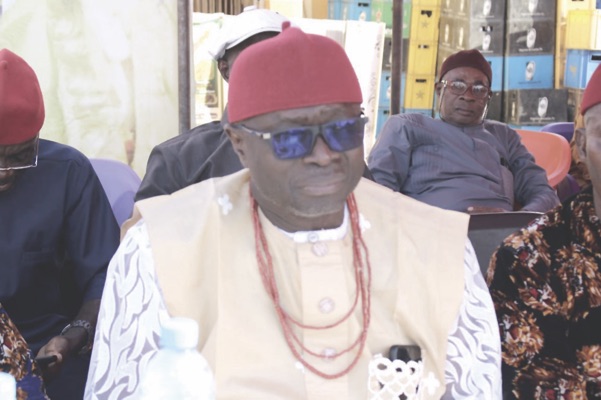
They are calling on Nigerians to see beyond tribe and ethnicity. In an interview with Daily Sun, Chief Kenneth Okeugo, President General of the Igbo Delegates Assembly (IDA), an umbrella body uniting Igbo across 19 northern states and the FCT, declared bluntly that 2027 is not about Hausa, Igbo or Yoruba presidency, it is about rescuing Nigeria.
That single statement is more than political rhetoric; it signals a potential reset in Nigeria’s national conversation. By openly rejecting ethnic entitlement as the basis for the next presidency, the IDA is challenging a political culture that has for decades weaponised identity at the expense of competence.
For the Igbo in the north, the stakes are even higher. Living outside their ancestral homeland, they are often caught between multiple fault lines, ethnic, religious, and regional. They know first-hand how destructive identity-based politics can be. Their perspective therefore carries the weight of lived experience in a Nigeria where divisions too often dictate survival.
Okeugo’s message is clear as he said, what matters is not where the president comes from but whether he or she can deliver on the burning issues of hunger, insecurity, and economic hardship.
While acknowledging that Igbo naturally desire one of their own in Aso Rock, Okeugo insists that symbolism is not enough. What we need is an “Igbo presidency” that can fix the economy or secure lives and property, if not it would be as hollow as any other failed promise. This sober realism puts the IDA at odds with ethnic champions who reduce national progress to mere “turn by turn” arithmetic.
According to Okeugo, the group is not just issuing statements; it is organising and mobilising for a better Nigeria. He revealed that the IDA is already assessing President Tinubu’s policies and those of his challengers. He explained that the group intend to engage directly with the presidency and leading opposition candidates, demanding clear blueprints for tackling Nigeria’s myriad crises. Beyond rhetoric, they want answers on jobs, fuel subsidy fallout, insecurity, and the collapsing purchasing power of ordinary Nigerians.
He equally disclosed that the group has intensified grassroots push, adding that the IDA has embarked on a campaign to mobilise Igbos in the North to register, collect their Permanent Voter Cards (PVCs), and vote where they live. This he said represents a quiet but profound shift: a diaspora community asserting political relevance not through ethnic bargaining chips but through informed participation.
The broader implications are striking. If other groups emulate this approach, prioritising policy over place of origin, it could force a recalibration of Nigeria’s political culture. Issue-based campaigns, long considered an elusive dream, may gain traction as voters demand specifics rather than slogans.
Of course, the obstacles are formidable. Nigeria’s political class has historically thrived by exploiting ethnic and religious divisions. Campaigns are often reduced to fear mongering about what the other tribe or the other religion will do if given power. But citizen groups like the IDA are increasingly pushing back, reflecting a generational frustration with politics-as-usual.
Ultimately, the IDA’s intervention underscores a larger truth: Nigeria cannot afford another wasted election cycle defined by sectionalism. As Okeugo aptly puts it, ethnicity and religion have not solved the country’s problems. What Nigerians need in 2027 is not a “son of the soil” but a leader with vision, competence, and the courage to take tough decisions.
If this message resonates beyond the Igbo community in the North, it could mark the beginning of a genuine political shift. For a nation battered by hunger, insecurity, and despair, that shift could be the most radical and necessary change yet.