Follow Us on Google

Following the signing into law of the Electoral Act Amendment Bill by President Muhammadu Buhari on February 25, it is gratifying that the Chairman of the Independent National Electoral Commission (INEC), Prof. Mahmood Yakubu, has consequently adjusted the 2023 election timetable. Under the new arrangement, the Presidential and National Assembly elections have been scheduled to hold on February 25, 2023, while Governorship and State Houses of Assembly elections will take place on March 11, 2023.
The Presidential and National Assembly elections had earlier been scheduled for February 18, 2023, while the Governorship and State Houses of Assembly elections were slated for March 4, 2023. Hitherto, President Buhari had rejected the electoral amendment bill five times, citing reasons such as drafting errors to proximity to the date of elections, insecurity and costs of execution, among others. Yakubu also stated that the new dates are in line with INEC’s aim of ensuring certainty in its electoral calendar.
With the release of the election timetable, political parties have from April 4 to June 3, 2022 to conduct their primaries and ensure resolution of disputes arising from the exercise. For Presidential and National Assembly elections, INEC says that political parties and candidates are to submit their nomination forms to the electoral umpire between June 10, 2022 to June 17, 2022, while those contesting for Governorship and State Assembly elections should follow the same process between July 1, 2022 to July 15, 2022.
According to reports, the commencement of campaign by political parties for Presidential and National Assembly election, is slated for September 28, 2022. That of the governorship and state assembly candidates, begin on October 12, 2022.
Similarly, the campaigns for Presidential and National Assembly elections end on February 23, 2023, while those of the governorship and state assembly elections, end on March 9, 2023.
Now that the election timetable is out, Nigerians and the world are looking up to INEC to conduct a free, fair and transparent election. It should not fail in this regard. Beyond the release of election timetable, the government must address festering insecurity across the country. There are fears that the general insecurity may adversely affect the poll if not urgently checked. Apart from ensuring that all eligible voters are registered and issued with voter cards, INEC must ensure that all those who changed their polling units are issued with voter cards early enough before the poll. At the same time, it should also address the peculiar problem of voters in IDP camps as well as those in hard-to-reach areas in such a way that no Nigerian is disenfranchised.
Moreover, continuous voter education must be prioritised by INEC and the political parties to avoid unnecessary hiccups during the poll. Let INEC train its main and ad hoc staff adequately for the tasks ahead. It is worth pointing out that all imperfections noticed in the recent Anambra gubernatorial election and others are rectified before the 2023 polls.
The electoral body should use the off season polls in Ekiti and Osun states to perfect its preparations for the 2023 polls. The argument by the electoral umpire before now was that it had been hampered by the delay in signing the Electoral Act. With the Act assented to by the President, the commission must hit the ground running.
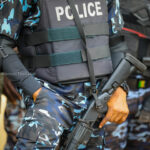
It is commendable that the National Assembly has acceded more powers to INEC in the Electoral Act to ensure that it conducts a free, fair and credible election. Therefore, there would be no excuses this time round. The intervening period before the elections should be enough for the electoral agency to perfect its system and ensure that all obstacles to free and fair polls are eliminated. The role of security agents during elections must be clearly stated and those on election duties must be made to abide by rules of engagement.
Also, the assurance by the INEC boss that the dysfunctional state of the Bimodal Voter Accreditation System (BVAS) as observed in the Anambra and February 12 area council elections in the Federal Capital Territory (FCT) has been rectified is encouraging. With adequate preparations, we believe that INEC would conduct a free, fair and credible election in 2023.