Follow Us on Google
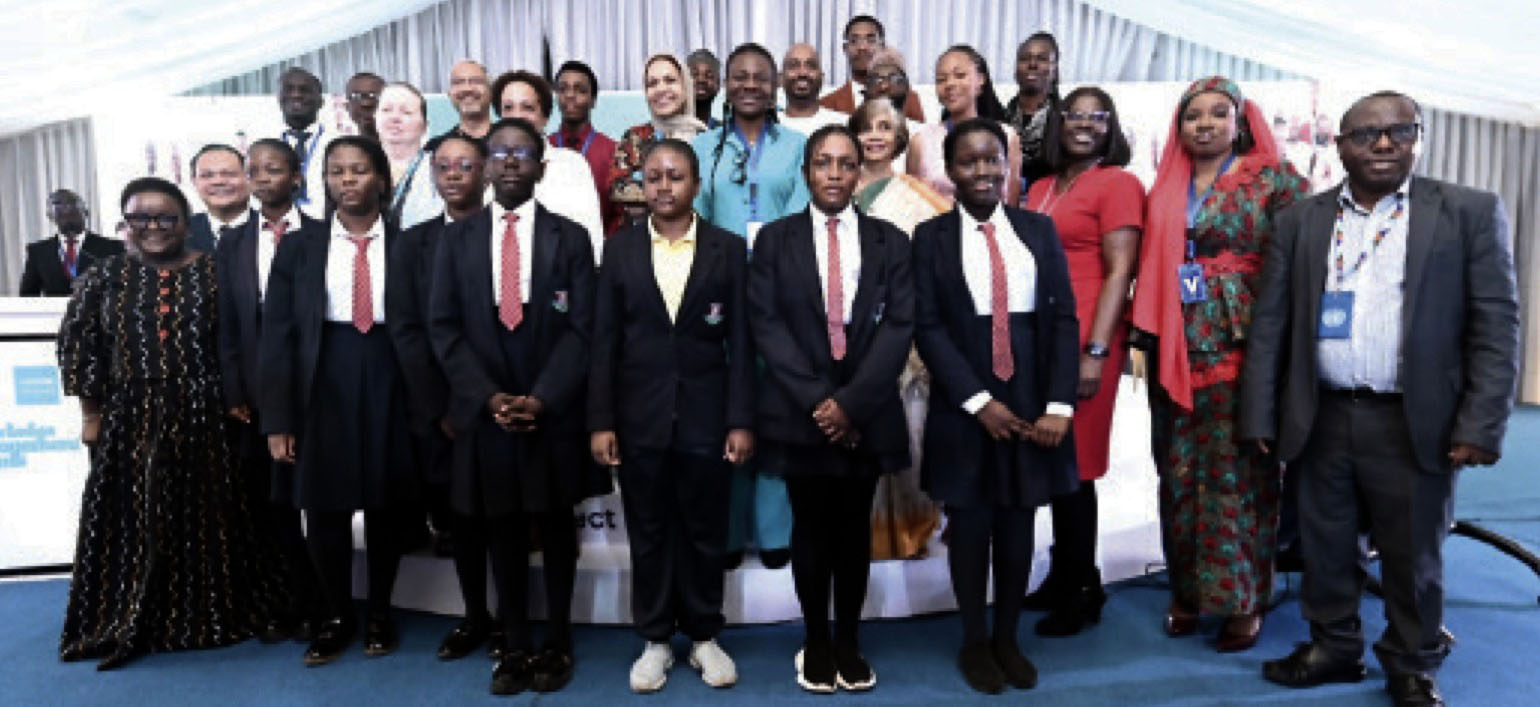
Nigerian children demand safety, education and voice in decisions affecting their lives at UNICEF’s K4U summit
From Juliana Taiwo-Obalonye, Abuja
For some Nigerian children, the journey to school is an everyday struggle against poverty, long distances and unsafe routes. For others, the greatest obstacle is not getting into a classroom but having their opinions respected at home, in their communities and by those making decisions about their future.
These realities emerged at the United Nations Children’s Fund (UNICEF) Knowledge for Use (K4U) Summit on Child Rights in Abuja, where young advocates called for safety, education, freedom and meaningful participation in decisions affecting their lives.
Their demands, articulated during the Youth Voices for Change panel session, went beyond the familiar calls for improved access to education and healthcare. They challenged adults and institutions to recognise children as individuals with rights, aspirations and valuable knowledge about the problems they experience.
The young panellists also raised questions about the effectiveness of interventions designed for them without their involvement, insisting that being invited to speak at public events was not enough if their views did not influence decisions.
The conversation, moderated by Inya Ode, brought together Ifeoma Agbuagu of Start-Rite School, Apo; Gloria Bala of Calvary Christian Learning Academy, Dei-Dei; UNICEF U-Reporters Isabel Anani; Hyacinth Nwana; and Abija.
Their contributions provided a human perspective to the central question confronting the summit: how can knowledge, research and evidence be translated into practical measures that improve children’s lives?
The summit, held on Wednesday, September 23, 2026, in Abuja and organised by UNICEF, in collaboration with the Nigerian government, was themed, “From Knowledge to Action: Advancing Child Rights Through Evidence, Innovation and Learning.” It brought together government officials, UN agencies, development partners, researchers, civil society organisations, young people and the media to examine ways of improving outcomes for children.
At the heart of the discussions was a concern that evidence generated through research, assessments and evaluations often fails to influence the policies and programmes intended to address children’s needs.
The UNICEF Representative in Nigeria, Wafaa Saeed, challenged stakeholders to move beyond producing reports and academic papers to using evidence to change decisions and improve lives.
“There’s a lot of time that we can get back and we can get evidence, but if we don’t use it, it becomes a big problem,” she said.
Saeed urged stakeholders to learn not only from successful interventions but also from programmes that failed to achieve their objectives, arguing that acknowledging shortcomings was essential to improving the response to children’s needs.
“Most importantly, we have to learn from what is not working well. For me, in my life, I’ve learned best at the time when I faced hardship, when I didn’t get what I wanted, when I failed,” she said.
She said learning from failure required “courage, integrity and openness”, adding that young people must be central to the process because their lived experiences constitute an important source of knowledge.
“We really have to put young people at the heart of this. They also have their lived experiences. They are experts in their own issues,” Saeed said.
That call resonated with the young panellists, whose accounts illustrated why research and policy discussions must take into consideration the realities of children in different circumstances.
When poverty and location determine a child’s future
For the young advocates, child rights are not abstract legal provisions. They are reflected in whether a child can attend school, access clean water, receive healthcare, enjoy a safe environment and have the freedom to develop.
Ifeoma described child rights as part of fundamental human rights that guarantee every child protection, safety and access to essential necessities, including healthcare, clean water and food.
Gloria defined them as the basic things every child needs and is entitled to, while Abija identified education and freedom as fundamental rights.
For Isabel, however, the idea of child rights also meant the freedom to enjoy childhood without being burdened by circumstances beyond a child’s control.
“When I think about child rights, the first thing that comes to mind is freedom. Children should be able to enjoy their childhood without worrying about issues beyond their control,” she said.
She described a stable childhood as one in which a child’s major concerns would ordinarily revolve around homework or being allowed to play beyond 5 p.m., rather than poverty, insecurity or other problems that threaten their wellbeing.
“Every child deserves a stable childhood,” she added.
Hyacinth offered a broader perspective, arguing that children must be recognised as individuals whose aspirations and opinions have value, rather than being viewed exclusively as future adults.
She said, “The first thing that comes to mind when child rights are mentioned is recognising and appreciating that children are not merely future adults. They are individuals with dreams, opinions, aspirations and imaginations.”
She acknowledged that some children’s ambitions might appear unrealistic or uncertain to adults but maintained that this should not diminish the value of their ideas.
Her position was particularly relevant to the discussion on participation, as it challenged the assumption that adults should always determine what is best for children without considering their preferences.
The young advocates also identified poverty as a major barrier to the enjoyment of children’s rights.
Abija said some children could not attend school because their families lacked the financial means to support their education. She called for opportunities, including free education, to ensure that poverty did not prevent children from learning.
For Ifeoma, the obstacles extend beyond school fees to the availability of basic infrastructure, particularly in rural communities.
She said children in some rural areas lacked clean water, proper sanitation and decent shelter. In certain communities, children had to travel long distances to reach schools, sometimes along unsafe routes.
She identified access to education and basic amenities as major challenges confronting children whose circumstances are determined by where they live.
Isabel argued that these challenges vary considerably across Nigeria, making it difficult to address children’s needs through a uniform approach.
She cited insecurity, malnutrition, extreme poverty and child marriage among the problems confronting children in parts of northern Nigeria. In some southern communities, she identified child exploitation and environmental pollution, particularly in oil-producing areas, as significant concerns.
She noted that even neighbouring locations could have different child protection needs, citing Kaduna, Abuja and Nasarawa State as examples.
For her, recognising these differences is essential to designing interventions that respond to the specific circumstances of children in individual communities.
The accounts also underscored why evidence on child rights must reflect the diversity of children’s experiences rather than relying on generalisations that may overlook the needs of vulnerable groups.
A seat at the table, not just an invitation
Beyond poverty and inadequate access to services, the young panellists identified the limited influence children have over decisions affecting their lives as another significant concern.
Although some of them said they felt heard in their immediate environments and appreciated the opportunity to speak at the summit, they questioned whether children generally enjoyed the same privilege.
Hyacinth said the opportunity to participate in the panel demonstrated that adults could listen to young people. However, she cautioned that participation was often restricted to invitations to discuss programmes that had already been designed.
“Sometimes, we bring young people into a room, but we do not give them a seat at the table,” she said.
She argued that institutions should stop creating conversations merely about young people and begin involving them directly in discussions and decisions.
“It goes beyond designing programmes for young people; we must create them with young people,” she said.
Ifeoma said she felt heard at the summit because participants were listening to her views, but noted that many children did not enjoy similar opportunities in their homes and communities.
She cited girls subjected to child marriage and children experiencing child labour as examples of young people whose wishes and opinions were often disregarded.
She maintained that every child deserved a fair opportunity to express themselves and have their concerns taken seriously.
Abija raised concerns about parental expectations, particularly when parents insist that children pursue careers that do not reflect their interests.
She described situations in which a child who wants to become an engineer is pressured by parents to study medicine, even when the child has little interest in the profession.
She argued that children should be allowed to pursue their interests and participate in decisions about their futures.
Gloria also expressed a desire to make her own decisions, highlighting the importance of freedom and personal choice.
Their contributions brought the issue of participation beyond formal policy discussions, pointing to the need for children to be heard in everyday decisions made by parents, teachers and community leaders.
For the young advocates, the right to participate is closely connected to other rights, including protection, education and freedom. A child whose views are disregarded may have little influence over decisions that affect their safety, education and personal development.
From consultation to co-creation
The demand for meaningful participation was also reflected in the young advocates’ proposals for improving collaboration between government, UNICEF, communities and young people.
Hyacinth said co-creation should be the foundation of such collaboration, insisting that young people must be involved at every stage of programme development.
He questioned the practice of inviting young people to review documents and comment on interventions after major decisions have already been taken.
According to him, genuine participation requires their involvement in identifying problems, planning, designing, implementing and evaluating programmes.
He said this approach would also improve feedback mechanisms, enabling young people to understand the challenges confronting institutions while giving policymakers a clearer picture of the realities in their communities.
Isabel agreed that co-creation was important but stressed that young people also needed to be empowered to communicate information and advocate for change among their peers.
She observed that young people often communicate effectively with one another because they share similar experiences, interests, language and familiarity with technology.
She identified UNICEF’s U-Report network and young influencers’ networks as useful platforms for equipping young people with the knowledge and skills needed to sensitise their peers.
She also noted that schools, markets, churches, mosques and other community spaces provide opportunities for young people to share information through everyday interactions.
According to her, awareness campaigns do not always have to take place at formal events. Conversations among friends can also create opportunities to discuss nutrition, poverty, education and other issues affecting children.
She urged government and development organisations to provide young people with the information and resources needed to become advocates in their communities.
“We often hear that young people are the leaders of tomorrow. That expression is becoming repetitive. Young people are already change-makers today,” she said.
Her argument reinforced the need to move from treating young people as passive recipients of information to recognising their capacity to generate and disseminate knowledge.
Suzanne Suh, Head of Coordination at the UN Resident Coordinator’s Office in Nigeria, identified evidence-based decision-making, accountability and collaboration as three critical functions of effective knowledge management.
She said reliable data enabled institutions to monitor commitments, measure progress and establish whether resources were reaching the children and communities most in need.
“Knowledge is only powerful when it is accessible, inclusive, and actionable,” Suh said, advocating investment in disaggregated data, open-data systems, digital platforms and participatory approaches to make evidence more accessible and useful.
However, participants identified several barriers to translating evidence into action, including limited access to research, poor institutional memory, weak collaboration between researchers and policymakers, inadequate community engagement and the failure to consider the context in which evidence was generated.
Toby Moogie, an expert in intellectual property, innovation and creativity, cautioned against applying research findings without adequately considering the circumstances in which the studies were conducted.
He observed that programme designers sometimes relied on findings that supported their existing interests without establishing whether the original research population and conditions were comparable to those of the communities targeted by their interventions.
He called for stronger capacity among programme officers to interpret research findings, understand their limitations and apply them appropriately in policy formulation and programme implementation.
A representative working in child protection argued that Nigeria already had substantial evidence on children’s needs, making the effective use of existing research a more pressing concern than repeatedly commissioning new studies.
She stressed that children’s experiences often cut across several sectors, requiring institutions to integrate evidence from different fields rather than address each form of deprivation in isolation.
Professor Alfonso Isara, a university researcher who participated in the summit, called on researchers to incorporate community engagement, dissemination and feedback into their research designs from the outset.
He said researchers should return to communities where they collected data to explain their findings and implications in language residents could understand, ensuring that those who contributed information also benefited from the knowledge generated.
Addressing concerns about conflicting research findings, Isara explained that the reliability and weight of evidence depended partly on the research methodology. He cited systematic reviews and meta-analyses as approaches for synthesising findings from multiple studies, while emphasising the importance of context in interpreting and applying the results.
The roundtable also underscored the importance of engaging parents, extended families and communities in interventions designed to protect children and improve their wellbeing.
UNICEF Representative in Nigeria, Wafaa Saeed, said evidence showed that interventions targeting people around children could produce results, citing UNICEF’s parenting programmes and its efforts to make information more accessible to communities.
She identified influential family members, including grandmothers, as important potential channels for communicating information and addressing harmful practices such as female genital mutilation and child marriage.
The discussions also reinforced young people’s demand for meaningful participation in programme design. Participants noted that young people were increasingly frustrated by repeated consultations that did not translate into visible changes or demonstrate how their contributions had influenced decisions.
At the end of the roundtable, participants recommended establishing clear pathways for translating evidence into policy, improving access to research findings, strengthening community engagement and linking significant findings to specific decisions and actions.
Saeed urged stakeholders to tailor the communication of evidence to different audiences, including policymakers and communities, rather than relying on technical language that could limit understanding and application. She also advocated stronger community feedback mechanisms and proposed a common platform through which UN agencies could make evidence generated across their respective programmes more accessible.
For the children who participated in the summit, the success of these discussions will ultimately depend on whether evidence translates into safer journeys to school, improved access to education, protection from exploitation and greater respect for their opinions.
Their contributions also underscored the need for institutions to measure progress not merely by the number of studies conducted or programmes launched, but by the tangible improvements those efforts deliver in children’s everyday lives.
The central message from the young advocates and other summit participants was that children must not remain mere subjects of research or passive beneficiaries of interventions. Their lived experiences, ideas and participation must inform the policies and programmes intended to protect their rights.
While Saeed urged stakeholders to learn from both successes and failures, the young panellists made a complementary appeal: listen to children, involve them in decisions and give them a meaningful opportunity to shape the future they will inherit.