Follow Us on Google
From Adanna Nnamani, Abuja
For a country whose health sector is overstretched due to inadequate personnel and grossly insufficient infrastructure, it has become imperative that subscribers to Health Management Organisations’ services know their rights and how to enforce them.
For better service delivery, the National Health Insurance Authority (NHIA) has tightened the rules on HMOs as complaints over treatment delays, denied services and charges expose the need for Nigerians to understand their insurance rights.
For many citizens, the value of health insurance is not tested when an enrolment form is completed or a health insurance card is issued. It is tested at the hospital.
That is when a subscriber discovers whether the premium paid by an employer, government or individual actually translates into access to treatment and how quickly such treatment can happen.
For years, one of the most frustrating experiences for health insurance subscribers has been arriving at a hospital, receiving a doctor’s recommendation and then being told to wait for the Health Maintenance Organisation (HMO) to approve the treatment.
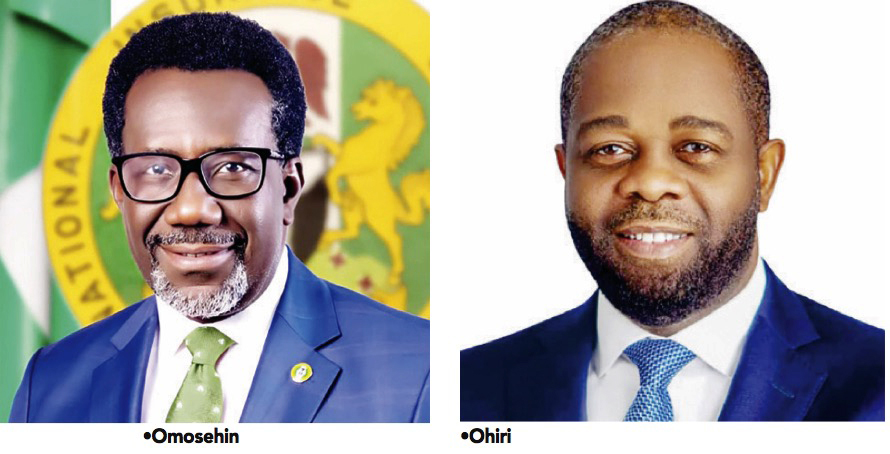
Sometimes the delay may be brief. In other cases, patients and their relatives can spend hours making calls between the hospital and the HMO. The NHIA, through its Director General and Chief Executive Officer, Dr. Kelechi Ohiri, is now attempting to close that gap.
The one hour limit rule
The regulator has introduced a one-hour limit for HMOs to authorise care and issue treatment authorisation codes after receiving requests from healthcare providers.
The directive became operational on April 1, 2025, following concerns that delays in authorisation were affecting beneficiaries’ access to healthcare with very unpleasant outcomes.
For over 22 million Nigerians now covered by health insurance, stakeholders say the rule is more than an administrative adjustment as it changes what subscribers should expect from their health insurance.
However, there is an important qualification, which is knowing that the rule exists is not the same as knowing exactly what your particular health plan covers.
That is why the first rule for every subscriber should be to ‘know your cover before you need it’.
Healthcare facilities are also required to submit requests promptly so they do not create avoidable delays themselves.
The reform was prompted by complaints over delays in treatment authorisation and issuance of codes.
The NHIA has also required HMOs and healthcare providers to keep records of requests and responses relating to treatment authorisation. Where an HMO has a justifiable reason for refusing authorisation, the response should be communicated rather than leaving the patient waiting indefinitely.
For an enrollee, therefore, the question should no longer simply be “when will the HMO approve the request but when did the hospital send the request?”
That time can become important if the case has to be escalated.
The NHIA has specifically urged enrollees to report delays or barriers to accessing healthcare arising from authorisation requests that go beyond the one-hour limit.
Emergencies should not wait for paperwork
The one-hour rule becomes even more important when the patient’s condition is urgent.
The NHIA’s operational position is that emergency care can commence without prior approval, with the authorisation code subsequently obtained within the applicable timeframe.
In practical terms, insurance administration should not become a reason for unnecessarily delaying emergency treatment.
That means a patient who arrives at an approved facility with a medical emergency should receive appropriate attention rather than being left indefinitely while the hospital waits for an HMO response.
For families, the lesson is clear, which is that in an emergency, seek immediate medical attention and ensure that the hospital and HMO deal with the insurance documentation as required by the applicable rules.
Complaints
The NHIA’s complaints data provides a useful window into the problems subscribers encounter.
In its 2025 Complaints and Resolution Analysis, the Authority reported that 3,878 complaints were resolved during the year, representing an 87 per cent resolution rate.
Of the resolved cases, 62 per cent were concluded within 48 hours, while 95 per cent were resolved within the prescribed 21-day timeline.
But the figures go beyond complaints and resolutions.
The Authority said 240 cases were escalated for enforcement review, while 368 warning letters were issued to strengthen compliance.
Nine healthcare facilities were suspended for significant violations of NHIA operational guidelines.
The Authority also reported that more than N14 million was refunded to affected enrollees through regulatory interventions involving healthcare providers and HMOs.
Those figures have an important message for subscribers.
A dispute with an HMO or healthcare provider does not necessarily end with the patient paying whatever bill is presented. There is a regulatory avenue for redress and the key advice is to keep evidence of every dispute.
If a subscriber believes a service has been wrongly denied or an improper charge has been imposed, the safest approach is to document the matter.
The NHIA has urged those affected to keep the receipt, prescription, doctor’s referral, authorisation request and keep the HMO’s response.
More so, subscribers are to record when the request for approval was made and who was contacted.
If a subscriber is told that a service is not covered, ask the HMO to explain why. If money is demanded, ask what the payment represents. This is particularly important because health insurance is governed by defined benefit packages and conditions. The NHIA itself makes clear that its programmes do not cover every ailment and that there are exclusions and partial exclusions.
Therefore, a refusal to pay is not automatically a violation.
The key question is whether the treatment is covered under the relevant plan and whether the HMO and healthcare provider followed the applicable rules.
Insurance card is never a blank cheque
One of the biggest mistakes subscribers make is assuming that having health insurance means every medical expense will automatically be paid. It does not. The NHIA’s own information says its programmes have exclusions and partial exclusions. It also states that beneficiaries generally do not need cash for treatment under its programmes, except for a 10 per cent co-payment for drugs under the applicable programme. That distinction is important.
Before treatment, an enrollee should know: what services are included in the plan; which drugs are covered; are there co-payments; which procedures require prior authorisation; is a referral required before seeing a specialist; which healthcare providers are accredited under the plan; what services are excluded and what happens when the preferred hospital cannot provide the required service.
These questions should be answered before a crisis occurs.
Know your healthcare provider
The HMO is only one part of the health insurance relationship.
The healthcare provider is the facility that actually delivers the treatment and the NHIA regulates the system.
That makes the provider network a critical part of the insurance package.
The NHIA maintains a list of participating healthcare providers and a separate list of accredited HMOs on its official platform.
Subscribers should, therefore, verify whether their preferred hospital is part of their plan’s network.
This is especially important for families that have specific hospitals they prefer for maternity care, children’s treatment, specialist services or emergencies.
An insurance plan can appear attractive until a subscriber discovers that the nearest preferred hospital is not available under the plan.
What if the hospital asks you to pay?
The answer should not automatically be yes or no. Ask questions first.
First, try to know if the treatment is covered; if the charge is a permitted co-payment; if the medicine is outside the approved list; if the procedure excluded and if the payment for a service requested by the patient is not included in the benefit package.
Above all, if the explanation is unsatisfactory, contact the HMO.
More so, if the subscriber believes the charge is improper, retain evidence and lodge a complaint.
The existence of NHIA’s complaints and enforcement system means subscribers have an avenue to challenge conduct they believe violates applicable rules. The Authority’s 2025 data shows that complaints have resulted in regulatory intervention and refunds.
Where do you complain?
The NHIA’s official FAQ says complaints may be lodged with NHIA offices, HMOs or the NHIA call centre.
The Authority also publishes contact information and state and zonal office details. Its official contact page lists its headquarters in Abuja as well as telephone and email contacts.
This means subscribers do not have to regard an HMO’s response as the final word where a dispute remains unresolved.
The NHIA Act 2022 established the Authority as the regulator and provides for mechanisms to address complaints involving enrollees. The Act replaced the former National Health Insurance Scheme Act.
Coverage is expanding
The complaints reforms are taking place against a rapid expansion of health insurance coverage.
NHIA’s official fourth quarter 2025 coverage presentation is part of its continuing effort to track the number of Nigerians covered under the different health insurance programmes.
By the first quarter of 2026, health insurance coverage had reached 22,025,342 people, according to figures presented by the Federal Government and reported by credible Nigerian media.
The figure represents substantial growth from the 16.2 million recorded in the fourth quarter of 2023, amounting to roughly a 35 per cent increase.
For subscribers, that expansion is important, but it raises another question, which is, what happens to the quality of care as coverage expands?
More people carrying insurance cards will mean little if patients continue to face avoidable delays, providers reject insured patients or HMOs fail to respond promptly.
This is why complaints management, provider accreditation, enforcement and payment arrangements matter just as much as enrolment.
Coverage not the same as protection
The number of people registered under health insurance is an important indicator, but it is not the final measure of success.
The real test is financial protection. A person is genuinely protected when illness does not force the household to sell property, borrow at high cost or postpone essential treatment because the family cannot immediately raise the money.
That is the wider objective behind the NHIA’s mandate to expand health insurance coverage and improve financial access to healthcare. The Authority says the NHIA Act 2022 is designed to promote universal health coverage and financial access to quality healthcare.
The government is also using the Basic Health Care Provision Fund to support healthcare financing for vulnerable Nigerians.
In June 2026, the Federal Government approved a further N32.88 billion second-quarter disbursement under the BHCPF.
As of the first quarter of 2026, 2,450,204 beneficiaries had been covered and verified with NIN under the relevant BHCPF arrangement, according to figures presented by the federal government.
These interventions are important because the people most vulnerable to healthcare costs are often the least capable of paying insurance premiums without assistance.
Informal sector remains crucial
One of Nigeria’s biggest health insurance challenges is extending coverage beyond people whose premiums can be collected through formal employment.
A civil servant can have contributions deducted through an organised system.
A trader, artisan, farmer or small-business owner does not necessarily have that structure.
The expansion of health insurance will therefore depend heavily on reaching people outside conventional payroll systems.
The NHIA’s programmes include formal-sector, organised private-sector, vulnerable-group, individual/family and private-plan arrangements.
That broad architecture is intended to move health insurance beyond its historical association with government workers.
But expansion must be accompanied by consumer education.
A newly enrolled subscriber who does not understand referrals, authorisation, provider networks or exclusions may still face serious difficulties when treatment becomes necessary.
Subscriber’s 5-point checklist
Before the next hospital visit, every HMO subscriber should be able to answer five questions.
What exactly does my plan cover? This is important. Do not rely on assumptions. Read the benefit package.
Another poser is which hospital can I use? Subscribers are to check the approved provider network.
Again, what requires HMO authorisation? Know which treatments or procedures require approval.
Again, try to determine what you are expected to pay.
Understand legitimate co-payments and excluded services.
Know where to complain. Save your HMO’s customer-care details and the NHIA’s complaint channels.
These five pieces of information can save considerable time and frustration.
What to do when approval is delayed
If a hospital says it is waiting for an HMO authorisation, first, ask when the request was submitted.
Second, contact the HMO and confirm that it received the request. Third, record the time.
Fourth, ask for an explanation if the one-hour period passes. Fifth, if the problem remains unresolved, report the delay to the NHIA.
The Authority has expressly told enrollees to report delays and barriers resulting from authorisation requests that exceed the one-hour limit.
For emergencies, treatment should not be unnecessarily held back because the authorisation process has not been completed.
Regulation is only half the solution. The NHIA’s tougher approach to complaints and HMO compliance is significant, but regulation alone cannot make health insurance work.
HMOs must respond.
Healthcare providers must submit requests promptly. Providers must deliver the services they are contracted to provide. Subscribers must understand their plans and the regulator must continue enforcing the rules.
The 2025 complaints data suggests that the NHIA is increasingly using complaints not merely to settle individual disputes but also to identify compliance failures.
The Authority said 240 cases were escalated for enforcement review and 368 warning letters issued, alongside the suspension of nine healthcare facilities.
That represents a shift from a system in which complaints could disappear into bureaucracy to one in which complaints can trigger regulatory action.
Message for Nigerians
The days when an HMO subscriber simply accepted “the HMO has not approved it” as the end of the conversation are changing.
The subscriber can now ask; when was the request made; is the treatment covered; why has approval been delayed; what does my benefit package say; what exactly am I being asked to pay for and if necessary, where can I lodge a complaint.
Those are not difficult questions.
But they can make a significant difference.
Nigeria’s health insurance coverage has grown to more than 22 million people, and the NHIA is strengthening the regulatory machinery around those enrollees.
The next phase must be about ensuring that coverage translates into reliable care.
For the subscriber, however, the first line of protection is knowledge.
Know your HMO. Know your hospital. Know your benefit package. Know the authorisation rules. Keep your records. And know where to complain.
Because an insurance card is only useful when the person holding it knows how to make the system work.
Know your rights
You have a right to understand the benefits attached to your health insurance plan.
You should know the healthcare providers available under your plan.
HMOs are expected to respond to treatment authorisation requests within the NHIA’s one-hour timeline.
Emergency treatment should not be unnecessarily delayed by the insurance authorisation process.
You can question charges that you believe are inconsistent with your benefit package.
You can lodge complaints with your HMO or the NHIA.
Keep receipts, prescriptions, referrals, authorisation records and other evidence where a dispute arises.
The real question is no longer simply how many Nigerians have health insurance. It is whether those Nigerians can use their insurance when they need healthcare.
With 22,025,342 people covered by the first quarter of 2026, the system is clearly expanding.
With 3,878 complaints resolved in 2025, an 87 per cent resolution rate and more than ₦14 million refunded to affected enrollees, the regulator is also demonstrating a stronger focus on enforcement and consumer protection.
But for the ordinary Nigerian, the ultimate test remains the same:
When illness comes, does the insurance cover work?
The answer will depend partly on the HMO and provider and increasingly on how well the subscriber understands the rights that come with the cover.