Follow Us on Google
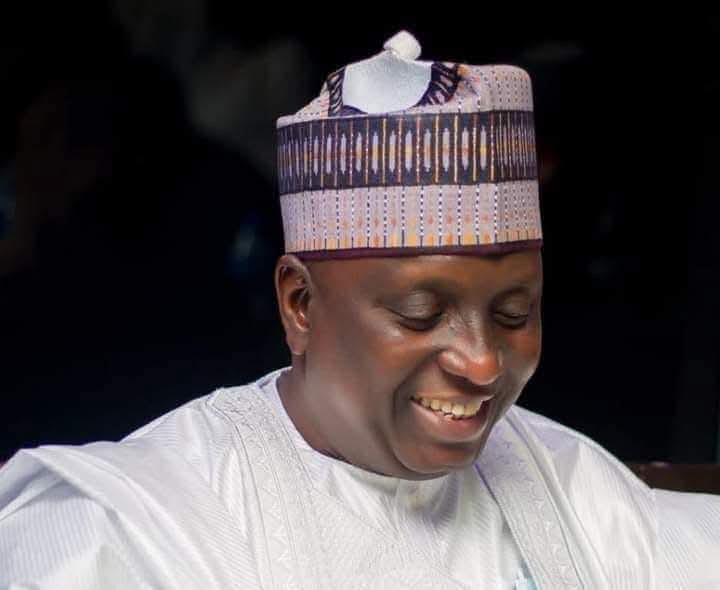
By Femi Ogunshola
I do not often like to tread this path because of the respect and admiration I have for my Ilorin friends, especially my newfound friend from Ilorin, who has shown class and finesse.
But when leaders from Kwara Central, such as Sen Salihu Mustapha and Sen Yahaya Oloriegbe, speak from what appears to be the same position of dominance over other zones, I find it troubling. As someone from Kwara South and a proud son of Ekiti, I must examine these claims.
No one has claimed that Kwara Central lacks voting strength, nor dismissed its ability to unite during an election and produce a candidate. But suggesting that Ilorin must be the only zone to continually produce the governor is, to me, troubling.
The G15 Coordinator, Sen Oloriegbe, declared that they are supporting PDP candidates under the leadership of Sen Bukola Saraki because they want leaders who will answer to them.
That is fine. It is their inalienable right.
But the senator went further to explain that Ilorin has the largest population in Kwara and should therefore be producing the governor again in 2027.
He cited Oyo, Bauchi, Kaduna, Benue, Kebbi, Borno and other states, arguing that what is happening there is what the people of Ilorin are asking for, and urging us to learn from Kogi.
We all understand the case with Kogi, Yahaya Bello, Ododo and the Igalas. The Igala had been in the saddle for years until a Bello changed the game. Oloriegbe forgot that such a scenario could also befall anyone like it also happened in Oyo, when Sen Rasheed Ladoja was impeached.
Oloriegbe further said, “In Kwara Central, we have 1,204 polling units. If we add Moro, Ilorin and its environs account for about 47 per cent of the polling units in Kwara State.”
Unfortunately, when elders who should be the vanguard of unity, love and peaceful coexistence become instruments of division, consumed by a hegemonic mentality, they must be called to order.
This master-servant relationship that Oloriegbe and Mustapha appear determined to impose on other freeborn Kwarans will be resisted, not with insults, but with facts.
The last time Sen Mustapha appeared on Channels TV, while reeling out the list of the Army of G-15, he mentioned himself, Yahaya Seriki and Sen Oloriegbe. Despite Sen Lola Ashiru and Hon. Bashir Bolarinwa being members, he almost forgot them, mentioning them only at the tail end. I shock my head in disbelief.
It, however, appears that sanity may be prevailing with BOB and Sen Ashiru, as they are now seeing more clearly the hegemonic and perpetuity agenda which was why they refused to register their presence at the G-15 rainbow coalition rally.
But can Ilorin single-handedly produce a governor without Kwara South and Kwara North? Can Ilorin’s votes alone determine who becomes governor?
Today, Ilorin is populated by people from different parts of Kwara and neighbouring states. That should caution anyone against presenting Ilorin as a monolithic voting bloc.
As of the 2023 general elections, Kwara State had a total of 1,695,927 registered voters.
Kwara Central, covering the Ilorin area, accounted for roughly 42–44 per cent of the state’s population or voting strength, approximately 700,000–750,000 voters. That is still less than half of the state’s total.
Therefore, to win statewide, a candidate needs more than 50 per cent plus one of the valid votes cast, subject to constitutional requirements.
Even if a candidate receives 100 per cent of Ilorin’s votes, that would still be less than half of the state’s voting strength. The remaining 56–58 per cent comes from Kwara South and Kwara North. No serious statewide strategy can ignore them.
In 2023, the APC won comfortably, but the distribution of votes across senatorial districts demonstrates why no single district should be treated as Kwara’s entire political universe. The PDP also won parts of Kwara Central but lost statewide because it did not secure enough support.
I understand that whoever controls Ilorin controls the tempo, but controlling the tempo is not the same as controlling the election. To win the governorship, a candidate needs support beyond Ilorin.
Ilorin is the single biggest voting bloc and can deliver substantial votes. But it is not enough. A successful governorship campaign requires support from Kwara South, Kwara North, or both.
Besides, Ilorin cannot vote as one indivisible bloc. People from different backgrounds and communities live there, with different political interests and aspirations. They will not necessarily align behind one Ilorin agenda.
The breakdown of the 2023 governorship election results by senatorial district was will proof me right.
The APC’s AbdulRahman AbdulRazaq had 273,424 votes, representing 59.4 per cent, while the PDP’s Shuaib Yaman Abdullahi had 155,490 votes, representing 33.8 per cent.
The APC won decisively, carrying all 16 LGAs, while turnout was 27.9 per cent from 1.69 million registered voters. The margin was about 118,000 votes, while the SDP came third with 4.1 per cent.
So there is a need to rethink the narrative that Ilorin must be the only zone to produce the governor.
What I find most striking, however, is that Kwara South and Kwara North, combined, had enough votes to elect a governor without a single vote from Kwara Central, based on the figures presented here. Together, they form a majority voting bloc.
Based on the 2023 numbers, total votes statewide were 460,497, meaning 230,249 votes would represent more than half of that total.
In essence, Kwara North and Kwara South combined had 146,420 plus 124,294 votes, giving a total of 270,714. That represents 58.8 per cent of all votes, which is comfortably more than half.
By contrast, Kwara Central had 189,784 votes, representing 41.2 per cent.
So, even if Kwara Central were completely ignored, Kwara North and Kwara South together would still hold more than 50 per cent of the votes reflected in these figures.
It is therefore high time that those encumbered by hegemonic thinking came down from their high horses and acknowledged the strength and importance of every region. Kwara should not be built around the dominance of one zone.
United, we can stand; divided, we risk falling. The future of Kwara should be a shared project, not a contest for regional supremacy.
Though it is not a given that an entire region will vote the same way, and that is the beauty of democracy, it is wrong to make it appear that without Ilorin, a governor cannot emerge.
That narrative is unhelpful to Kwara’s unity.