Follow Us on Google

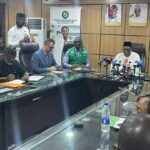
The federal government has disclosed plans to privatize or concession no fewer than 91 state-owned enterprises across the country. The affected enterprises include the nation’s moribund four refineries located in Port Harcourt (Rivers state), Warri (Delta State) and the Kaduna refinery. Others are the Ajaokuta Steel Company in Kogi State, Tafawa Balewa Square, and the Trade Fair Complex, Lagos, as well as five international airport terminals. The Director-General of the Bureau of Public Enterprises (BPE), Mr. Ayodeji Ariyo Gbeleyi, who disclosed the plans, said these enterprises have become drainpipes, despite huge government investments in them.
However, he promised that each transaction preparatory to the outright sale or concession of the national assets will undergo a ‘rigorous and transparent’ process, with inputs from technical, financial, and legal experts. He also stated that the Bureau will not arbitrarily fix values or terms for the enterprises slated for privatization until expert advisers have completed feasibility studies on them. The technical consultants will carry out a detailed review of the operational realities of the infrastructure, including the performance of those listed in the Nigerian Stock Exchange.
The plan to sell these assets has been ongoing for a long time. Successive administrations have debated the issue and yet nothing was done to either privatize or concession them. For example, the Group CEO, Nigerian National Petroleum Company Limited (NNPCL), Mr. Bayo Ojulari, said government was seriously considering the privatization of the refineries, saying years of costly rehabilitation efforts have yielded little or tangible results. According to him, the management of NNPCL is reassessing its entire refinery strategy with a comprehensive internal review expected to be submitted by the end of 2025.
Figures from the government showed that, in the past decade alone, a total of N11.35trillion (equivalent of $25billion) had been spent on the rehabilitation of the four refineries. And between 2021 and 2023, $3 billion was spent on Turnaround Maintenance (TAM). Of this amount, Port Harcourt refineries gulped $1.5billion. The four state-owned refineries have an installed capacity of 445,000bpd, lower than the 650,000 bpd installed capacity of the privately-owned Dangote refinery located at Lekki, Lagos. The government-owned refineries have operated far below capacity. Some have been idle despite huge resources deployed to bring them back on stream. We support the sale of most of these enterprises, especially the refineries that have become burdensome to manage. The turnaround maintenance of the refineries has been riddled with corruption. This can explain the call for their outright sale by concerned Nigerians. The privatization of some of these assets is welcome provided that it will follow due process. If due process is jettisoned, there are fears that these assets will go to politicians and their cronies. We abhor a situation where a few privileged Nigerians will take over the ownership of our common patrimony.
Other News
We raise these fears considering our recent past experience on privatization where wealthy Nigerians bought over the national assets at questionable fees. Let the planned privatization or concession be transparent and follow due process. Whatever is done in the privatization process must be in line with global best practices. Anything short of a transparent process will make a mockery of the privatization plan and further erode public confidence in the system. With the privatization of the refineries, the government can use the money for annual TAM to do other things.
The case of the refineries is as disturbing as that of the 46-year old Ajaokuta Steel Complex that was conceived as the ‘bedrock of Nigeria’s industrialization, modernity and prosperity.’ For decades, the plant stood as a symbol of Nigeria’s dream for greatness, based on the massive 24,000 hectares of land appropriated for the construction, of which 800 hectares cover the site plant. The edifice also comprised 10,000 houses, a hospital and school. With over $8billion reportedly spent on the Ajaokuta Steel without a bar or coil of steel produced from the envisaged 3 million metric tons of steel since inception, the plant has become a monumental failure, an awesome example of a white elephant.
The Ajaokuta Steel Complex can be traced to frequent ownership changes, poor governance and sheer incompetence. These poorly managed national assets have justified the claim that government should not engage in business. The collapse of the Nigerian Airways is a typical example that government should not be involved in business. The proceeds from the privatization should be invested in infrastructure development which will stimulate economic growth and enhance the welfare of the people.
The government must exercise caution in the privatization of these assets and ensure that due process prevails. The buy-in of experts and their recommendations should guide the privatization process. Let the government carry out the privatization process with sincerity of purpose and avoid unbridled sectionalism that appears to have become a feature of our national life.