Follow Us on Google
By Seyi Babalola
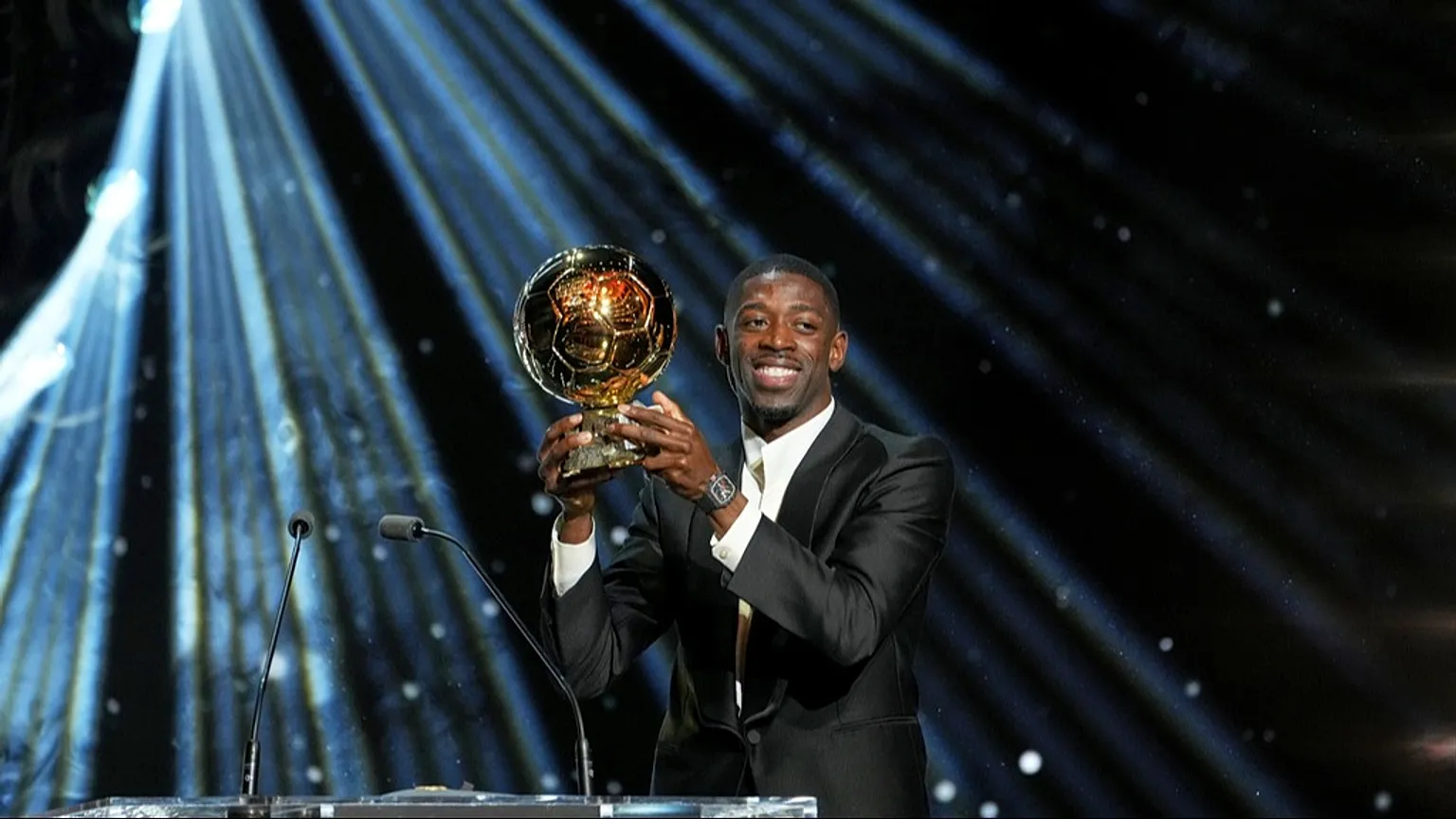
On September 22, 2025, at the Théâtre du Châtelet in Paris, Ousmane Dembélé etched his name into football immortality by claiming the 2025 Men’s Ballon d’Or, the sport’s pinnacle individual honour.
The 28-year-old Paris Saint-Germain forward, who beat out Barcelona sensation Lamine Yamal (2nd) and PSG teammate Vitinha (3rd), became the sixth Frenchman to lift the trophy, joining legends like Raymond Kopa, Michel Platini, Jean-Pierre Papin, Zinédine Zidane, and Karim Benzema.
Dembélé’s emotional acceptance speech, delivered with tears streaming down his face, paid tribute to his family and supporters, declaring, “The Ballon d’Or was never a goal in my career, but I’m happy tonight.”
Presented by 2005 winner Ronaldinho, another PSG icon, the moment symbolised a full-circle redemption for a player whose path to glory was anything but linear.
Early Promise: A Prodigy emerges
Born on May 15, 1997, in Vernon, Normandy, Dembélé’s talent shone early.
At just 18, he exploded onto the scene with Lille in Ligue 1 during the 2015-16 season, scoring 13 goals and providing 17 assists in 26 games.
His blistering pace, dribbling wizardry, and vision drew comparisons to a young Lionel Messi.
By 2016, Borussia Dortmund snapped him up for €15 million, where he thrived in the Bundesliga, contributing to a 6-1 thrashing of Tottenham in the Champions League and earning a spot in France’s 2018 World Cup-winning squad.
At 20, Dembélé was hailed as football’s next big thing—a versatile winger who could unlock defences with a flick of his boot.
The setbacks
Injuries and unfulfilled potential fame came quickly, but so did adversity.
In August 2017, Barcelona shattered transfer records by signing Dembélé from Dortmund for an initial €105 million (potentially rising to €145 million), positioning him as Messi’s long-term successor on the right wing.
A ruptured hamstring just two months in sidelined him for four months, derailing his debut season.
After more than six years at Barça, injuries became a cruel companion: 38 separate spells on the sidelines, including a torn ACL in 2021 that kept him out for eight months.
Other News
Critics labelled him “fragile” and “inconsistent,” with his dazzling skills often overshadowed by erratic finishing and off-field whispers.
Flashes of brilliance
By 2023, like his role in France’s 2022 World Cup final run, Dembélé had scored just 40 goals in 185 appearances for Barcelona, falling short of the Galáctico expectations.
A €50 million move to PSG that summer felt like a fresh start, but few predicted it would culminate in Ballon d’Or glory.
Reinvention under Luis EnriqueDembélé’s PSG chapter began promisingly, but it was a tactical masterstroke from manager Luis Enrique in December 2024 that unlocked his true potential.
Shifting from his familiar right-wing berth to a central striker role, Enrique harnessed Dembélé’s ambidexterity (he is equally lethal with both feet) and work rate.
No longer relying solely on flair, Dembélé embraced the “dirty work”: relentless pressing, leadership in build-up play, and clinical finishing in the box—areas that had long eluded him.
“He learned to love tap-ins and not ‘cheat’ by dribbling into dead ends,” Enrique later quipped.
Transformation
This evolution transformed PSG into a dominant force, blending Dembélé’s creativity with the squad’s depth, including stars like Achraf Hakimi (6th in Ballon d’Or voting) and Kylian Mbappé (7th, now at Real Madrid).
The 2024-25 campaign was Dembélé’s masterpiece, a statistical and narrative triumph that propelled PSG to a historic European treble and made him the undisputed architect of their success.
Dembélé’s 51 goal involvements across all competitions edged out rivals like Mohamed Salah (57 in top leagues but no UCL success) and Mbappé (43 goals but trophyless at Madrid).
His eight UCL goals tied him for second in the tournament, but it was his intangibles—moral leadership, fair play, and big-game poise—that swayed voters.
PSG’s five-trophy haul (Ligue 1, Coupe de France, Trophée des Champions, UEFA Super Cup, Champions League) mirrored Barcelona’s 2009 dominance under Pep Guardiola, with Dembélé as the linchpin.
Ballon d’Or glory
Dembele’s spectacular season culminated in his winning the coveted Ballon d’Or Award in what many describe as a well-deserved recognition.
At 28, with PSG eyeing dynasty status and France gearing up for the 2026 World Cup, his journey reminds us: the most coveted award often crowns the unlikeliest hero.