Follow Us on Google
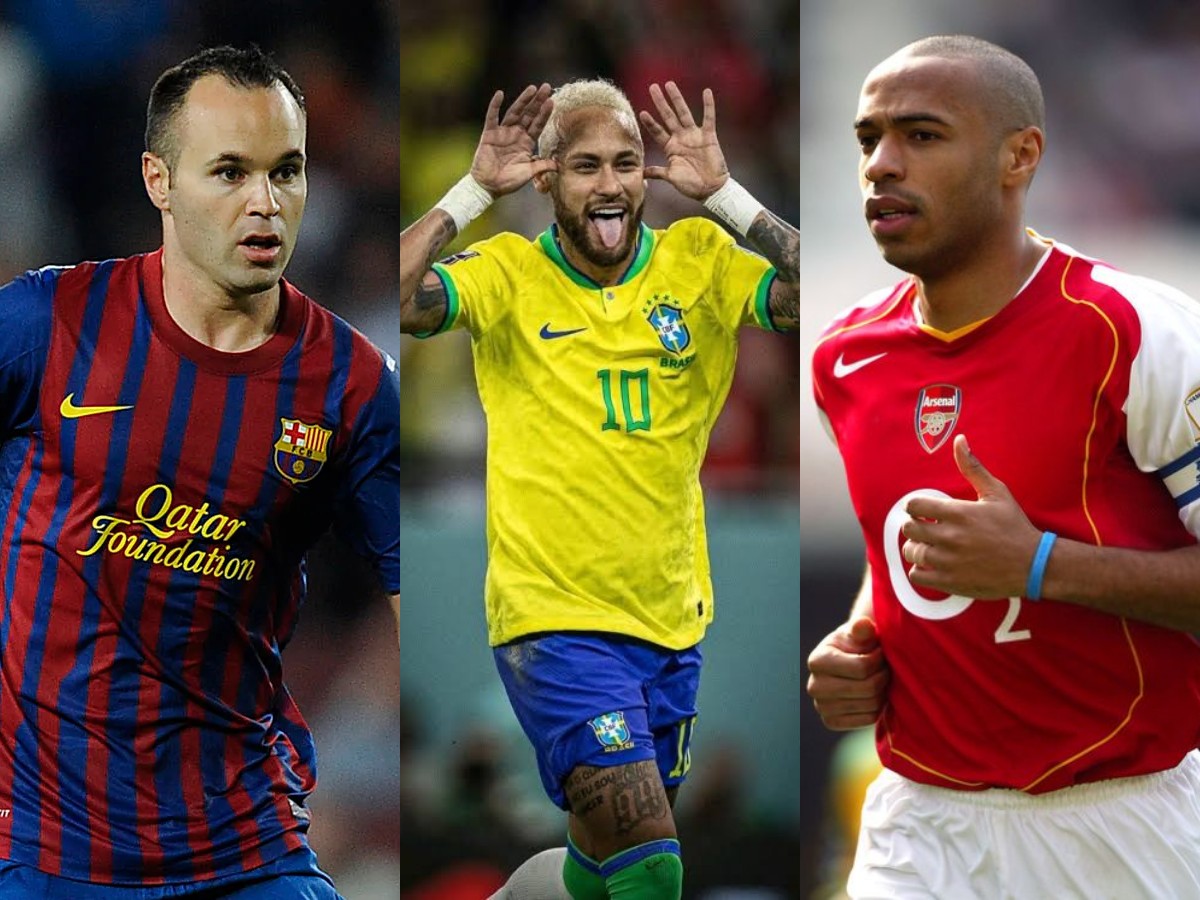
The Ballon d’Or has long favoured goals, assists and trophy-laden campaigns, leaving some of football’s greatest midfielders, defenders and goalkeepers without the sport’s most prestigious individual award.
The dominance of Lionel Messi and Cristiano Ronaldo further narrowed the path for elite players during an era in which extraordinary seasons were often not enough to claim the prize.
Several legends came close, finishing among the top three or even as runners-up, but seven stand out for the strength of their careers and the quality of their individual near-misses.
1. Andrés Iniesta
Iniesta’s career combines individual brilliance with some of football’s biggest trophies.
He scored Spain’s extra-time winner in the 2010 World Cup final and was central to Barcelona’s Champions League triumphs in 2009 and 2011.
He finished second in the 2010 Ballon d’Or voting, taking 17.36 per cent against Messi’s 22.65 per cent, and was third in 2012.
Despite scoring one of the most important goals in Spanish football history, Iniesta never claimed the award, partly because he spent his peak years alongside Messi.
2. Thierry Henry
Henry was the defining attacking force of the Premier League’s first golden era and came closest to winning the Ballon d’Or in 2003.
He finished second to Pavel Nedvěd despite producing a remarkable goal-and-assist campaign for Arsenal. He was also third in 2006.
The Frenchman later won the Champions League with Barcelona and the World Cup with France, strengthening a career that already placed him among the greatest forwards of his generation.
His 2003 finish remains one of the award’s most frequently debated results.
3. Paolo Maldini
Few defenders can match Maldini’s career. The Italian spent 25 seasons with AC Milan, winning five European Cups and seven Serie A titles.
Yet the Ballon d’Or never came his way.
Maldini finished third in 1994 and 2003 and was second in the 1995 FIFA World Player of the Year award. He also became the first defender to win World Soccer’s World Player of the Year award.
His omission highlights one of the Ballon d’Or’s longest-standing problems: defenders have historically struggled to compete with forwards for the top individual honours.
4. Gianluigi Buffon
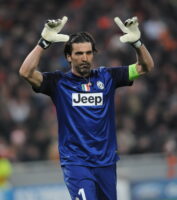
Buffon came agonisingly close in 2006 after helping Italy win the World Cup.
He finished second behind his Juventus and Italy teammate Fabio Cannavaro, who claimed 173 points to Buffon’s 124.
Only Lev Yashin has won the Ballon d’Or as a goalkeeper, underlining the difficulty players in the position face.
Other News
Buffon nevertheless maintained an elite level for years, including after Juventus were relegated to Serie B following the Calciopoli scandal, before returning to the top of European football.
5. Robert Lewandowski

Lewandowski’s biggest Ballon d’Or disappointment came in a year when he did not even get the opportunity to compete.
The Polish striker was instrumental in Bayern Munich’s 2019–20 treble-winning campaign and produced one of the most prolific scoring seasons of his career.
However, the Ballon d’Or was cancelled in 2020 because of the disruption caused by the COVID-19 pandemic.
He finished second in 2021 after scoring a Bundesliga-record 41 goals in a league season.
For many observers, the cancelled 2020 award remains the clearest example of an individual losing an opportunity through circumstances beyond his control.
6. Wesley Sneijder

Sneijder’s 2010 campaign remains one of the strongest cases for a player who came close to winning the Ballon d’Or without claiming it.
The Dutch midfielder helped Inter Milan win Serie A, the Coppa Italia and the Champions League before guiding the Netherlands to the World Cup final. He scored five goals at the tournament and won the Silver Ball.
He finished fourth in the 2010 FIFA Ballon d’Or, behind Messi, Iniesta and Xavi. However, the voting system that produced that result was at the centre of the controversy.
The 2010 award was the first after France Football’s Ballon d’Or was merged with FIFA’s World Player of the Year prize.
Instead of journalists alone deciding the winner, the electorate included national-team captains, national-team coaches and selected international journalists.
Messi benefited heavily from the expanded voting system, receiving the highest share from both captains and coaches.
The published figures showed Messi with 22.65 per cent overall, followed by Iniesta on 17.36 per cent, Xavi on 16.48 per cent and Sneijder on 14.48 per cent.
Yet Sneijder actually received the highest share of the journalists’ vote, with 7.70 per cent, narrowly ahead of Iniesta’s 7.53 per cent. Messi was fourth among journalists with 4.38 per cent.
This does not imply that Sneijder was officially robbed under the rules. Rather, it shows how the newly merged voting system changed the outcome: the journalists favoured Sneijder, while the combined votes of coaches and captains pushed Messi to the top.
Had the old France Football system remained in place, Sneijder would have won the Ballon d’Or on the journalists’ vote alone.
7. Neymar
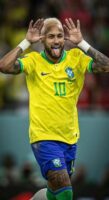
Neymar finished third in the Ballon d’Or voting in both 2015 and 2017, placing him among the few players of the Messi-Ronaldo era to seriously challenge the established order.
At Barcelona, he formed part of one of the most formidable attacking partnerships in modern football and developed into a player capable of sharing the spotlight with Messi.
His move to Paris Saint-Germain produced impressive individual numbers and domestic trophies, but injuries, the absence of a Champions League title and Brazil’s failure to win the World Cup limited his chances of going further.