Follow Us on Google
By Chinelo Obogo
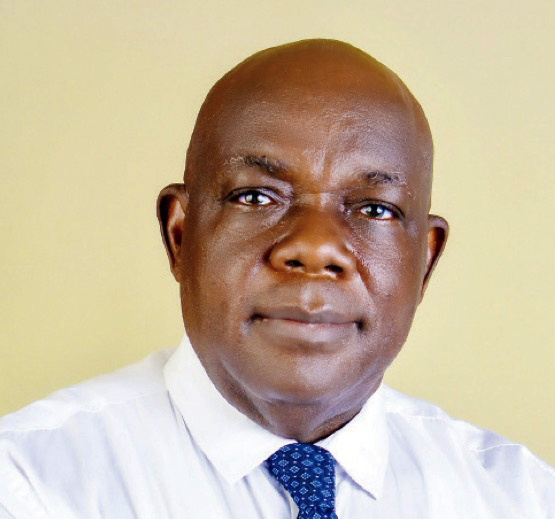
Dr. Christopher Ede is the founder of East Wing Aviation, a diploma-awarding aviation institute based in Enugu that trains aircraft engineers.
In this interview with Daily Sun, he said that despite over a decade of operation and hundreds of its graduates now working in the aviation sector, the institute has grown largely without external backing or funding. He said over the years, he has sought support from the government, but nothing has been forthcoming. He spoke on why he believes Nigerians should be investing in institutions like his.
How I started
I started my career in the Nigerian Air Force in 1984. After serving for some years, I left for Russia, where I earned my Bachelor’s, Master’s, and Doctorate degrees in Aeronautical Engineering. My thesis focused on aircraft engines, which became my area of specialization. I returned to Nigeria in 2002 and found myself at the Nigerian College of Aviation Technology (NCAT), where I was looking for a job. I was offered a position as an instructor and eventually became a department head at NCAT before I left. After NCAT, I saw an advertisement from CAC Canada offering a better salary, so I moved there. I later worked with Mid-Air Contractors for some years, and when an even better offer came along, I moved on again.
Why I founded East Wing Aviation
Throughout my time at NCAT, I noticed that our people were not properly represented. Northern governors would bring 10 or 20 students at a time and pay their school fees, but people from the South-East were left behind. I kept thinking about what I could do to bring more of our people into aviation. While I was in Lagos, I bought some plots of land in Enugu and developed them over time. Once it was ready, I invited the Nigerian Civil Aviation Authority (NCAA) to inspect it for approval. Fortunately, it was approved, and we began training young people in the industry, teaching them how to become engineers and maintain aircraft. I’m happy that some of them are now working outside the country.
Looking at the South-East, I noticed most of our people were not going into aviation; they were mostly into marketing and trading. People kept asking me why the school wasn’t in Lagos, and I would ask, “Why not in the East? Why not Enugu?” They said people didn’t know anything about Enugu in this context, so we decided to make them aware.
From Training Centre to Accredited Institute
In 2024, I applied so we could begin admitting students straight from secondary school through JAMB. Our school was inspected and approved as an institute. We have trained more than 300 people, many of whom are now working in the industry. We are currently approved for two courses: Aircraft and Avionics Engineering. Under the NCAA, we could expand to offer more. We train helicopter engineers and provide licence-preparatory training for those aspiring to work in the industry, as approved by the NCAA under Part 3 of the Nigerian Civil Aviation Regulations.
Reaching students in the South-East
Most of our students so far have come from the South-South region. That’s why we started marketing more actively in the South-East, to let people know what we’re doing. Last year, one of our best all-round students, from Anambra State, earned a scholarship. We hope to continue producing a top scholarship student every year. We also now partner with a school in Europe that gives our students access to about 535 online courses, fully paid for. Some of my instructors are retired Air Force personnel who have worked in the industry and hold licences from the Air Force. Some are retirees from NCAT as well.
Difficulty for pilots, engineers to get jobs
Some airlines used to train people directly, but they’ve grown wary. After training someone and having them sign a service bond, the person often leaves for a better offer as soon as the bond period ends. Someone from another company simply asks, “How much are they paying you?” and the person moves on. I always tell my engineering students: A bird sitting on a tree branch shouldn’t fear the branch breaking; it should trust its own wings because a strong wing means you can fly out at any time. Get yourself properly trained, get a proper licence, and you’ll always have options.
European Aviation Safety Agency licensing
I was the first to introduce the EASA exam here in Nigeria. Students from Ghana and Ethiopia have come here to sit the exam. People said it wasn’t possible to bring EASA to Nigeria, but I insisted: Why not? Africans should have that option. We should be the ones supplying skilled aviation manpower to the rest of the continent.
The EASA licence is recognized worldwide and can be used anywhere. To obtain it, candidates must pass 16 exam modules with a minimum of 75 per cent each. Once you pass all 16, you can proceed to your “log-ins” (practical, on-the-job training hours) under Part 147, which are required before a licence is issued, though currently, those log-in hours must be completed in Europe. We prepare students for these 16 exams. We currently partner with the Sofia Aviation Academy in Bulgaria and previously worked with a school in Scotland before it moved to a different administration. We also have an ongoing partnership with Ekaros in Cyprus.
Our standard is exactly the same as NCAT’s. We were established under Part 3 of the National Civil Aviation Regulations, and Part 2 covers personnel licensing. To qualify for a Part 2 licence, you must go through an approved training organisation under Part 3, and once you meet those requirements, you qualify, regardless of which approved institution you attended. In fact, one of our students, based in Benin, had originally planned to study in Scotland. The school there advised her to attend East Wing Aviation instead, since she’d receive the same training. She’s since completed her ND programme with us.
How many students have passed through the school since 2012?
It’s hard to give an exact number. Some are foreigners, including several Ghanaians who regularly come for our EASA exams. Altogether, more than a thousand people have passed through, including about 300 in Anambra and 10 sent by the Rivers State Government. As an accredited institute specifically, we’ve graduated around 40 students so far, since NCAA regulations cap each class at around 20–25 students.
After the first year of training, students proceed to PRODA in Enugu for industrial attachment, then return to us for another year, followed by another year at an airline. That three-year cycle qualifies them for a National Diploma. We also award a Higher National Diploma (HND) in Engineering Management, and we’re now applying to offer HND as well. Space is currently our biggest constraint, which is why we’re moving to a permanent site.
Partnerships with airlines?
Not directly, though some of our students complete their industrial training (IT) with them. Currently, I personally conduct type training on helicopters, the AW139 and the AS/EC helicopters used by several companies. Once someone completes their basic licence through our institution, they can go on to Boeing or Airbus for type training, which typically takes about four weeks—a very different commitment from the three years needed to obtain a basic licence. Type training does require NCAA approval, and for now, our focus is on helicopters, since fixed-wing type training in Lagos is already highly competitive. Coincidentally, some of my competitors in that space are my former students.
Any plans for a Maintenance, Repair, and Overhaul facility?
Everything comes down to funding. I hold a PhD in Aeronautical Engineering, and there’s no aspect of this field I can’t mentor someone in, but expanding into something like an MRO requires resources we don’t currently have. You do what you can do best, and for us, that’s training.
Our biggest challenges and lessons
We know what needs to be done, but we haven’t received support from anywhere. People see that what we’re doing is good, but they just watch from a distance.
Have you actively approached people or the government for support?
Not really, because we wanted to have something solid on the ground first. When people want to trust you, they need to see your work physically—the trained students, the facilities. We did write to the state governor, but we haven’t been able to secure an audience with him. One immediate issue is the road leading to the school, which hasn’t been fixed. A better road would make the site far more accessible to the airport. Government involvement is essential not just in words, but in real engagement with what we’re building. Beyond that, the message to our people is that the funds that go into other ventures could just as easily support institutions like ours. We’ve built what we have without outside support. The achievements are real, the offering is strong, but funding remains the constraint.
Why airlines fail
In aviation, teamwork matters. Many airlines fail due to poor management and a lack of understanding of what the business truly requires: staff salaries, spare parts, fuel, mandatory recurrent training for engineers and pilots every one to two years, and rigorous maintenance. An aircraft earns money while flying and costs money while grounded, so operators are often tempted to rush maintenance to keep aircraft in the air. Operators need to provide the resources for proper maintenance and avoid cutting corners on training, even though it’s expensive, simply out of fear that a trained engineer might leave for a better offer elsewhere.