Follow Us on Google

“Nothing is more difficult, and therefore more precious, than to be able to decide.” —Napoleon Bonaparte
By Cosmas Omegoh
Last Wednesday’s flash flood that rampaged through Lagos State opened a new vista for the state governor, Mr Babajide Sanwo-Olu.
The flood disaster which left its imprimatur on every part of the state opened the eyes of many to the grim reality that previous efforts at combating the menace only scratched it on the surface.
Over time, the Lagos State had experienced flooding of various proportions. Those who follow trends know that the state is naturally flood-prone. Even, some say it lies below sea level.
Over time, the various administrations in the state have done their best to fight flood disaster. Yet the area is still not immune to the challenge.
In the recent past, for instance, Lagos State had created a drainage unit to ensure free flow of floods whenever it rained. More of the agency’s job was de-silting the drainage and also freeing them of filth. In some areas, huge drainage collectors had been constructed to help empty floods into the lagoon.
But as the state continues to grow, the reality dawns that enough has not been done to halt the flood.
After last Wednesday’s downpour, those old enough to know reasoned – and they were right – that the state and the residents still have a lot to deal with.
Across the state, most homes and property got submerged. High-browed areas like Victoria Island, Ikoyi, Lekki Phase 1, Ikeja, as well as Amuwo Odofin, Oworonshoki and others, were for hours underwater. Roads in those areas were taken over. In areas considered as slum, the residents’ pains were untold. They have long resigned to their fate. So, their tears no longer flow.
After the rains and floods, many residents consoled themselves by posting social media footage of the impact of the disaster in their areas. It was a show of solidarity and unity in suffering of some sort.
In some areas, the floods rose thigh high. Most residents were chased away from their homes after their houses were overrun, their household property destroyed and cars swallowed up. Some communities could not access their neighbours. Children in many areas could not go to school; their parents did not allow them to do so.
Until the flood started to recede, businesses were grounded. Even most workers could not go to work for fear of the rains and the attendant floods. So, a reign of uncertainty mounted.
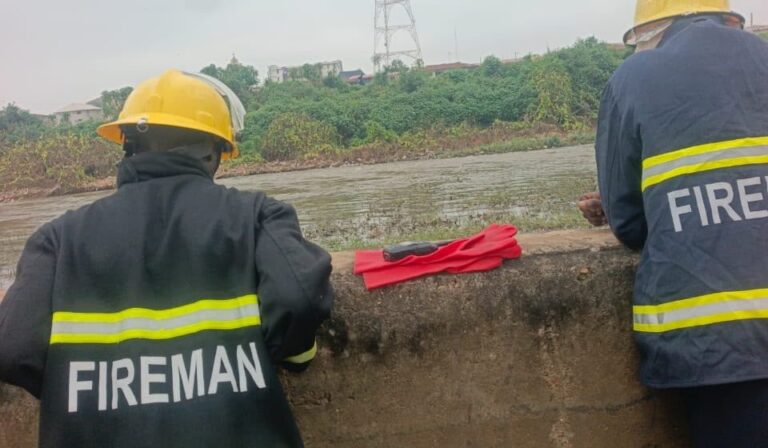
To underscore the enormity of the floods, some government agencies rose to help. But their effort was only limited by the quality of technology available to them. It is because of that, that, Governor Sanwo-Olu needs to empower government agencies to stand ready to render more help in the future as more floods loom.
During last week’s disaster, there was a reported case of a kid who was swept away. That was sad. But happily, the fatality figure did not excede that number.
However, all what the residents experienced point to the truth that the Lagos State government has not really hit the nail on its head.
Other News
In some areas – although it was a bizarre culture that had existed before now– able-bodied men ferried stranded residents across the flood on their backs for a fee.
In some other areas, street urchins constructed makeshift bridges and charged access fee. They were allegedly arrested. But they were only filling a void which the government must now rise to ensure that it no longer exists. Over the past months, the state Commissioner for Environment and Water Resources, Tokumbo Wahab, has been handing out assurances that his ministry had done more than enough to keep away the floods.
All this while, his ministry has been pulling down property in controversial circumstances, claiming they stood on floods’ right of way. So far, many of property and business owners have regrettably lost their investments; they are still sulking.
Sadly, certain ugly undertones had crept into the entire exercise. Some social media users have been telling Mr Wahab that there were no solutions in some of those his demolition exercises, voicing their suspicion of political agenda.
In his social media handle, Mr Wahab had hit back at his traducers, even vowing more demolitions.
Now, many people suggest that in the light of the hardship in the land, the Sanwo-Olu government needs to show human face while taking down houses at will, urging all parties to the crisis to eschew bitterness.
Although combating flooding in Lagos is the way to go, random demolition of people’s property in these difficult times could be unconscionable. Perhaps, to assuage the people’s pains, the government needs to give affected individuals ample time to vacate their property. Handing them a 24-hour notice to do so is unfair in good conscience. Let fair be fair.
Going forward, concerned Lagos residents want to see Governor Sanwo-Olu brace up for the coming rains and floods.
The people want to see him try every trick in his bag to ensure that a legacy of Lagos plagued by lesser floods is left for the generation well on its way.
Will it be out of place for him to bring in experts from wherever he can find them to holistically look at Lagos and construct a flood-management master plan to mitigate the disaster? Perhaps, doing so will egg the state further towards realising its mega city dream.
Indeed, Lagos has the war chest to accomplish whatever project it sets its sights at. Top on that bill ought to be fighting flood to a hilt. Doing so will help grow its economy and boost investment, just as it will further improve the lives of the residents by miles.
Overtime, contracts for construction of roads and drainage in the state and local governments are hardly followed up to the letter. It is either the contractors begin the work at the wrong time or they allow it to drag into the rainy season thus causing the communities to suffer hardship. Sometimes, the projects are either done haphazardly or abandoned, thus opening the communities to flooding. Government needs to see to this.
The Sanwo-Olu government needs to see that projects whose impact will touch the lives of communities and residents are started in the dry season and completed before the outset of the rains, just as the quality of work done needs to be certified to ensure that it is not sacrificed on the altar of corruption.
Meanwhile, as the rains and floods keep up their threat, now is the time for the state Wahab and his ministry to start going round with the community leaders to identify their areas of challenge.
The communities and the residents know the flood channels. They know who built on where they were not supposed to build.
Therefore, the government needs to forge close collaboration with Community Development Associations (CDAs) so as to understand how the people can be best served.
As all and sundry head for the peak of the wet season, the government needs to listen to the community leaders when they cry for help, and when lethargic construction work being done in their communities or elsewhere near to them is hurting them. That way, the government will be seen working with the people and for the people.