Follow Us on Google
• Why I won’t support Tinubu, Atiku, Obi
• How Tinubu balkanised Northern Nigeria
By Fred Itua, Abuja
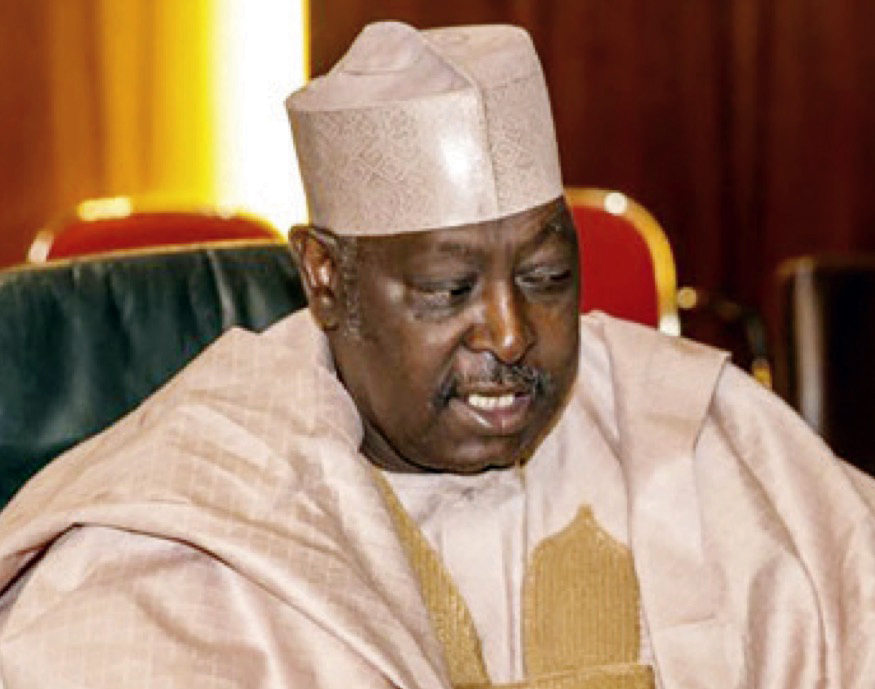
Babachir David Lawal is a politician and an engineer by profession. A close political ally of former President Muhammadu Buhari for over a decade, Lawal served as the Secretary to the Government of the Federation (SGF) from 2015 until 2017.
Hailing from Adamawa State, his tenure at the apex of Nigeria’s civil service and his deep roots in northern politics have made him a central figure in the nation’s contemporary political landscape.
In this interview with Sunday Sun, the former SGF opens up on the administration of President Bola Ahmed Tinubu, his re-election bid, Peter Obi’s chances and why he believes former Vice President Atiku Abubakar can never rule Nigeria as President. He also speaks on insecurity, state police, among others
With recent developments, people are wondering which party you currently belong to. Are you still a member of the ADC after the recent fallout with the former Vice President?
I am not a member of the ADC. Must I belong to a party? I am an engineer. I am a theologian. I am in many professions. I am a farmer. I am a worker. I have so many streams of activities and streams of livelihood. I am a missionary. I do not have to belong to a party. I have left the ADC.
One could classify Atiku Abubakar as your kinsman, being from the same state. There have been questions about the genesis of your frequent disagreements with him. Is it personal, or is it born out of political differences?
Why do you say frequent? How many times have we disagreed? I have never been in the same political space with Atiku. In 2014, he met me in the APC after we had already formed the party. Politicians were free to join. We could not drive them away. But it is not as if we formed the APC together. It is more like we formed the APC and then they joined. He joined along with some governors. So, I have never truly been in the same political space with him in that sense, and I never knew firsthand how he operates until recently.
So what led to the recent disagreement?
He is a man who likes absolute control and domination of others. He is the type of person who wants to control a structure from the polling unit level all the way to the executives. That is not politics to me. In politics, you focus on your own lane, pursue whatever ambition you have, and allow others to pursue their own ambitions at whatever level they choose to participate. But Atiku Abubakar is full of himself. As a simple illustration, you can see that he still lives as though he is a vice president. His convoy is sometimes longer than that of a sitting president. He moves around in private jets. He moves around with protocol officers who clear the road for him, just as they did when he was vice president. He seems to have internalised the belief that people should serve him, not the other way around. I do not consent to that type of conduct.
In this case, was the contest for control of the ADC structure in Adamawa part of what led to the disagreement?
No, not at all. There was never a contention for control of the Adamawa ADC. Well, he likes to fool himself. It is not about who is in charge. It is a party system. There is a structure, there are executives running the party at every level. I happened to be the National Vice Chairman for that zone as well. But I never conceded to him that a former vice president could give directives over and above my head to the rank and file below. It had gotten into his head that being a former vice president entitled him to behave like that. When his sycophants go to him with complaints, he likes to give orders. Knowing that I am not the type of person he can order around, he would sometimes try to leapfrog me and go directly above me, but I never allowed it even there.
In 2023 you disagreed with and refused to support your long time friend, the current President Bola Ahmed Tinubu, over the Muslim-Muslim ticket. Three years down the line, have you reached out or renewed that friendship you once had with him?
Reach out to do what? What is bad is bad. It does not change with time. The sense of equity is constant. If there is a lack of equity today, a hundred years from now it remains the same. Truth does not change with time. What is good remains good. What is bad remains bad.
But those who argued that Christians would be marginalised by this government say that fear has not really played out. As a clergyman, is that true?
Have Christians been well represented in this government? When you ask questions like this, you do not feel what we feel. In the North, the word minority is not actually the proper word. Let me explain it this way. You can only understand the North in the context of what the jihad did or wanted to do. Usman Dan Fodio was successful in conquering the Hausas and installing emirs. With the other tribal groups in the North, he was not able to do that. He was effectively resisted. There is not a single smaller tribe in the North that Dan Fodio successfully conquered and subjugated into Islam. There are Muslims among us, but they are there by persuasion, not by compulsion. When the British came, they found the larger part of the North almost monolithic and already under the Islamic caliphate system of governance. The imperialists found it easy to co-opt and adopt that system. They did not need to set up new structures to collect taxes and maintain peace. Since the Hausa people were completely subjugated, they already had emirs running the system. In those areas they could not subjugate, they decided to create some form of emirate structure. While those emirates were not always successful, you saw small pocket chiefdoms in places like Nasarawa and Adamawa, among largely Christian populations. What they did was downgrade the traditional chiefs on the ground and elevate the emirate system. Even in Yola, it was only a small village in Guri before they downgraded all the chiefs and upgraded the emirate system to create a uniform structure. The tension has remained ever since. Those ethnic nationalities whose rulerships were downgraded have been struggling to recover their status.
How has that tension manifested in the bureaucracy today?
If you were to go to Abuja today and enter any government establishment, you would find that a northern Christian has one consistent complaint: marginalisation. Before you arrived, I had just received someone who works in a government agency. He has been passed over repeatedly. He is due for branch leadership, but nobody gives it to him. They continue to elevate people below him. That is the universal cry for ethnic nationalities in the North – ‘they refuse to promote me. There is a vacancy above me, yet they bring in a Fulani or a Muslim man and elevate him instead.’ And even within Islam there are two categories. The Fulani and the Hausa are in category A. Those from our people who are Muslims by persuasion are in category B. So where they cannot find a Hausa or Fulani man for a position, they manage with an ethnic nationality who is Muslim. But even they are second class. Perhaps we are third class and they are second class. That tension is alive today.
So, has the Tinubu administration elevated that tension or maintained the status quo?
President Tinubu’s agenda has nothing to do with restoring equity in the system. His agenda vis-à-vis the North, as I see it, is to balkanise the North along existing fault lines. He operates at the upper echelons of society and has no interest in people like us. Tinubu does not appreciate that within the North there is a Kilba man, a Jukun man, a Tiv man. For southerners, we are all Hausa or we are all Fulani. Tinubu does not concern himself with liberating us. He distributes appointments as the Fulani do: if there is no Yoruba man available, he manages with whoever will do his bidding. He has no interest in addressing the oppression embedded in the system.
With this alleged balkanisation of the North, would that affect his chances of re-election?
Yes. To be honest, all over Nigeria there is suffering. Security suffering, economic suffering, social segregation and division. All of this contributes to tension within the system. But in the North, it is peculiar because our governments and our elites have failed us woefully. We feel the impact of these economic, social and security dysfunctions more than other places. If that were to translate into votes, people would vote against him. Almost every Nigerian would vote against him. The North in particular would do so more forcefully. But in politics, it is a basket of many things. It is not one factor that determines the outcome. Which brings me to my position on Atiku Abubakar. The ADC rank and file knows that Atiku will not win the presidency for them. First, because there is a fatigue against that man all over the country. He has been a recurring figure in every presidential election since 1999, and indeed since 1993. Nigerians are asking what is driving him to that position. It cannot be altruistic. It cannot be other than self-serving. People are tired of him.
Other News
You mentioned that your fears about the Muslim-Muslim ticket have been confirmed. In what sense?
In the sense that banditry has increased everywhere. Every state now has its own brand of banditry, and all of it is largely driven by those who feel emboldened because their people are in power. They feel this is their government. I used to tell this story when I was the Secretary to the Government of the Federation. I went to my farm and some Fulani men pushed their cattle into it. I was there. We apprehended them and took them to the police station. At the station they were bragging to the police that they had people in government. When the police locked them up, calls started coming from Abuja asking for their release. Because I was the SGF, my authority was sufficient. Eventually, they were prosecuted. But that scenario has played out over and over again.
Do you think that if President Tinubu maintains a Muslim-Muslim structure for a second term and wins, that same problem will persist?
It is not persisting, my brother. It is increasing. When you say persist, you imply it is stabilising. It is growing exponentially. There is no state that does not now have issues with bandits or kidnappers.
The President believes that state police will solve part of the insecurity problem. What is your view?
My brother, this is like pushing filth in your house aside with a rake. It is still there. They are not removing it. They are pushing it down to these governors who are themselves the cause of many of these problems. Governors already collect about 47 or 48 per cent of the federation account and do nothing with it. If the 36 governors had been working for Nigeria, Nigeria would not be where it is today, no matter how bad the federal government performs. And about 90 per cent of northern governors are Fulani, in spite of the fact that the largest single group in the North could well be the Hausa people. There is not a single Hausa governor. Sokoto is Hausa land. Kebbi is partly Hausa land. But look at the governors across Kwara, Kano, Jigawa, Kaduna. So, what police are you giving them and to what end?
What solution would you prefer for the insecurity problem?
First, equip and retrain the security agencies as they currently stand. The quality of training in the depots has declined drastically. A soldier barely finishes his training before he is sent to a war front with an antiquated rifle, sometimes with the magazine tied together with rope or cello tape. When I was in military school, we trained with live ammunition, live grenades. Today, I am told some soldiers demonstrate firing exercises with their mouths because there is no money for bullets. The springs on their rifles have jammed from overuse. That is what they use to face the enemy. Meanwhile, senior officers are building estates in Abuja and buying property in Dubai. The son of a poor man is sent to face the enemy with a rifle held together with tape.
Although you do not currently belong to a party, who would you support in 2027? You still have a base that listens to you.
I have gone back to my farm. Let me tell you what pained me about leaving the ADC. The ADC was a platform that Nigerians everywhere genuinely hoped would produce a good president. As we travelled around the country, people told us this party could win in a landslide, but only provided it was not Atiku as the candidate. Everyone said that. And yet the ADC closed its eyes to it. Their own surveys told them he could not win the election for them, and they still chose him.
Who would you have supported in place of Atiku?
I would have supported Hayatu-Deen. I have never hidden that. Among those who were contesting, he was head and shoulders above the rest.
You do not believe in a north-south rotational presidency?
I believe in equity. When I supported Peter Obi before, it was not because of rotation. It was because I believed he would be a better candidate.
Do you still believe that now?
Things have changed. Dynamics have changed. He has left the structure we believed could have delivered the presidency to him and joined a new party with no structure. He has said he likes parties without structures. And Peter Obi does not release money in politics. Kwankwaso is worse in that regard. They are essentially of the same character. And Seriake Dickson does not have the resources to finance them. He has been out of government for a long time.
So between the leading candidates, where do you stand?
Between Atiku and President Tinubu, Tinubu is at least wary of us. All we may need to do is tolerate the arrogance of this government for another four years and then move on. With Atiku, I am not confident the country would survive his presidency in the current climate. My hope in Peter Obi winning is not very high because of the structural challenges he has chosen to saddle himself with by moving to a party without resources or structure. I pray that we find a way out. How God is going to do it, I do not know.
If President Tinubu decides to replace his running mate and pick a Christian from the North, would you support him?
First, it would signal that he has acknowledged the injustice done to Christians and wishes to retrace his steps and do the right thing. But that alone does not make every Christian acceptable. The Nigeria we are moving towards demands good governance, not simply ethnic or religious representation. There are quite a few capable northern Christians. If someone like Hayatu-Deen were considered, for instance, that would carry weight. I have also always believed that someone like Buba Marwa, were he to be Vice President, Nigeria would be better for it. He is a very hard-working and brilliant man with experience, and he does not carry the baggage that many in the political class carry. Someone like Col Umar also comes to mind. I have said so openly.
If it were to be a Christian running mate, who would you recommend?
When looking at a Christian vice president, do not restrict yourself to the political class. Among the Christian fold, there are pastors and clergymen who have managed institutions for decades, theologians with PhDs in political science, academics with backgrounds in security studies. People of genuine competence who could serve as vice president or even as president. You could find a credible Christian from Kano State, for instance, if you searched carefully. The answer is to look deeper, beyond the political class, into academia, into the church, into professional institutions. That is where real capacity sometimes resides. If someone were to be considered from a military background, I would look for someone trained to think security, live security, walk security, but not one of these retired generals building estates in Abuja and properties in Dubai. Those men have already joined the civilian class in everything but name. There are younger, sharper minds out there. Go and find them.