Follow Us on Google

By Steve Agbota
Following robust stakeholder endorsement of the Customs’ B-Odogwu platform, the President of Blue Diamond Logistics and Chief Executive Officer, Shanghai Engineering Works, Mr Festus Mbisiogu, has urged the Nigeria Customs Service to sustain the initiative designed to dismantle cumbersome clearing processes at various ports.
In this interview with Daily Sun, he said the B-Odogwu platform has the ability to absorb all inflows from across the globe in a streamlined fashion and ultimately tackle corruption.
He called on the Customs management to set up a monitoring committee that will be on standby to respond to each stakeholder in case of teething issues that could arise from the new platform.
However, he commended the Comptroller General of Customs, Adewale Adeniyi, for the various initiatives he embarked upon to change the narrative in the Nigeria Customs Service.
He said CG would be remembered for almost decades to come for the B-Odogwu platform he introduced to make the clearing of imports seamless and curb corruption in the maritime sector.
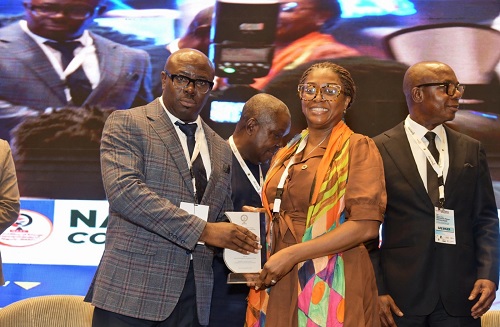
“Then I also call for the sustainability of this process, even when the CG leaves. I applaud the CG for receiving The Sun award recently and he deserved it. That is the first time I’ve seen a CG from Customs receiving an award. If others had received it before, I don’t know. But it gives me joy,” he said.
He speaks more on the B-Odogwu platform.
Your opinion on the pre-launch of B-Odogwu by Customs CG at Apapa port recently
Here’s your text with only typographical and punctuation errors corrected while maintaining the original context:
Something happened recently when we were invited as stakeholders to one of the meetings chaired by the CG of Customs himself. I was invited as one of the stakeholders, and we were discussing the Odogwu platform. That was the first time I had heard about it. The CG said some people call it B-Odogwu, but he clarified that the main name is Odogwu. He explained that the “B” stands for “Border,” but we should focus on calling it the Odogwu platform.
Even before his speech, the team he set up to manage the Odogwu platform had given us hints about what it entails. From what I heard, due to the increasing size of cargo entering Nigeria and the existing platform— which has been in place for about two decades—there is a need for expansion.
They want to digitize the process of clearing goods, making it easier for clearing agents and importers alike. They aim to create a system with greater capacity so that an importer can stay in their office, receive a code, log into the system, and track their cargo from the point of shipment to the seaports. Through this new platform, they will be able to monitor their cargo seamlessly.
When the CG outlined the details, I was super excited. Having lived abroad, I have often heard negative things about Customs. But that day, as I listened, I was happy to see that this man had a solid vision. The initiative they are introducing into the industry is a welcome development.
He emphasized that the essence of the Odogwu platform is to enhance capacity and accommodate the increasing inflow of cargo worldwide. For Nigeria to compete globally, this platform must be upgraded.
One point I am not entirely sure about is whether the contract for the current platform has expired or if it simply needs improvement. Regardless, I commend the Customs Service because, as stakeholders in the industry, this initiative will help us process our cargo more efficiently.
From what we gathered, users may soon be able to track their goods from the point of loading, monitor the arrival date, and follow the movement of goods through different terminals and ports. The platform will also facilitate online transactions, ensuring a seamless process upon arrival. This means that once the goods arrive, they can be accessed within 24 to 48 hours. Everyone in that meeting applauded the CG for this initiative.
Honestly speaking, the award given to him by The Sun was well deserved. I also learned that another newspaper is set to honor him with an award. To my knowledge, this is the first time I have seen a Comptroller General of Customs receiving such recognition. If others have received it before, I am unaware, but I was truly impressed.
With the innovations introduced in the system, I can confidently say that the Customs Service under his leadership is performing exceptionally well. Let me give an example. As stakeholders, we process transire from the mother port to various terminals. The paperwork and back-and-forth— from Apapa to FOU at Ikeja and back—take up too much time. This man wants to fix these inefficiencies by moving everything online.
By enabling real-time tracking of cargo, this system will eliminate shortcuts and enhance transparency, which is why we are so pleased. The CG also explained that with the new system, users will receive a code, and once they log in, all details about their consignment will be available on the platform.
I must commend this CG of Customs. In my personal opinion, it is beneficial for key leadership positions in such a crucial industry to be occupied by individuals from within the system. He speaks with authority, understands the gaps, and is taking steps to bridge them. I am not saying previous leaders did not do well, but from what I have heard and observed, this man is making significant progress.
It is not an exaggeration to say he truly deserves the awards he is receiving
As terminal owners and stakeholders, we believe the introduction of the Odogwu platform will enhance cargo clearance. The CG advised us to stop calling it B-Odogwu and to refer to it simply as the Odogwu platform. He explained that “Odogwu” represents capacity, emphasizing the system’s ability to handle global transactions efficiently.
We are very pleased with this development, and I want to take this opportunity to commend the Customs team managing this project. The meeting we attended was essentially a pre-launch event.
Another aspect that excited me was hearing testimonials from places where the platform has already been tested. Since it is still in the testing phase, they are running trials at different terminals and ports. The feedback from operators who have used it so far has been highly encouraging. We all applauded this initiative.
I also want to commend all Customs officials who are working tirelessly to ensure the system operates effectively.
As someone residing abroad, I am particularly impressed because I am based in China, where the maritime industry operates almost entirely online. You rarely see people running around to exchange documents—everything is digitized. I live in Guangzhou, China, where we have a strong presence, and this new Odogwu platform will be a game-changer.
Advice for Customs on Sustaining the Initiative
Since the CG is a civil servant, his tenure will eventually come to an end. My appeal to the Customs Service is to ensure sustainability. From the testimonials shared by terminal operators, the platform is indeed a seamless process. However, there have been some challenges, such as system downtime due to the ongoing upgrade, which have affected overall operations.
This is understandable, but my advice to the Customs Service is to establish a monitoring committee that can respond to stakeholders in real time. Since this is a new system, there will inevitably be some challenges. The key to success is ensuring efficiency while minimizing disruptions for stakeholders, importers, and the economy as a whole.
For example, some importers have reported delays in capturing and paying duties due to network failures caused by the upgrade. While this is expected in a transition phase, it is important for Customs to address these technical issues promptly.
To mitigate these challenges, Customs should: Set up a dedicated customer service team, not a temporary one, to handle complaints and assist stakeholders; establish a hotline or dedicated contact number for importers and terminal operators to report issues and receive immediate assistance and ensure that banks involved in the payment system are well integrated since the same code is used for duty payments.
If these measures are put in place, 90per cent of the challenges will be resolved because stakeholders will have a direct line of communication with the support team. Having people who are willing to assist will make a significant difference.
That is my sincere advice.
Will B-Odogwu help Customs meet its doubled target for this year?
From what I know about this system, it is all about efficiency. It’s all about effectiveness in the service, right? And when there’s efficiency and effectiveness in the service, what that entails is that the ease of doing business will be witnessed. Many international bodies will want to do business with Nigeria. Now, so many people are having difficulties clearing their goods.
So many cargoes will arrive today, and the process of transferring them to the various terminals, handling the paperwork, writing the DTO, and so on takes longer than expected. But with this platform they are introducing now, efficiency will improve, and more revenue will be generated.
However, there is a clause regarding the issue of targets given to them by the Nigerian government. And this is my advice to them: Every importer—I mentioned this during my interview on one of the television stations—factors in the landing cost of each good he or she imports from abroad, along with their profit margin. So if the government feels that they want to generate this kind of amount, they should also reconsider that they are taking money from Nigerians. What this means is that the cost of goods will rise because additional charges have been placed on the value of the duty.
There was a 4per cent VAT added to each of these duties. The stakeholders protested, and the authorities listened. The National Assembly instructed them to remove it and to call stakeholders for a town hall meeting before implementing that 4per cent.
The platform, however, primarily brings efficiency, effectiveness, and increased inflow from international bodies. People will be more willing to do business in the maritime sector in Nigeria because of the improved ease of doing business. Many people will want to engage with us and even invest in the maritime sector with this platform.
But my argument is this: I learned that the CG promised to generate N12 trillion for this year. So, I’m wondering how this will work because, essentially, customers and importers will pay more, and importers will ultimately pass these costs onto consumers by increasing the price of each unit of imported goods.
Secondly, my advice to the government is this: Let them focus on supporting us, the importers, because some of the items we import can be easily produced locally in this country. However, the problem we are facing is the lack of a steady power supply. I have said it time and again—targeted it before—that in my factory in Owerri, at one point, we were spending almost 15,000 liters of diesel, about N20 to N30 million, in a month. It was extremely difficult for us to break even with such expenses.
The government should work to ensure a stable power supply in this country and also support manufacturers with low-interest rates. If that happens, the cost of producing some of these goods locally will drop, reducing the need for imports. But as it stands, producing locally is still costly, making imports the more viable option.
What is your advice to stakeholders to embrace B-Odogwu?
Yes, thank God we were there that day. We welcome this system. From the testimonies of terminal operators and other stakeholders, it is clear that they support it because it makes the clearing process seamless and stress-free. From the comfort of their offices, stakeholders can complete many processes online before the arrival of their goods.
I encourage other stakeholders to support the Customs Service commands for this initiative. While I was there, I heard a lot of commendations from stakeholders. They said it was long overdue and that they had been expecting such improvements because of the challenges they faced in accessing the Customs portal and even in offloading goods.
From what I was told, many outdated processes will be phased out. Some of the steps we currently go through while importing will become digital and seamless.
So my advice is for stakeholders to embrace and support the federal government’s initiative because it is for the good of this country. If we establish a very effective and efficient Customs network, it will attract more investors to the maritime industry.
You mentioned before that people think Customs is all about corruption. So, what made you change your mind about this perception?
No, see, there is no sector in this country where corruption does not exist. There is corruption everywhere, even in the company where you work. But from what I have observed under the CG, while corruption cannot be eradicated completely, it can certainly be minimized. With the introduction of B-Odogwu, many things will become seamless.
I don’t know if you understand what I’m saying—this is key. Many things will be streamlined, and a lot of sharp practices by some bad eggs within Customs will be eliminated.
What changed my mind is that I am now a stakeholder. I have witnessed the tireless efforts of Customs officers, even in my terminal. I used to hear that they did not start work on time, but I have personally seen them at my terminal by 8 or 9 o’clock. Sometimes, they even start work as early as 6:30 or 7 o’clock.
Previously, I thought they resumed by 12 pm or 1 pm and did things at their own pace. But now that I am inside the system, I see things differently. Also, I never imagined that they had such ambitious plans.
You know, Nigeria is good at formulating plans, but this one is different—I saw commitment, I saw passion. I saw someone trying to leave a legacy before leaving Customs.
That was why I was so impressed at The Sun Award. I was there. He didn’t know I was there, but I wanted to cheer him up and say, “Well done, you are doing very well.”
I didn’t want him to recognize me. As someone who is based abroad, representing Nigerians in China, I know what propelled China to where they are today. So when I saw something like this happening in Nigeria, I was really happy. The brainpower, the ideas, and the concept behind this initiative are outstanding.
That is what changed my mind. Some people may still say that Customs is the most corrupt sector, but in reality, there is no place without corruption. However, with the right policies, loopholes that enable corruption can be closed.
So I am really impressed with them. It’s a welcome development, and that’s all.
What is the current situation behind your bonded terminal?
Regarding the bonded terminal, as I said before, I have been based in China for almost 20 years. My partner has been in Dubai for nearly 30 years. We were encouraged to think about investing at home by government officials who visited China during Goodluck Jonathan’s administration between 2011 and 2012. I was invited to consider repatriating my funds back home.
That led me to open a factory in Imo State, which the government commissioned at the time. Under this present administration, in 2020, I came into contact with some Customs officers who handled my cargo through different agents. They recognized my name—Blue Diamond—and suggested that I diversify into this line of business, as it aligns with what I am already doing. It was a natural extension of my work—shipping and logistics.
It also creates employment and generates more revenue for the Apapa Customs Command. I heeded that call, and I have no regrets about entering the bonded terminal business.
Right now, we are doing our best to help decongest Apapa Port. We are facilitating the swift movement of cargo—not just mine, but from all over the world—into my bonded terminal. Once it arrives, it doesn’t take long before it is processed, as Customs officials are on-site to do the needful and release the goods.
I have also learned a lot about the processes, documentation, and overall operations of bonded terminals.
I won’t say the business is booming, nor that we are making so much money, but I am happy that I am contributing to the economy. That is what matters most. Whether I have a container there or not, my joy is in knowing that I brought my money back to this country and that people are working there. Customs officials are also actively engaged. That, for me, is the most fulfilling aspect.