Follow Us on Google
From Adanna Nnamani, Abuja
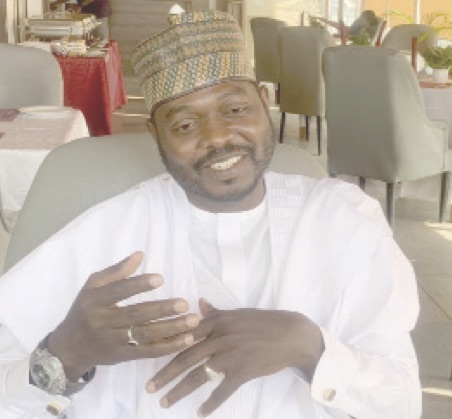
As the national conversation surrounding the proposed tax reform bills grows louder, Abdullahi Hashim, the Chief Executive Officer of Cubical Vertex Solutions Limited, an engineering firm, has frowned at the low level of awareness about the legislation.
In a candid interview with journalists, Hashim pointed out that while the reforms hold immense potential to strengthen Nigeria’s fiscal health and create a more conducive environment for businesses, a significant portion of the public remains uninformed about their contents and implications.
He emphasised the critical need for both the government and private sector leaders to take proactive steps in raising awareness about the bills, stressing that without proper public education, the reforms may face resistance or fail to achieve their desired impact.
The Harvard alumnus and member of the Nigerian Society of Engineers also took the opportunity to discuss a range of other critical issues, providing insight into the challenges and opportunities facing Nigeria’s engineering and business sectors. He reiterated his belief that collaborative efforts between the public and private sectors are key to tackling the nation’s economic challenges and driving sustainable growth.
Hullabaloo about Tax Reform Bills and the way forward
The Tax Reform Bills are one of the most wonderful reform bills I have ever seen. And I can even begin by saying even Singapore, I think as far back as 1993, they also did their tax reform.
It’s a global trend. The Organisation for Economic Co-operation and Development (OECD), which has 38 member countries, has also adopted policies similar to what we’re presenting in Nigeria.
This reform is not unique to us. If you analyse it, Nigeria has been operating with archaic tax systems for years. With this reform, we now have an opportunity to upgrade our tax structure and make it more effective.
But we have to contextualise it with the realities on the ground. And it has to be in tandem with the global standards. Now if you look at the post-experience after the pandemic, as well as the aging population and the overriding expansion of technology, there is a need for the upgrade of this particular tax reform.
So what I advocate is nothing but a consensus. It’s a very wonderful thing, but the consensus is what will move the country forward. Based on what the Governors’ Forum has adopted, I think there is going to be a positive change.
Governors’ Forum proposition of a new counter-proposal to the original Bill
Well, that is to say Mr President is very inclusive in his leadership. Because if you bring a policy, you have to allow it to be consumed by the entire population. So now that is to say that there is a paradigm shift in the policy and in the running of the administration.
Then their perspective is one thing. They have to vent out their perspective based on their local realities too. So that they will see it as a positive change for their people.
Since they are also elected, they have to inspire their people. They have to bring the yearnings of their people to the federal government.
Do you think the governors’ proposition is something the National Assembly should consider?
Well, it is bound for debate.
So, I think there must be an equilibrium point, where they will meet. Definitely.
Should we abandon what the President has submitted to the National Assembly and work with the new proposal?
I agree with you. If there are outdated provisions, operations, or policies within the tax bill, they need to be removed from the system. A new law will certainly come, but we need to contextualise it to fit Nigeria’s local realities. This will ensure that ordinary citizens are not unfairly burdened. That is my perspective.
When you talk about aligning policies with local realities, what specifically are you referring to?
By “local realities,” I mean factors like purchasing power and economic leakages. For example, let’s talk about petroleum. According to figures I’ve seen, about 15.6 million litres of fuel are smuggled out of Nigeria daily. This affects our internal consumption.
The NNPC has reported that Nigeria’s internal consumption is around 64.14 million litres per day. Now, if you subtract the 15.6 million litres being smuggled, along with an estimated 4.5 million litres drop in consumption due to rising costs and reduced purchasing power, you can see the impact. Adding the 4.5 million litres to the smuggled amount gives a total leakage of about 20.1 million litres.
This means Nigeria’s internal supply is short by that same 20.1 million litres. These are the kinds of realities I’m referring to—purchasing power, quality of life, and economic inefficiencies.
In terms of tax policy, concessions can be made for certain businesses. For example, rather than having businesses pay taxes directly to the government, they could receive waivers for specific periods in exchange for delivering critical infrastructure, such as roads, bridges, or other projects within their operational areas. This would ensure businesses contribute to national development while easing the burden of compliance.
How would you rate the level of awareness about the tax reform bills in Nigeria?
The level of awareness about the tax reform bill in Nigeria is extremely low—there’s no doubt about it. Many people don’t even know what tax reform is, let alone the details of this specific bill. The bill itself is almost 400 pages long. Who has the time to read through it, especially when Nigerians are already dealing with increased fuel prices, rising hardship, and other pressing issues?
Most citizens don’t have the time to understand the reform. Only a small fraction of people, those with vested interests, take the time to engage with it—and unfortunately, they often manipulate it to suit their personal agendas. But this is not about individual interests; it’s about over 200 million people. Such critical policies should not be treated lightly.
There’s also an issue with how some of these policies are drafted. I remember when I served at the villa during the administrations of Umaru Musa Yar’Adua and Goodluck Jonathan. I came across a policy document and to my surprise, I discovered that it was an exact copy of a policy from Australia.
And the policy then had already passed the first and second readings at the National Assembly, but it was a direct copy-paste from another country. They didn’t even bother to change some acronyms to fit Nigeria’s context. So you see how people will just go and just copy policies and paste it shamelessly.
So, the government should do more, because the enlightenment is not there.
Some people are saying that the southern part of the country would benefit more from the tax reform due to the derivative sharing formula. They are asking for a new revenue sharing formula.
Who is saying that? How can that be possible?
They want to discredit the effort of Mr. President.
I think the point needs to be made that there must be a kind of openness. There must be a kind of awareness. There must be a kind of enlightenment, because it is not there.
The enlightenment is not there. It is really less. And as you mentioned, that derivative formula.
What comes to my mind is nothing but… If you look at the northern part of Nigeria, the majority of the businesses that are happening there, they are happening in an informal way. So therefore, there are going to be leakages for the north. So, northern Nigeria will definitely want to vent out their anger, because they know the realities on ground are not going to meet up with what Mr. President wants.
But Mr. President brought this particular policy, not because he wants to… No, no, no. He wants to raise the capacity of Nigerians. He wants to reduce the enslavement process that some of the politicians are really dumping on the public.
He wants to make people independent. He wants to set people free. Because you have to think out of the box to make earnings daily.
So, if you are thinking you are going to have a free mind, nobody is going to be shortchanged by certain individual policies.
Celebration over Warri and Port Harcourt refineries
Yes, it is worth celebrating. Because some of the past leaderships have not seen it even happening. They even thought it was not going to happen.
But under this administration we did. We have to appreciate it. Apart from the government refineries, that are heating up. Even private refineries are heating up.
Like Dangote Refinery, already in operation. Like BUA, it is almost 70% in completion. And now, talk about the government now.
The government refineries, almost four of them. At least 50% are working. So, with the hope that the remaining ones are going to be in operation sooner.
So, I think it is a good thing. We really need to have a time also to celebrate it at a larger level. This is something that we need to believe as Nigerians, that this administration will definitely bring positive changes and development.
You said it is something we should celebrate. But for sustainability’s sake. And from all of the lessons that we have learnt.
All of the things we have done. How badly we have managed businesses as a government. What would you recommend for these refineries that have been resuscitated? Should they continue to remain under government purview? Or should we outrightly sell them? So that we can see an increased level of efficiency as we are doing with Dangote.
Operation and maintenance under the private sector is one of the best. It is one of the best. Because every private person that invests a single penny inside any business wants a rate of return for it. So, he will not play with the business. He will definitely maintain it as it is.
And if you look at all the developing countries. There have been concessions. Concession and Public-private partnership (PPPs). Which is a very good way to go.
Tackling incessant building collapse
For building collapse, there are policies on the ground which are not being implemented.
And the operation in Nigeria is to the extent that just one person will just call a foreman to build a house for him. Without taking cognizance of the rules and the standards. So what I will just say is there should be enforcement of all the laws.
And maybe punishable part of the laws should also be enforced. So that everybody will sit up. From the client to the contractors to the engineers.
I think that is just it. You will just call anybody on the road that you see is building. And they say, okay, I saw you in one building.
Come and build it for me. Without taking cognizance into all the necessary BS188, all the codes that we normally apply into engineering buildings. Somebody may not even know.
But it’s just a layman who knows how to practically build a house. But there are certain professions standards inside it. He is supposed to go to the class to learn before they do so. but because of the cheap labour that people want to get, they normally employ just anybody. But in the part of the COREN, I think they should just enforce the punishable part of the laws.
You talk about quackery and you are talking about enforcement. How do we deal with substandard materials?
Today, if you see iron 18, it’s as tiny as this last finger of mine. If you see a 0.4 roofing sheet, it’s almost like paper.
So, what is really happening? How have we become a dumping site for all kinds of substandard material? Because you can put the right engineer on the site. Enforce the right laws, but built with substandard material and everything will come crashing down on you.
I think it’s a good question. I think there should be a collaboration between the standard organization of Nigeria and maybe, consumer protection FCCPC. It’s very important and it’s very vital.
They should link up along with all the professional bodies like the Nigerian Institute of Civil Engineers, like COREN, to sit down and talk about this. And NBBRI also is very important in terms of what you call testing material. And I think a professor also is the DG.
They have a very big lab for testing of material and standard material requirements. So I think they should advocate that right from the university level. students should know during the SIWES should distinguish between the quality.
So if they grow up with that, they already have the standard of operation. So they will not go for what will not bring collapse in the country.
I think one area the government has not been doing well is in the area of sanctions.
Prosecution
I think we need to checkmate the system too because the system needs to be checkmated accordingly. And if you cannot set an example, then the problem will remain. The problem will remain.
But if you set a good example, the problem will definitely be reduced, at least, even if it does not go away completely. So my observation is let the government also look into this matter. Because when you’re talking about enforcement, you’re talking about all the law enforcement agencies.
And that depends on what problem caused what. So they have to look into the matter and then address the matter accordingly.
Tackling housing deficit
Yes, it’s a very big one, with the rising population and rising cost of material, housing has become very difficult to do.
Now, I think one of the buildings I was able to see or supervise was five or six stand-alone houses in Katampe. Now, the time we began building that particular unit and by the time we finished, there was almost 400 persons in this. Initially, they were selling the house at 200 million, but now we’re at 860 million.
Wow. So almost 400 people. And they’re looking to us, maybe next month, to close the gap to 1 billion.
Do you think houses or buildings are overpriced in Nigeria?
Absolutely. I think they are being overpriced.
It’s one of the things. Realistically, they are being overpriced. Even though, with the realities of market fluctuations, of course, even the market itself needs to be checked.
Why are they rising? So, as you mentioned, FCCPC is very important to work on this issue. We need to know the quality, the material that suits our nation.
It’s not everybody that will just dump anything from China anywhere to just bring it in Nigeria and just start applying it.
Why can’t Nigeria have an efficient mortgage policy that allows people to pay for 20 or 30 years?
One of the reasons is the implementation gap of policies. When you bring policies that are outside of the country and you want to apply it, there is going to be an implementation gap. It is going to be very difficult for you to implement.
In London, for instance, they are using LIBOT. Lendon interbank operating rate. But in Nigeria, if you use the Nigerian interbank operating rate, it is going to affect you.
Not because of anything but you can set your life for 30 years in England. Without having increase of so many things in terms of percentage. You can even project the percentage of increase and live your life in England and in Switzerland.
But when you come to Nigeria, within three months, you have to reassess. Because of fluctuations, you can’t even plan . That is one of the things that we have in Nigeria.
So, price fluctuation and policy somersault. You mentioned something about why we have refineries without sustainability in terms of operation. It is because of policy somersault.
This government will come with policy and the next government will just eradicate it and bring another one. Without having a synergy in terms of having a plan, let’s say, of 50 years. This is a national succession plan.
Building new cities
That’s a good question, and I think it’s from the policy part of it. We are having a leadership that misplaces priorities.
I think that is one of our problems. Because why would you now lay a tar, let’s say one kilometre tarred road, and in another two years, you now remove this tar and lay it again. You don’t think of expansion. Forget about this old city. Build another new city,
With all the facilities in check. And with the affordability level. Some people don’t even think about affordability when they are doing their policies.
That is why most of the policies that we are having in Nigeria are really sabotaging environmental incentives. And it’s not good.
As a stakeholder, how often does COREN interface with the federal government when it comes to addressing the highlighted issues?
Most of the members at the high level of COREN are also high-level politicians, many of whom are part of the government. So there is some interaction between COREN and the government, but from what I know, it happens mainly during events like the Annual General Meeting (AGM).
COREN is a government-owned institution, unlike NSE, which is a society. While there is some level of relationship, it’s not as robust or consistent as it should be. For example, during an AGM, I stood up and told them they need to establish a proper system for interfacing with the government.
This involves identifying key players in government and understanding what they want. Even in countries like America, you have lobbyist bank. What do they do? They study systems, understand people, and approach them strategically.
But they (COREN) were complaining that they had a lot of strategies that were not implemented.
I told them, look, you need to approach them with the terms they would understand. You know, all politicians need win-win situations. How do you approach politicians? You approach them with what they know, so that your result will be quick.
But you remain two years with policies. You have a Minister of Works here.
You have all these old engineers and nothing is happening. Approach them with the terms they would understand, you will see the result.
Do you think that the president has the power to go after wealthy, top-shot Nigerians that are evading tax?
Mr. President can raise taxes on certain products—for instance, on unhealthy foods—to help control the health of the community. So that one can also apply.
Also applies to the big people.
So, what should be the government’s priority? Is it about raising tax revenues or raising productivity?
I believe the priority should be raising productivity. Stimulating productivity will generate more energy, more revenue, and more rewards. Even taxes will become more accommodating in such an environment. But if the government focuses solely on taxation, it won’t be sustainable.
There is a message that I want you to pass across to Dangote and others. The last time, Dangote was saying that Nigeria should import petrol that the refinery can supply, but he forgot that Nigeria is also having a reserve because of an emergency.