Follow Us on Google
By Abioye Damilare Samson
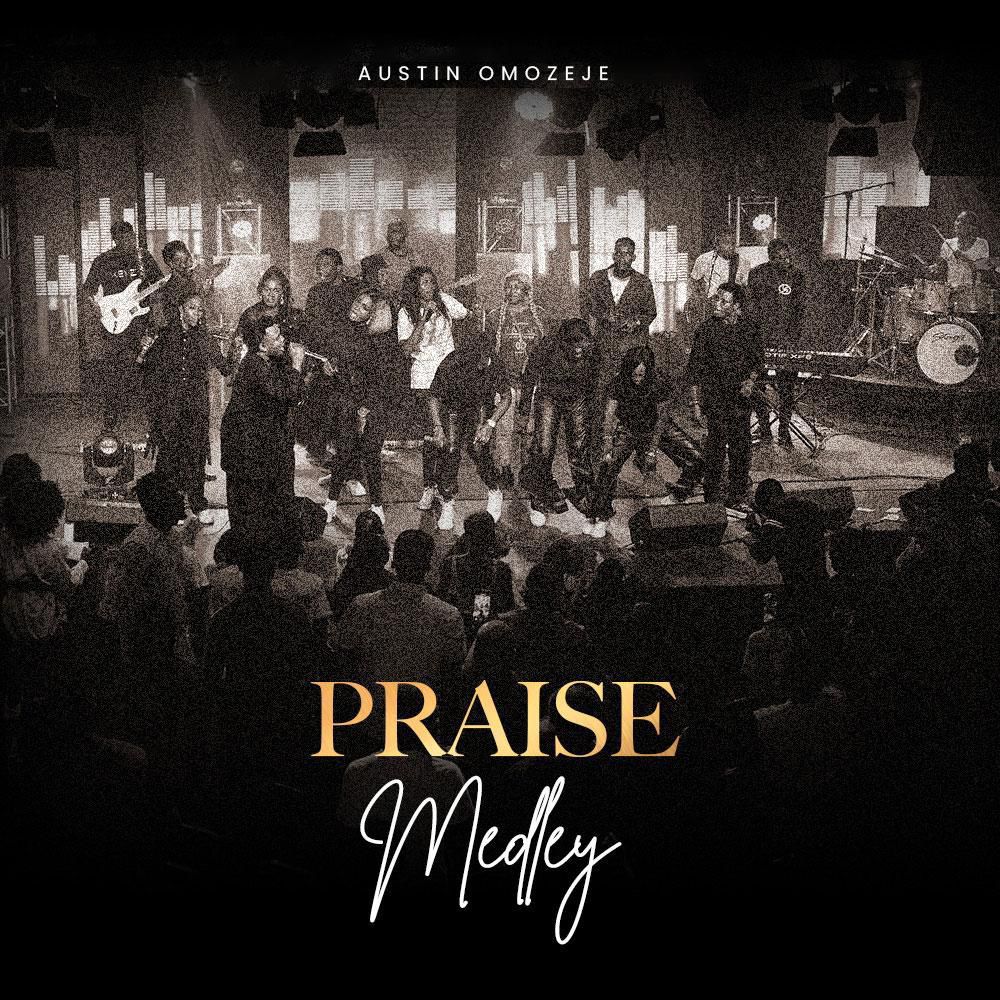
On September 12, 2025, the music world experienced Austin Omozeje returns with “Praise Medley,” a 7-minute, 27-second worship piece that brought together several members of his team.
Ese, Joel, Meg, and Joy collaborated in a vibrant, expression of thanksgiving. The medley marks yet another evolution in Austin’s creative journey, showcasing a broader musical palette and a more communal approach than his earlier releases, “Anchor” (2022) and “Ovie” (2023).
Where Anchor introduced listeners to a quiet, introspective Austin writing from solitude and uncertainty, and Ovie expanded his sonic and linguistic landscape through the majesty of Urhobo worship, Praise Medley presents another side of his artistic identity: collective praise.
The length of the song is deliberate. At 7:27, Praise Medley mirrors the open-ended nature of live praise sessions, unhurried, repetitive, and intentionally immersive.
Instead of a tightly structured single, Austin embraces the flow of spontaneous worship, allowing each featured vocalist to carry a piece of the medley’s emotional arc.
Joel leads with classic praise phrasing, Ese introduces a prophetic charge, Meg reinforces the theme with repetition, and Joy ends on a personal note of gratitude. Austin stitches these contributions together with simplicity and confidence, guiding the medley’s rhythm without overpowering it.
By 2025, a pattern is unmistakable in Austin’s songwriting. Austin does not write to impress, he writes to connect. His lyrics often rely on short lines, repeated phrases, and uncomplicated declarations. This was true in Anchor (“You are my Anchor, Lord”), clearer in Ovie (“Ovie — my King”), and now fully embraced in Praise Medley (“God is good, He has done me well”).
From the cosmic descriptions in Ovie to the personal dependence in Anchor, Austin’s writing blends biblical imagery with everyday emotions. In Praise Medley, this shifts toward victory language, “No more delay,” “No more oppression,” “All power belongs to God.”
Austin writes songs that grow rather than explode. He begins small, adds layers, repeats themes, and lets the music settle. This meditative progression was obvious in Anchor, majestic in Ovie, and celebratory in Praise Medley.
After featuring Jadda in Anchor, Austin leans more heavily into teamwork here. Praise Medley highlights voices within his circle showing a writer who understands the communal nature of praise.
Across all three works, Austin transforms from a reflective solitary worshipper into a leader guiding a community in praise. His thematic progression mirrors spiritual growth: from dependence, to revelation, to celebration.
Musically, the medley sits comfortably in contemporary Nigerian gospel tradition — rhythmic, repetitive, and easy for congregations to sing along.
Every section feels like a doorway into another expression of praise, and the song’s length allows each vocalist room to breathe.
Austin’s voice remains the anchor, guiding transitions with the calm assurance that has become a signature of his style.
Praise Medley is Austin Omozeje at his most communal, confident, and celebratory. In bringing multiple voices together and allowing the song to unfold naturally over seven minutes, he delivers a worship experience rather than a conventional single.