Follow Us on Google
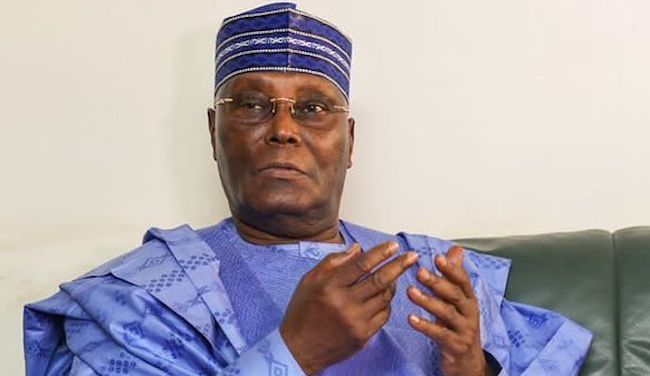
Former Vice President and presidential candidate of the African Democratic Congress (ADC), Alhaji Atiku Abubakar, last week, reopened one of Nigeria’s most contentious economic debates with his proposal to restore petrol subsidy if elected president in 2027.
Atiku argued that the removal of subsidy by President Bola Tinubu has imposed severe hardship on Nigerians, with the sharp increase in petrol prices feeding directly into transportation costs, food prices and the broader cost-of-living crisis.
He equally questioned the benefits Nigerians have derived from the policy and maintained that his administration would consider restoring the subsidy to provide relief to households and businesses.
The proposal has, however, run into resistance from stakeholders across Nigeria’s oil and gas industry, who argue that returning to the old subsidy regime would be economically unsustainable, legally complicated and a step backwards from the reforms undertaken since 2023.
For the stakeholders who spoke to Daily Sun in separate interviews, the answer to the hardship created by subsidy removal is not necessarily a return to the blanket subsidy that existed before 2023, but a more targeted system of intervention capable of protecting vulnerable consumers and critical sectors without reopening the fiscal hole that prompted the reform.
Energy policy analyst and Partner, Bloomfield Law Practice, Mr. Ayodele Oni, described the proposal to restore petrol subsidy as “poor economics and unexecutable law”, arguing that a universal subsidy is inherently regressive because households that consume the most petrol are rarely the poorest.
“A universal subsidy is regressive by construction, since the household that consumes the most fuel is rarely the poorest, and the fiscal space it swallows is the same space that funds transmission lines, mass transit and gas infrastructure,” Oni said.
He argued that the proposal also faces a fundamental legal hurdle because subsidy restoration cannot simply be achieved through an executive announcement.
According to Oni, the Petroleum Industry Act (PIA) repealed the Petroleum Products Pricing Regulatory Agency(PPPRA) and the Petroleum Equalisation Fund (PEF) and left petroleum liquids prices to market conditions. A return to a formal subsidy regime would therefore require legislative amendments, the recreation of an administering agency, a new pricing template and a fresh appropriation.
Such a process, he noted, would ultimately have implications for the revenues available to the three tiers of government, particularly states and local governments whose allocations increased following the removal of subsidy.
But Oni said the demand for accountability over the utilisation of subsidy savings is legitimate and should not be dismissed.
He called for a month-by-month reconciliation of Federation revenues, deductions and transfers since June 2023, arguing that Nigerians should be able to see clearly what has been achieved with the resources freed by the reform.
“The reform does not need reversing. It needs finishing, and it needs to be made visible in the household energy bill,” he said.
The position of Oni was equally echoed by the former Chairman of the Society of Petroleum Engineers (SPE) Nigeria Council, Mr. Joe Nwakwue, although he draws a distinction between the old blanket subsidy and targeted government intervention.
Nwakwue said Nigeria should not return to the subsidy regime that existed before 2023, describing it as poorly designed and implemented. He noted that the policy was introduced in the 1970s under circumstances that had changed significantly over the decades.
“I think that we should not reverse to the pre-2023 situation,” Nwakuwe said.
However, he cautioned against interpreting the failure of the old subsidy regime to mean that the government should never provide energy-related support.
According to him, subsidies can be justified where critical sectors face extraordinary pressures that threaten their ability to remain productive and competitive.
“Subsidies are not bad in themselves, but they have to be properly designed and implemented,” he said.
Nwakuwe pointed to Nigeria’s manufacturing sector, which he said is heavily dependent on diesel. If diesel prices rise to levels that make production uneconomic, he warned, the impact would be felt across industrial output, employment and Nigeria’s competitiveness.
“We need to be very clear that we may need subsidies at some point. We haven’t done the modelling to see at what point, at what price level, for instance, manufacturing needs some help with diesel pricing,” he said.
He, therefore, advocated a smarter subsidy model targeted at specific outcomes rather than a blanket intervention that benefits every consumer irrespective of need.
Other News
“Subsidies should be targeted at outcomes, not activity,” Nwakuwe said.
He also called for any such intervention to contain an automatic phase-out mechanism, warning that an open-ended subsidy would create permanent dependency.
The former SPE Nigeria Council Chairman warned that the country cannot afford to have an open-ended subsidy scheme which he likened to a system of keeping a sick patient permanently on oxygen.
For Nwakuwe, the government’s decision to remove subsidies was ultimately unavoidable because successive administrations had delayed addressing an increasingly unsustainable system.
He said stakeholders had previously advised the government to develop a gradual plan for winding down the subsidy regime, but the delay eventually made a more abrupt removal inevitable.
“We had recommended prior to the previous government that they needed to come up with a plan to gradually wind down that subsidy regime. But I think we waited too late and it became almost existential that they had to pull the plug the way they did,” he said.
While acknowledging that the manner of implementation created significant pain for consumers, Nwakuwe argued that reversing the policy now would be counterproductive.
“I really don’t think they had much of a choice to go that way,” he said.
The Public Relations Officer (PRO) of the Independent Petroleum Marketers Association of Nigeria (IPMAN), Mr. Chukwudi Akadike, also opposed a return to the old subsidy regime, arguing that the country should consolidate the gains from its removal rather than reverse the reform.
Akadike said the government had been able to free significant resources through subsidy removal and should focus on deploying those resources to productive areas of the economy.
He argued that Nigeria should concentrate on strengthening domestic refining, improving petroleum product distribution and fixing infrastructure rather than returning to a system that placed a heavy burden on government finances.
For IPMAN, reducing the underlying cost of petroleum products is a more sustainable solution than maintaining an expensive government-funded price intervention.
The position is also reflected in the views of PETROAN, which has consistently pushed for measures that can cushion consumers from the immediate impact of deregulation while maintaining the broader objective of a market-driven downstream sector.
Rather than returning to a blanket subsidy, the industry has advocated interventions capable of reducing transportation and energy costs, expanding alternative fuels and strengthening domestic supply.
The debate therefore appears to be moving beyond the simple question of whether subsidy should exist.
The more fundamental issue is how the government can protect Nigerians from the consequences of high energy prices without recreating the fiscal distortions, leakages and structural weaknesses associated with the old subsidy regime.
Atiku’s proposal has placed that question firmly back on the political agenda ahead of the 2027 election.
For millions of Nigerians struggling with high transportation and food costs, the attraction of cheaper petrol is obvious.
But for industry stakeholders, the experience of the past decades offers a warning that cheaper petrol at the pump can come with a much higher price elsewhere in the economy.
The emerging argument from the sector is therefore not that Nigerians should be left to absorb the full impact of deregulation, but that relief must be targeted, transparent and linked to measurable outcomes.
The government, in turn, faces the challenge of making the benefits of subsidy removal visible enough to compete with the immediate pain of higher fuel prices.