Follow Us on Google

By Fred Itua, Abuja
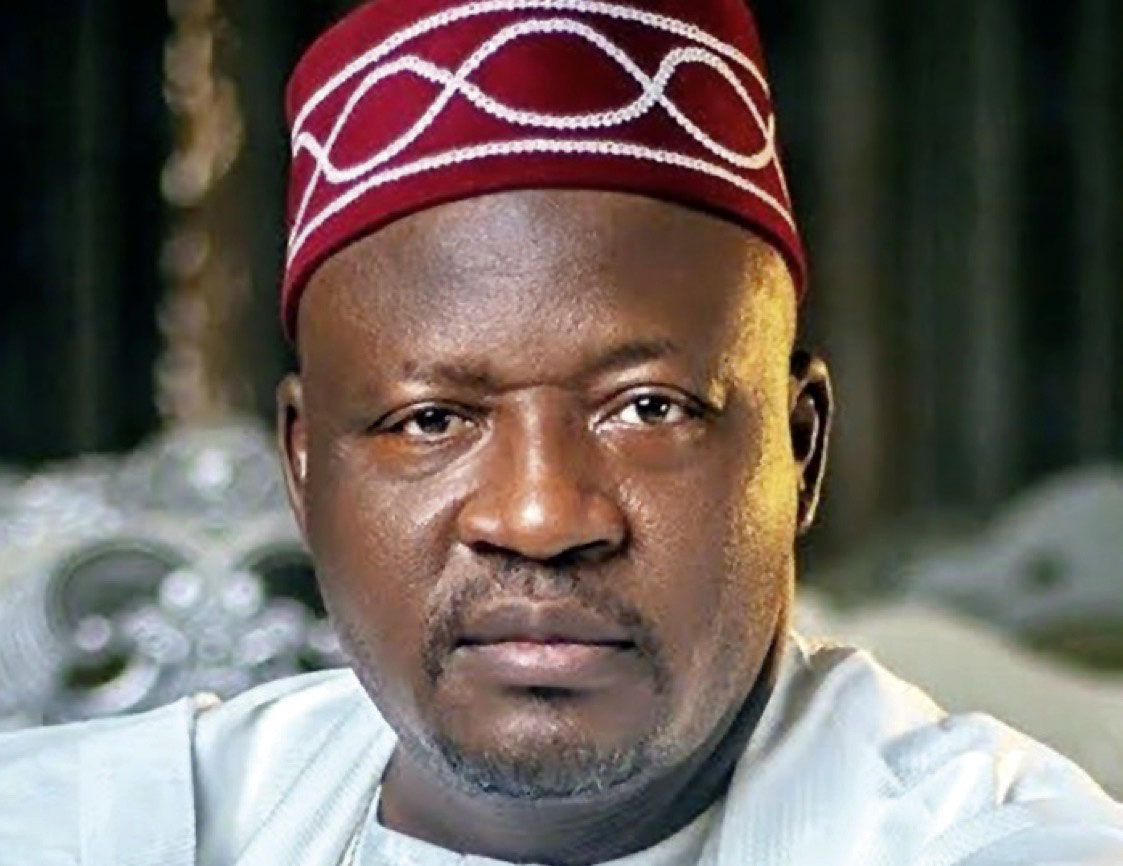
In this wide-ranging exclusive interview with Daily Sun, Senator Kawu Sumaila, from Kano, defends his occasional disagreements with party positions, speaks candidly about the economic hardships under President Bola Ahmed Tinubu’s reforms, outlines what the APC must do to retain northern support and dismisses the electoral threat posed by former Governor Rabiu Musa Kwankwaso, Atiku Abubakar and Peter Obi.
You are a recurring face in the National Assembly since 2003. Now, you are asking your people for another opportunity to renew your mandate…
If we are talking about performance, I believe my performance will take me back to the National Assembly. As a Muslim, however, in our belief you cannot depend solely on your performance when pursuing an ambition; it is in the hands of God. Yet if we are talking strictly about performance, I can say I have performed very well. When you compare my three years in the Senate with the previous years from 1999 onwards, you will see a clear and marked difference.
What are some of the key things you have done that you feel your people will appreciate by voting for you again?
I made a clear commitment to social justice. Under that commitment, I selected three priority areas: education, health, and agriculture, which includes dry-season farming, water supply, irrigation and related interventions.
So far, have you performed well in these key areas?
You can go and verify for yourself; the record of what we have achieved is clear.
You are a member of the APC, yet you sometimes disagree with the party and with the policy direction of the government when you feel it does not serve the people. Why do you often take that position?
I hold my own opinion. This party is a mass political party. It falls under the category of a mass political party, not a cadre party with a rigid ideology. In political science, a mass political party is an amalgamation of various interest groups under one umbrella for the purpose of forming a government. The primary reason we come together is to form a government. Once that is achieved, individuals then pursue their own visions, missions and ideas. It is not a cadre party in which everyone is bound to a single ideology. The APC is no exception; the majority of parties in Nigeria today are mass parties that people join mainly to win elections. In that arrangement, the party is simply a vehicle that takes you to a destination.
The APC has been in government since 2015. Focusing on the last three and a half years, the administration insists it has performed well, yet the feedback from ordinary people appears to contradict that claim. As a representative who interacts directly with the people, do you agree that in some areas the government has not done well and needs to improve?
The head of government chose to embark on serious reforms. When you undertake reforms, people will naturally be unhappy because some interests must be touched. It began with the removal of the fuel subsidy. The moment Mr President announced the removal, the reaction was immediate. It is important to note that it was not President Asiwaju who first removed the subsidy. The previous administration had already made no provision for it, and the signing of the Petroleum Industry Act effectively ended the subsidy regime. What remained was the formal pronouncement, which he made. From that point, economic challenges have confronted the country. We acknowledge those challenges, but we believe that in the end, the reforms will take us to the promised land.
People are suffering. Inflation is at its highest level. Some APC leaders fear that the anger across parts of the country could damage the party’s political fortunes in the next election.
That is precisely why I keep insisting that we must take our message to the grassroots. We need inter-party dialogue and open avenues where citizens can ask questions and receive explanations. We must engage all stakeholders and carry them along on what we are doing. My concern is that we are not doing nearly enough on this front.
The APC controls all 19 northern states, yet there is still worry that growing discontent could prevent the President from securing a second term from the region. If elections were held today, does the opposition stand a realistic chance in Northern Nigeria?
I believe we can still win the election.
Even against Atiku, who appears as a single northern candidate facing a fragmented southern field?
We are 60 days away from the election and we are strategising carefully, putting our heads together to maximise our advantages. I assure you we will win. Northerners are politically sophisticated; they know what they are doing.
Other News
Recall 1993: Bashir Usman Tofa, a Hausa man from Kano, contested against Moshood Abiola, a Yoruba man from Lagos. Tofa lost. Abiola won, and the entire North voted for him. It depends entirely on how you present your case and how effectively you take your message to the grassroots. That is why I insist we must reassess the journey so far. We must move away from the old order of political jamborees, dancing and display of wealth. We must ensure our message reaches the people who will actually benefit from it. We already have the commitment of our party members, but party members do not constitute two-thirds of Nigerians. When you hold large rallies you are largely speaking to your own base, people who will vote for the APC whether the rally happens or not. I want the message to reach the ordinary Nigerian who holds no party card. The electorate is divided into three groups: our supporters, their supporters, and those in the middle. We and the opposition together do not make up thirty per cent. The majority sit in the middle, waiting to be convinced that after the present suffering there is a credible path to the promised land. Success therefore depends on how persuasively and diplomatically we communicate with that teeming population.
Why has the APC not done more of this, beyond the mega rallies that are broadcast live? You have identified the gap in grassroots engagement…
What I am advocating is the organisation of town-hall meetings and similar events that allow us to present our achievements and challenges honestly, cross-fertilise ideas with Nigerians, and then integrate the best of those ideas into policy.
Atiku remains the dominant northern candidate. Does he pose a serious threat to the APC and to the President’s standing in the North?
He is the major opposition leader, but we enjoy wide support and acceptability across the South West, South East and South South. When the percentages from those regions are added to our northern figures, the variables clearly indicate that Asiwaju will win the election comfortably.
In the last election, the opposition performed better than the APC in your geopolitical zone, the North West. Conditions then were better: inflation was lower and the fuel subsidy was still in place. Today, people are angrier than they were three years ago.
At that time, roughly 75 per cent of those in government were opposed to the APC and to Asiwaju’s candidature. Many did not support him. In addition, large numbers of young people were dissatisfied with President Buhari’s policies and viewed Asiwaju as a continuation of that administration. That created a significant challenge. Remember that when Buhari assumed office, the exchange rate was around 160–170 naira to the dollar; by the time he left it had risen to nearly 700. People had reason to be unhappy.
There were two rates during that period, an official rate below N500 and a parallel-market rate of about N1,500.
During the Buhari years, the parallel rate never reached 1,000. It was only after this administration floated the naira that the single rate settled between 1,300 and 1,500. The economic policies of President Bola Ahmed Tinubu are beginning to translate into reality. The relative stability of the naira between 1,300 and 1,400 is one indication. Our foreign reserves are another. A country is ultimately judged by the strength of its reserves.
How does that translate into relief for ordinary people? That is the practical test.
I agree. When designing policy, one must anticipate difficulties at the initial stage. I believe the situation will improve later.
Turning to the National Assembly, where you are a prominent member, there is a growing concern about the frequent approval of loan requests by both chambers without adequate scrutiny. The Debt Management Office reports that this year alone the government has spent about N7 trillion naira on debt repayment, and projections suggest that by 2030, as much as 70 per cent of our earnings could go towards servicing debt. Why are these loans being approved so readily?
Let us take the issues one by one. On the approval of loans, the process is technical. A member needs a solid understanding of how Parliament works. When we arrived in 2023, we inherited the 2023 budget framework. Before the President lays a budget, he is required to submit the Medium-Term Expenditure Framework, which sets out the administration’s three-year fiscal plan. We raised strong objections because we foresaw the problems that have now materialised. We called for a fresh examination of the budget and the MTEF. In the end, only two of us sustained the fight. The Senate used its numerical strength to pass both the MTEF and the budget. We are still operating within that template, and it is that template that has brought us to the present situation. Had the National Assembly and the wider public listened at the time, we would not be where we are today.
Most of the loans are tied to specific projects – the Kaduna-Kano-Abuja road, the Kano railway, the Kano-Kaduna line, and other major infrastructure works. The financing arrangements for these projects are lengthy and complex. We are not borrowing for unspecified purposes; every request is attached to a concrete project. That distinction is important and should not be overlooked.
On the projection that by 2030, a large share of revenue will be consumed by debt servicing, I accept the concern. However, with the vigorous diversification of the economy that the government has begun, I do not believe it will become an insurmountable problem. At the same time, I agree that the National Assembly must strengthen its oversight function. Oversight is the most important aspect of legislative work; more important even than law-making and representation.
On Kano State. The running mate to Peter Obi is your former principal and former governor of the state, a man who remains popular. Does he pose a threat to the APC and to candidates like yourself in the coming election?
I am confident we will win our election. Let us examine the political history of Kano South. Before 2023, Kwankwaso had never won Kano South. From 1999 onwards the senatorial district was predominantly an ANPP remnant stronghold. We are now in the APC. I focus on Kano South because the numbers will ultimately speak. In Kano North, as you know, in the last general election, the opposition managed only about five legislators plus Senator Barau against us, despite the political wave at the time. He still won his seat. The setbacks the APC suffered in the last election were caused largely by our own internal factors. In 2019, I contested the Senate primary and won it by a landslide, yet the ticket was taken from me. I returned to my work. Later, they came pleading for me to contest the House of Representatives seat, which I did, and I won comfortably in 2023. My vote tally was more than 50,000, while the candidate on the Kwankwaso platform polled fewer than 20,000. Kabiru Gaya also won. After a three-year break, I consolidated my base, understood the mood of the councillors, and eventually aligned with the Kwankwaso movement. By the grace of God, it worked. That does not mean that because Kwankwaso is on a ticket everyone will automatically vote for him. The electorate in Kano is politically sophisticated.
When he last contested on the NNPP platform there was almost no serious opposition in the state; it was a landslide.
I disagree. Even on the presidential ballot his total was about 940,000 votes while Asiwaju received 560,000, nearly double, yes, but there is always a home-advantage factor when a son of the state is on the ballot. This time, he is not on the ballot. The candidate is Peter Obi. Our people still need to understand who Peter Obi is. It is unfortunate that during and after his time in office, he never built any meaningful relationship with Northern Nigeria. He rarely attended northern events, and on the occasions he came to the North, he aligned primarily with northern Christians, a move that is politically sensitive.