Follow Us on Google
•Our country won’t make progress until we return to true federalism
•No president should stop citizens from probing his past, but opposition should focus on issues
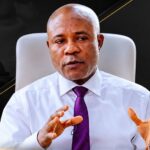
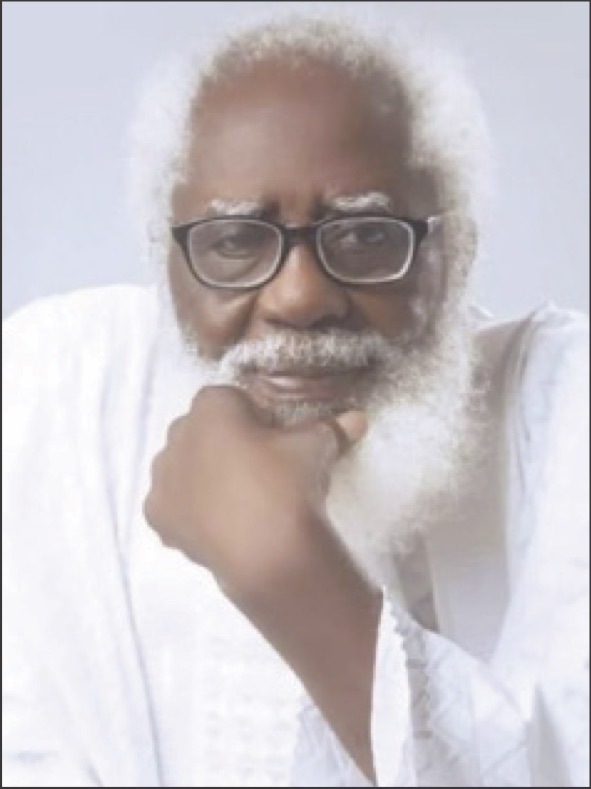
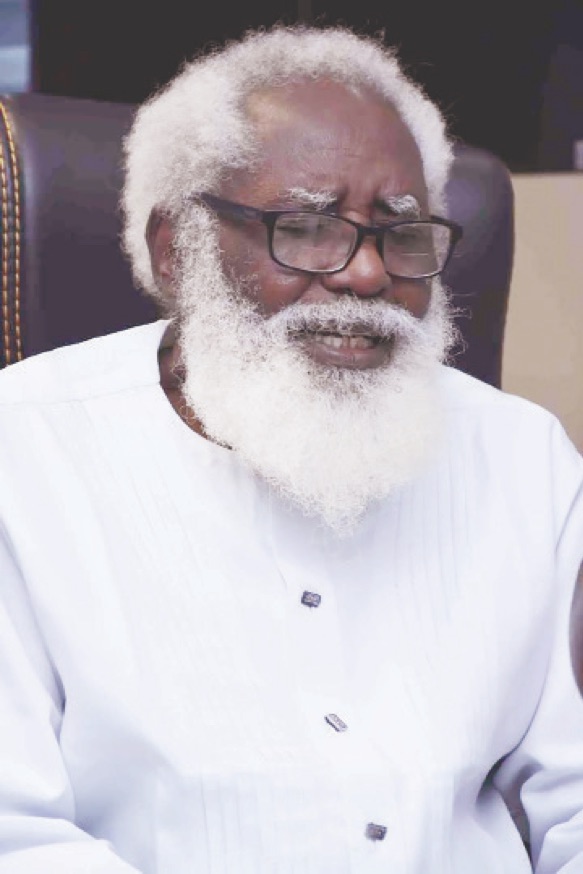
Elder Statesman and former Nigerian Ambassador to the Philippines, Chief Yemi Farounbi, is not happy with the present state of the nation.
Farounbi turned 84 on October 1, on a day Nigeria would get its independence from Great Britain. But looking back at the trajectory of the nation, he says Nigeria ought to have progressed more than its present state, given the abundant resources and manpower God has blessed Nigeria with.
In this interview, Ambassador Farounbi offered a frank assessment of the problems facing the country as the 2027 elections draw nearer.
At 66, has Nigeria fulfilled the dreams of the founding fathers, considering the present situation in the country?
As far as I am concerned, Nigeria has not lived up to the expectations of the founding fathers or even the citizens. It has not lived up to the expectations because it has not magnified the potential that Nigeria has. It has not magnified the potential that we have in terms of population. It has not magnified the potential in terms of the usefulness of the population.
It has not magnified the potential that we have in terms of climatic variation, in terms of soil conditions, and in terms of economic and real possibilities.
So, Nigeria is not in the same level that it is expected to be. It is not that it has not moved forward. But it has not moved forward in the direction that it is expected. It has not satisfied the yearnings of the people. There is still so much insecurity in the country. There is so much hunger and anger. There is so much poverty.
For instance, the World Bank statistics says that about 126 million people out of the 235 million Nigerians have been regarded as poor.
So it has not reached the level of expectation. It has moved forward, but it has not moved forward enough.
At what time did Nigeria get it wrong? And what do you think we can do to actualise the dream of this great country?
Well, there are two levels. Twice we veered to the wrong path. Exactly after independence, from 1960 to 1962, the political class became massively intolerant of opposition. They did everything to decimate the opposition party.
We saw then the Action Group and the process of governance in the Western Region. All of this led to manipulation of elections in the 1964 federal elections, and massively in the 1965 Western regional elections. This led to an explosion of anger by the people which we called “Operation Wet e.”
This provided the foundation for the major error that Nigeria committed because it allowed the military to strike in January 1966.
It is true that those who struck did not eventually succeed. But it was the military that actually disrupted the negotiated consensus that formed the foundation of Nigeria.
The negotiated consensus that formed the foundation of Nigeria, from the beginning, resulted in the MacPherson Constitution of 1951, leading up to the Littleton Constitution of 1954 and that of the Independence Constitution of 1960 where the founding fathers agreed that federalism is the best way of managing Nigeria. Federalism is an equal, coordinated relationship between the federal units.
But when the military struck, because they are used to a unitary, hierarchical chain of command, they disrupted the federalism that was the negotiated consensus that formed the basis of the Federal Republic of Nigeria.
They upturned the relationship. Instead of the 12 functions that the centre handled in the 1960 Constitution, in the subsequent constitutions that were written by the military, either 1979 or 1989 or 1999, the federal government now handles 68 functions.
Instead of the 20 per cent of the national revenue that the federal government used to control under the negotiated constitution, the federal government now has 52.8 per cent.
So instead of having a coordinated relationship between the federal units and the centre, what we now have, brought in by the 28 years of military aberration, is the centre as the dominant partner, the headmaster, while the states are now the class teachers.
They are no longer equal. They don’t have the resources to do what federal units ought to do. Therefore, such functions as ordinary housing, primary education, secondary education, trade, agriculture, farming, fertilizer provisions have been moved to the federal.
The federal government has become so dominant and domineering, sometimes even tyrannical.
So this was where we got it wrong.
The civilians prepared the foundation for the military to come in. The military distorted what we agreed and today we have 36 states that were not created on any logical basis. Thirty states that cannot be self-sufficient on their own, states that derive their funding from a federal government that is so powerful that it can dictate whatever it wants.
For instance, there is no state in America today that gets more than 24 per cent of its income from federal allocation. But in Nigeria, there are states that get up to 90 to 95 per cent of their total revenue from federal allocation. That is not what we negotiated.
What we negotiated was that whatever you produce, you keep 50 per cent of it for your own development and 30 per cent goes to the Federal Government.
This was disrupted and distorted by the military. The Federal Government has become so powerful and so attractive that people want to get there by all means. It is a do-or-die affair.
The Federal Government was not so attractive to create a do-or-die struggle for it. So, where we are today is because we veered off in 1962 and the military destroyed it in 1966.
So how do we get back?
Go back to what we negotiated. Restore what is called true federalism. I know it is difficult for incumbent governments to do it.
I always like to quote that it takes a president who has the kind of power the Nigerian president has and will not want to destroy it. It had to be a Churchill or it had to be a Hitler. But we don’t have any of that in Nigeria.
So, it will require a government or a succession of presidents that will voluntarily surrender the power that they have acquired from the military and restore the true structural foundation that we laid in 1960.
We have to look at the system and see where we can alter it by returning the functions that belong to the states.
And it is not only the functions that must return. The money must come along with it. It must be arranged in such a way that federal allocation of revenue encourages hard work. The more you work, the more money you earn and you get a greater percentage of what you earn.
But if I work, if I have mineral resources in my area, and exploration destroys the land, destroys the climate, destroys the weather, destroys the soil, destroys the water, I only get 10 per cent. And those who are not suffering from the devastation arising from the exploration get a lot of money. So I suffer, but I don’t benefit.
So the present system of distribution is not the best for us. We should rearrange it in such a way that those who work hard get more, while those who are disadvantaged are protected. That was the arrangement in the public interest.
That is what they meant by protecting those who are disadvantaged either by nature, by availability of resources or by barriers. But to have a situation where those who work don’t get enough, then it means that you are discouraging people from working.
As far as the Nigerian system is concerned, we are not recruiting our best for public office. We are recruiting those who have money. We are recruiting those who have the capacity to manipulate the system. We are not recruiting those who have the capacity to serve the nation.
We are not looking at the vision they have for the nation. We are not looking at the competence of such people. And we are not looking at their character. We are looking at how much they have in the bank. That is what has dominated the political recruitment system. And that is something also we must alter.
So, we must not only go back to the negotiated consensus, we must look at our recruitment system.
I always say this: No matter how good a computer is, if the computer operator is not efficient, if he is not competent, if he has no expertise, if he has no knowledge, and if he has no character, that computer will be of no use. So those are the two things we must look at in Nigeria — the structure of Nigeria and our recruitment system, so that we can always have the best as president. It should no longer be said that the best will never be our president.
It is not something to be proud of to say that you have the best president you never had. It is wrong not to have the best as governor, as local government chairman and as assembly members. We must deploy the best of our immense human resources to exploit and manage our immense natural and physical resources so that Nigeria can achieve her dreams.
As the 2027 election draws nearer, what do you think INEC can do to achieve a free and fair election?
INEC has immediate responsibility, but it doesn’t have the total responsibility. INEC has a responsibility as an election management agency to ensure free and equal access to the electoral process. To ensure that election results are counted at the polling unit and also uploaded immediately without any delay.
That would allow people to monitor the results. That would allow the person in the polling unit to know whether the result that was recorded is the people’s wish that was correctly uploaded. INEC must do that.
The electoral umpire must ensure that ballot boxes get to the polling unit at the right time, in right quantity, in right quality.
INEC must ensure that electoral officers and returning officers are educated about the need to have a free and fair election that represents the views of our people. INEC must do all these even as the security agencies must also do their own.
They are the ones to protect and provide security for the people. They are not to assist in manipulating results in favour of any particular party or government. They are Nigerians, though they are in uniform, they are being paid by Nigerians, so that Nigeria can be great.
So, they must not assist in destroying the cause of democratic justice. The security agencies have to maintain the rules. Of course, the candidates themselves must begin to realise that you have a right to offer to serve Nigerians.
Nigerians have a right to accept or reject. You cannot impose yourself on Nigerians by manipulating the electoral process, either through the electoral management agency or through the security agencies. You cannot impose your will on the people. Let the people’s voices be heard.
So, the candidates must conduct themselves in a true democratic way. For the political parties themselves, they and their candidates are the ones who buy votes. They are the ones who come back and say, take money, vote for us, to make soup today and suffer for the next four years. They should not do that.
Elections can be expensive in every country. But what they spend on campaigns is to promote their vision. They go on radio, TV, newspapers, billboards, to tell us what they want to do, where they are going as leaders and how they intend to do what they want to do better.
But what do our politicians spend money on? To buy votes. Because the people are pauperised. They are poor, they are hungry, they are suffering, they need food and housing. So they are absolutely helpless and vulnerable. So you go and buy them. We must ask the political parties and their candidates to stop this.
Because if there is massive manipulation of electoral results, there is no way we can have a free and fair election that reflects the correct wishes of the people.
And finally, for the people themselves, why would they allow their votes to be bought? There is a market, not an election, because people are available to be bought. That’s why politicians are able to buy them. As it has happened in one or two cases, the people took their money and did not vote for them.
The process of an election is a true objective choice based on the electorate’s assessment of the candidates and the direction they want their constituency or country to move. So all of us have to change.
We have to move away from electoral corruption, electoral fraud and electoral violence. We should not have to lock down the whole country because we want to vote.
In Ghana, they don’t go to courts because the election is free, fair, and it’s obvious to everybody that it is free and fair.
In Nigeria today, we have over 10,000 cases in court. We have turned the court into another INEC. Today, a lot of members of the Houses of Assembly and National Assembly are products of courts, not products of election any longer.
They go to court, and we have seen what they can do with the courts in terms of electoral manipulation through courts. And they put winners in an election that they have lost. They become technical winners in an election where the people massively voted against them.
All of this must be removed. The courts must not turn themselves into an alternative opportunity to impose people on Nigerians.
Let the voices of the people be manifested irrespective of technical manipulations.
It is when we do what is right that we can have once again the freest, the fairest, and the truest representation of the wishes of the people in 2027.
What does Nigerian independence mean to people of your age now? A failure or a work in progress?
Let me say this. Every nation is a work in progress, but it depends on the rate at which you are working.
You can drive a car 10 kilometres an hour, but the law allows you to do 100 kilometres an hour. So if you choose to do 10 kilometres an hour, you are actually a work in progress, but it’s an unfortunate work in progress.
That’s what it means to us. It is not the kind of dream I had in the 1960s, the kind of hope we had, the kind of expectations we have not seen in spite of the work in progress.
We see the best of Nigerians in Japan, the best of Nigerians trained by Nigerians in Nigerian institutions, now growing other countries, adding value to those countries. We lost all of them. That wasn’t our hope.
One to two million Nigerians still cannot find admission to universities every year because we don’t have enough institutions to accommodate them.
The institutions we have, we either don’t pay the teachers well, or we have not expanded the facilities in terms of where the world is moving technologically. We have not even reached the level where we can use Artificial Intelligence for the benefit of human beings.
We have not been able to adapt technology for use in our own institutions. We still have many who cannot get admission. We weren’t expecting that.
Why are industries being shut down? Why are industries not being expanded? Why are financial services, tourism, and hospitality sectors not being expanded? Why is it that other countries are growing their GDP at rates beyond 10 per cent while we are growing at 2.3 per cent?
Why are we not responding to the needs of the people? We are giving them what we think they want. We are not providing for the needs of the people in terms of future development, infrastructure and human capacity development. That’s not our expectation in 1960.
It is a cumulative failure of all of us, failure of our leaders, and failure of us as followers. When we choose to be silent where we ought to talk, when we choose to keep quiet where we ought to criticise, where we ought to offer alternatives. And it is also a function of the failure of our democratic process.
How does our opposition operate? Today, our opposition are not providing alternatives to what government is doing; they are just criticising. We don’t do what the late Chief Obafemi Awolowo did in 1983. When he told Shagari that the economy was going to collapse, he provided clear options on what we ought to do.
Shagari and his minister went around the whole world, told them that our economy was not going to collapse and when the economy eventually collapsed, they started doing what Awolowo told them.
Our opposition parties should offer credible alternative solutions. They should not just criticise or wait in the wings because everybody wants to have the key to our public treasury by winning elections at all costs.
So we have to, as political parties, those in power and those not in power, begin to talk to us about their vision, what they want Nigeria to become, how they want Nigeria to become what they want it to become. Then they should tell us the kind of competence, capacity, expertise, experience and knowledge they have to achieve the dream.
They should tell us about their character. Can we rely on them? Are they dependable and reliable? Can we trust them with our resources, wealth and future? These are the things we expect to hear from politicians on both sides.
But what we get from the opposition is abuse, nothing that talks about the maximum good for the maximum number of people. All of this has to change. So for me it is a poor work in progress.
How do you think President Tinubu has fared in the area of insecurity, economic reform, and other areas of our national life?
I would like to say this. Tinubu is the only politician that has been very consistent since 1998. Obasanjo was brought from prison. The late Yar’Adua did not have the good health and time to help Nigeria. He was a product of accident. Obasanjo was also a product of military dictatorship.
So, Tinubu has been in the political system, as a product of the late Yar’Adua school of thought from the PDM days and also as a pro-democracy activist in the trenches. So we expected the best from him, better than all the others.
Because we were aware that he was not a stranger to our quest for a sovereign national conference.
He was not a stranger to the struggle for true federalism. He was not a stranger to the crusade for a true federal constitution. He was a fighter, a governor who went to court to challenge the federal government on the position of local government.
He won at the Supreme Court. His viewpoint was that local government is the baby of the state, not something that ought to be created by the centre or the National Assembly.
So we saw him fight to restore democratic principles back to the negotiated consensus. So our expectation was that now that one of us is there, our hopes and aspirations would be better.
So what do we have? It is also his government that went to the Supreme Court to break the relationship between the local government and the state. He now wants to call it an ideological message that local government should relate as a third tier. That wasn’t his position in eight years of being governor of Lagos State. That wasn’t his position in 2012.
So, I have seen him behaving like every other politician, not faithful to what we know him to be, but faithful to a new ideology we didn’t associate with him.
I didn’t expect that it would take this long for a man who promised us in his May 29, 2023 speech that he was going to have a new security doctrine and a new security architecture. I thought he had a template for this that would reduce insecurity. I wasn’t expecting that we would be hoping and waiting this long.
I was also hoping that the President who promised to look at the security system and modernise it would not be the one battling with two to three years’ budgets, not in fulfilment but in non-compliance.
Because he promised in his speech that economically there would be minimal inflation. I wasn’t expecting that our nation would begin to talk of Band A, B, C, D for electricity. Because he did promise in his May 29 speech that he was going to address the electricity problem. He even said they should not vote for him for a second term if he did not fix electricity and make it accessible and affordable. But we all know the reality today. It is not accessible, it is not affordable.
And I would like to remind him that he promised food would be cheap and affordable. But I have not seen any of these things being done.
So when I look again, and I do that almost every month, I come back to his inaugural speech. The only thing he has totally implemented is fuel subsidy removal that created hardship for Nigerians. After removing it, they are looking for how to solve the problem. They are telling us we will have vehicles using CNG, something that has been abandoned in Malaysia after being used for 10 years and found not to be a solution.
I thought that given what he did in Lagos, he would have looked at the removal of subsidy and packaged along with it options for dealing with the consequences, which I didn’t see.
I also know he implemented the unification of foreign exchange, merging the black market and official market, which led to massive devaluation of the naira.
I expected, as somebody who was a manager in Mobil Oil, that he had the intellectual wherewithal to know the consequences on the value of naira. Now they talk about the billions they spend to defend government decisions.
He also promised that he would review taxation, and he has done a good job with that. There are aspects of that taxation that are very progressive. It offers relief for those who earn less than one million naira. Apart from those two, all the others in that speech have been implemented in deficit. Maybe my expectation was too high.
Tinubu has been accused of nepotism. What do you have to say about this?
I don’t know what they mean by nepotism. I think what they mean is that there are too many Yorubas occupying important positions.
I look at it and say, those who accuse him of putting those he knows there will be right. If you say he’s not going beyond the circle of those he knows, you will be right. And I think it is part of the intellectual limit of the opposition.
Then you go and look at the investment in infrastructure. Who is getting more from road projects? We need to look at the road between Akure and Ado-Ekiti, between Akure, Ife and Ibadan. Until now nobody looked at the road between Ojoo and Ogbomosho, the collapsing road between Ibadan and Ogbomosho.
But that is not the same as the kind and pace of infrastructure being deployed elsewhere.
In America for instance, you have management consultants who tell you the kind of minister you need and they look for people all over the country and bring you the best three, and you make a choice. But what is our own political system? You have political parties submit names of politicians who are relatively unknown to you.
For the government, it is this faulty recruitment system that has been used since 1999. It didn’t use the facilities of the state wings of the party. It used those who were known in the party.
That is wrong. That is why I talk about political recruitment. I remember when a former governor became president, he had a cabinet of people he had never met at all. He couldn’t vouch for their competence, character, qualification or expertise. How do they help a man pursue a mandate when he doesn’t even know them? These are the systemic errors we must correct. We cannot just blame him; we must hope that because he is politically savvy he will change this.
The opposition is pushing for the FBI to release President Tinubu’s alleged drug file, while the President is fighting to block it. What do you have to say about this?
I wish we would not spend as much energy that is devoted to tackling the character issue of the incumbent president in promoting ourselves. That’s what in advertising we call negative advertising. You may unwittingly be promoting the president.
Talk about what you want to do. It should not devote all its energy on this. Really, in a democracy, there is no reason why we should be fighting this battle, because the president ought not to be opposing it.
It is only in this country that a president will seek to stop the public from knowing his past. Clinton was not ashamed to let us know that Clinton is not the name of his father; it is the name of his stepfather. He was not ashamed to let us know that his real father was a drunk who beat his wife and his mother had to leave him. Obama was not ashamed to let us know that his father abandoned his mother and his grandmother raised him. Why are we ashamed to open up our past?
There may not be a fault; it may be the fault of our parents, the system or the society. When we make the system opaque, we allow a lot of insinuations. I don’t see why my president is bothered about what he did when he was young. He should be bothered about what he is doing now.
We have seen the story of Winston Churchill. He was considered incompetent and removed, but we also saw what he did from 1940 to save the world from Hitler. People can change for good or bad. But when you begin to cover up, people think you have something to hide.
Nigerians should be bothered about who will give them better food, who will make life comfortable, who will make education stable, who will make sure people don’t die cheaply because they can’t buy drugs, because hospitals don’t have the best staff again, the best have moved to America and Canada. That should be the bother of Nigerians.
In the Bible, somebody was called a bastard and driven away. But when war came, they made him king. Everybody has a past, good, bad or ugly. We are interested in what we can do now.
But how does this portray Nigeria before the international community?
Not the best. Absolutely not the best. And that’s why I refer to what Awolowo did. Awolowo once told me, you don’t destroy a country you want to govern. You don’t destroy a people you want to govern. You don’t destroy an office you want to occupy. And that was why when Shagari offered him the CFR, in spite of their political differences, he went there and said, only the deep can recognise the deep.
You don’t destroy the image of Nigeria. You say we are lazy people, we are shallow, our educational system is not good. What do you expect foreign investors to make of that?
We destroy such a country even when you become a leader. They know you have been produced by that same system. You are an orange fruit from an orange tree. You cannot be a mango fruit from an orange tree.
If we are this bad, as you are presenting, then you are too bad, because you are a product of that bad society, bad environment, bad family, bad governance, bad police, bad army, bad media, bad economics.
That’s what we are saying. It is only a few persons that are bald-headed in a town and you now say everybody is bald-headed. Is that objective? Is that true? We are not helping the image of Nigeria at all.
Your advice for Nigeria’s leadership and politicians as we move to 2027?
My advice to them is that they should let the deciders decide. And the deciders are the electorate. It is not INEC that will decide. INEC is to announce the result as provided by the deciders, that is the electorate.
Security agencies should allow the deciders to do their job. Politicians and candidates should not seek to financially manipulate the system. Let the deciders for once say what they want.
But for them to be able to make a choice, let the media be able to do its job well. Because it is only the media that will help educate the electorate. It is the media that will say, this is what candidate A is promising, B is promising, C, D to 18. This is the qualification of A to 18. It is now left for you to know whether that man is competent.
The king of the electoral system is the electorate. The king is not INEC. The king is not a candidate. The king is not security. The king is not a political party. The king must be the Nigerian who must vote.
We must never have a situation like we had in 2023 where 93 million people registered to vote and only 27 million voted. That is not democracy.
All of you must come out to express your wishes and preferences, but let your preferences be based on objective criteria. It must not be based on how much money he has, what language he speaks, who he worships. What matters is his vision for you and your country.
So, the people I want to appeal to primarily are the silent Nigerians. You don’t talk. You are helpless, voiceless, hopeless, so it looks. But you have hope in your ballot, in your voter’s card that will give you a ballot paper. Use that ballot paper fairly. Use it objectively to create a greater Nigeria, not only for yourself, but for your grandchildren.
Our vote will count. Like the people did in the Philippines where I was an ambassador, when they found out their votes didn’t count, they forced Marcos out and a widow came in. I witnessed an experience in Osun. There were many APC governors in Osun, many police commissioners there, more military than police, but the people still made their votes count. They still took the money and still voted for their choice. That’s what Nigerians must learn to do.
Know that this is your country. It is not Tinubu’s country. It is not anybody’s country alone. He’s a citizen like you. He has only one vote like you. So give trust to the person you trust, the person you can depend on, the person you understand his vision, the person you know what he wants to do for you, whether he’s qualified to do what he says he will do. So the electorate, the common Nigerians that think they are helpless, you are not helpless. Your voter’s card can give you help. Your voter’s card will give you hope. Your voter’s card will give you voice. Use it wisely. Otherwise you’ll suffer for another four years.