Follow Us on Google
By Scholastica Hir, Makurdi
The Academic Staff Union of Universities (ASUU), Nsukka Zone, has accused the Federal Government of failing to fully implement the 2025 ASUU/Federal Government Agreement, warning that the continued delay could trigger another industrial crisis in the nation’s university system.
The zone has therefore appealed to the general public to urge the Federal Government to ensure a holistic implementation of the agreement to keep the university system running.
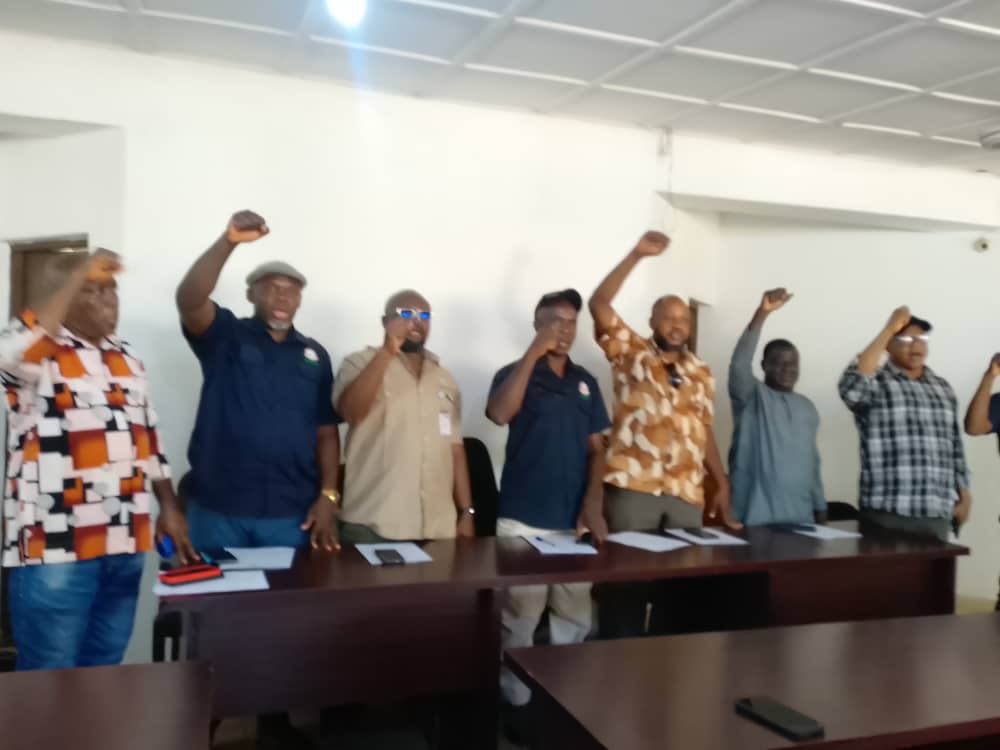
The union’s Zonal Coordinator, Christian Opata, said at a press conference in Makurdi on Thursday that the government was “taking the same unproductive route” that previously led to prolonged strikes in Nigerian universities.
The zone, comprising eight universities, including Moses Orshio Adasu University, Makurdi (MOAUM), Federal University of Agriculture, Makurdi (FUAM), Enugu State University of Science and Technology (ESUT), Federal University of Health Sciences, Otukpo (FUHSO), Kogi State University, Anyigba (KSU), Federal University Lokoja (FUL), Federal University Wukari (FUW) and the University of Nigeria, Nsukka (UNN), lamented that key aspects of the agreement signed on January 14, 2026, had either been partially implemented or abandoned entirely.
Opata, on behalf of the zone, faulted the Federal Government for failing to inaugurate the Implementation Monitoring Committee (IMC), which, he said, was meant to ensure faithful execution of the agreement and prevent bureaucratic sabotage.
The union also criticised the establishment of the proposed National Research and Innovation Development Fund (NRIDF) without involving ASUU, describing the move as a breach of the agreement.
According to Opata, the agreement had stipulated that at least one per cent of Nigeria’s Gross Domestic Product (GDP) should be dedicated to research, innovation and development funding.
He, however, questioned the Federal Government’s decision to benchmark the proposed fund at 500 million dollars without consultation with the union.
The union further decried the non-integration of key allowances such as Consolidated Tools Allowance (CATA), Earned Academic Allowance (EAA) and Professorial Allowance (PA) into the Consolidated University Academic Salary Structure (CONUASS), and frowned at inadequate government funding and the reluctance of some state governments to implement the agreement despite participating in the negotiations that produced it.
Other News
ASUU also raised concerns over lingering welfare issues, including unpaid arrears arising from the 25 to 35 per cent salary award, promotion arrears, unpaid third-party deductions, pension remittances, salary shortfalls linked to the Integrated Payroll and Personnel Information System (IPPIS), and the withheld three-and-a-half months’ salaries from the 2022 ASUU strike.
The union expressed dissatisfaction over what it described as increasing interference in university administration by governing councils and visitors, citing the situation at Benue State University, where it alleged that attempts were being made to arbitrarily overturn the appointment of a Deputy Vice-Chancellor.
ASUU also condemned what it called questionable appointments and promotions to professorial positions in some universities, specifically mentioning four cases under investigation at the Federal University Lokoja.
On the welfare of retired academics, the union described delays in the payment of pensions and gratuities as evidence of government insensitivity and also cited the case of late Professor Targema Iorvaa of Benue State University, who reportedly died without receiving his pension and gratuity benefits.
Opata, who clarified that ASUU members are not strike mongers, appealed to stakeholders in the education sector and all Nigerians to prevail on both the Federal and state governments to fully implement the 2025 agreement in order to avert another industrial dispute capable of disrupting academic activities across public universities.
In his remarks, the National Investment Officer for ASUU, Celestine Aguoru, who noted that the government had failed on its promise to commence implementation five months after the agreed time, said the union would convene an emergency meeting in the first week of June to decide its next line of action.
While lamenting that most of their member universities have been forced to borrow funds to implement the agreement, Aguoru said, “Today, most universities say they can no longer continue to borrow and that they are shutting down.”
He urged Nigerians to hold the government responsible should the universities be shut down again, saying, “Our children don’t need to be at home or on the streets. We do not like strikes; we only go on strike as the last option. The Government should be held responsible if ASUU goes on strike.
“We call on the general public to appeal to the government to avert the situation they are pushing us into,” adding that ASUU is poised to ensure that the universities keep running.