Follow Us on Google
By George Allwell
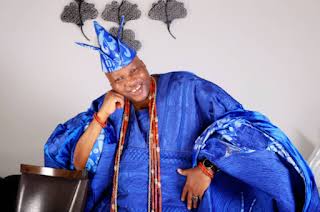
When you talk about someone who works hard and plays hard, the description perfectly fits Asiwaju Olayinka Fasuyi. He is a man of many parts: first Asiwaju of Ijesaland, first Balogun of Ijebu-jesa, Baba Oba of Iwaraja-Ijesa, Baba Oba of Ilaa-Ijesa, fourth Balogun Ijo of the 129-year-old Cathedral Church, Omofe, Ilesa, founder and chief consultant of Supreme Management Training and Consultancy Services Limited, which he floated after he resigned from Total Nigeria Plc. in 1992, founder and president of 14-year-old Ibadan Business School, Ibadan, founder and chairman of the Community Philanthropy Organisation, Asiwaju Yinka Fasuyi Foundation (AYFF), an outfit geared towards assisting the underserved as well as promoting and advancing the socio-economic interests of Ijesaland in his home state of Osun, patron of the first cosmopolitan club in Africa, Ibadan Recreation Club (1902), patron of Ijesa Sports Club and chairman of Ijesa Community Development Assembly.
Without any doubt, he has played key roles across several spheres of life and left indelible footprints and marks, not only in his immediate Ijesa, Osun State, community, but globally.
Ahead of his 70th birthday on October 27, which is expected to run for nine days, he spoke to journalists in Lagos.
Beifoh Osewele reports…
Growing up
“My father was a businessman. My mother was also a businesswoman. So, I grew up under their business tutelage. You may have heard of the Osomalos—we were taught to be streetwise.
The lessons I learnt from my parents were many. They taught us the value of love, unity, hard work and integrity.
I was raised in a polygamous setting with seven wives and 23 siblings. I am the 16th child. My mother had six of us. I am her first son and third child.
“My family stands out for its unity. Last week, at a niece’s wedding in Agege, Lagos, I commented on the unique and fantastic love and cordial relationship among us siblings, which people use as a reference for unity in polygamous families.
“The wedding was for the daughter of my late elder brother, my closest confidant in the family. That my late brother, though from a different mother, was my closest confidant in the family.
“The love among us is so deep that it has made our family a reference point when you talk about unity in a polygamous setting. This legacy of unity makes us all acceptable across the family, regardless of maternal differences. That is a huge legacy.”
Young millionaire
Asiwaju Fasuyi began his formal educational pursuits when he was enrolled at Otapete Methodist Primary School in 1962. He left in 1968 and immediately proceeded to Ilesa Grammar School in 1969. While in secondary school, he was exposed to friends whose youthful exuberance drove him to partake in various academic and extra-curricular activities, including attending parties or organising one. He adopted the moniker Lington, in replacement for Gabriel, which he was originally christened.
He recalls life as a schoolboy: “Right from the 1970s when I was in secondary school, I was nicknamed Young Millionaire. Anybody who attended Ilesa Grammar School around 1971 would confirm this. Whenever there was a party, my friends, including my seniors, would rush there early to make sure I met them there so that I could pay their gate fees. The fee was usually 10 kobo or 15 kobo. I would pay for 20, 30 or 40 people.”
In 1971 when he was in Form 3, he became socially radicalised. “I loved parties. I was bankrolling them. I had privileged access to my father’s drawer.”
The fact that he was a ‘big boy’ wasn’t in doubt. That fact was buttressed when his father bought him a Raleigh bicycle.
“I was the only student at Ilesa Grammar School who had a bicycle. On Mondays, I’d ride to school during assembly, just before the arrival of teachers and the principal. The entire school, a large comprehensive one, would be hailing, ‘Young Millionaire.’”
The late Afrobeat czar, Fela Anikulapo Kuti, was one of the biggest music stars of that era, and they tried to book him for one of their shows: “We wanted to contract him to play for us but he said he would not come to Ilesa. Then Segun Bucknor was next to him. I paid the bill to bring him to Ilesa.”
That, for the then young Asiwaju, was a landmark achievement. But it was also a push for him to explore further. He didn’t have to wait for too long.
“In July, 1972, Ebenezer Obey released ‘Club Members.’ I went to a place in Ilesa where a record seller was blaring the music because it was his first LP. The week after, Sunny Ade released ‘Seinde.’”
Hearing the two musicians singing praises of some people set him thinking.
“I asked myself, are these people being praised human beings or spirits? Obey and Sunny Ade were calling their names. So, I said, if these people are human beings, then I want to aspire to become like them.
“When Chief Commander Ebenezer Obey turned 80, two years ago, I was the chairman at the reception organised for him. And, to the glory of God, in the last 17 years, he has played at all my birthdays. And, he has also waxed three full albums for me, Asiwaju Yinka Fasuyi. He will also play during my 70th birthday later this month.”
Asiwaju did not become a giant overnight. He laid a solid educational foundation for himself. But he is frank enough to tell you that he never wanted to go to school. But for his brother, all he wanted to be was a merchant like his father.
“My aspiration was to become a businessman like my father and to own shops where I would sell building materials. However, when I came to Lagos, where most of my senior siblings lived, my perspective changed. My late elder brother, Elder Emmanuel Olatunde, advised me to prioritise education.”
He obeyed. He then enrolled at the Federal School of Arts and Science (FSS), Ondo, for a two-year A’ Levels programme, from 1977 to 1979, where he sat for and passed his examinations in Chemistry, Biology and Economics.
At FSS, something terrible that almost truncated his educational pursuit happened.
“I faced challenges, including false accusations that I instigated a riot. Unfortunately for me, the teacher who was assigned to look into the case was dragging a girlfriend with me. He found an opportunity to get rid of me. I was suspended for an offence I never committed. I was only allowed to come and write my examination from home. But when the result came out, I had the best result of the year in Chemistry, Biology and Economics.”
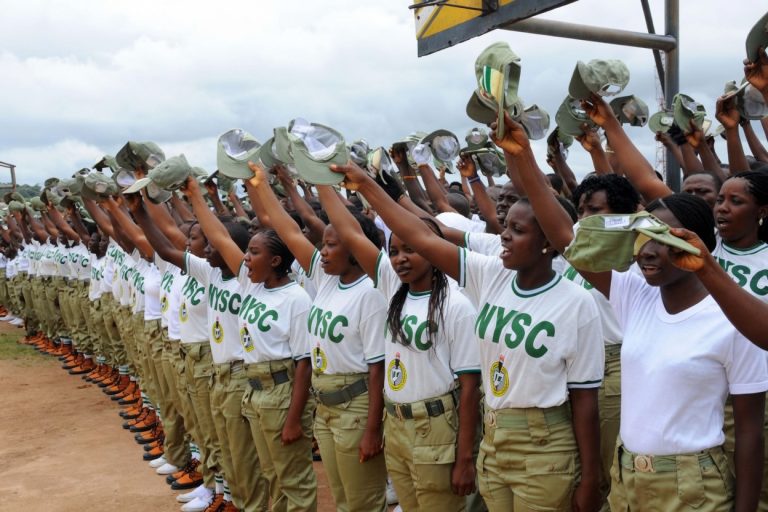
That enabled him to secure admission into the University of Ibadan in 1979/1980. He graduated with a Bachelor of Science in Economics (Hons.) in the 1982/1983 session. He subsequently embarked on the one-year compulsory National Youth Service in Gongola State, serving in Yola. He enrolled for a master’s degree in Industrial and Labour Relations (M.I.L.R.) at the University of Ibadan and graduated in 1986. His quest for knowledge later took him to Obafemi Awolowo University, Ile-Ife, where he pursued a second master’s degree in Business Administration (MBA). He graduated in 1992. That MBA became a major turning point in shaping his business philosophy and life trajectory. Not one to rest on his oars, Fasuyi proceeded and bagged a third master’s degree in Information Science (M.Inf.Sc.) in 1994 from the University of Ibadan.
“My academic success surprised those who knew me from Ilesa Grammar School.
So, by the time I started with the chain of master’s (degrees), people started wondering. They didn’t know that God was preparing me for management consulting.
“People could not believe that the Yinka Fasuyi they knew in Ilesa Grammar School could ever be involved in anything academic or knowledge-based, let alone finding himself in management consulting.
“I remember a friend of mine who came from the UK. I gave him my complimentary card. He told people, ‘How can Yinka be adding things that he never read on his card?’”
He added: “Music, particularly Ebenezer Obey, helped me through university. I mistook O’ Level economics with university economics, expecting it to be easy. Friends advised me to switch over to political science, warning that I’d struggle with mathematics. However, I persevered, using Obey’s music and Gulder to tackle mathematical difficulties.”
He made history as the first Asiwaju of Ijesaland. But he did not deliberately set out for it. His father did not take any chieftaincy title. Like his father, he avoided traditional titles. “I have never sought chieftaincy titles. At several events I attended with my wife, who holds a Ph.D in Communication and Language Arts from the University of Ibadan, I usually correct MCs whenever they introduce us as ‘Chief and Dr. (Mrs.) Yinka Fasuyi.’ I was okay with ‘Mr.’ I’ve declined numerous chieftaincy offers, preferring to remain ‘Mr.’”
But, unknown to him, that was only a matter of time. And his musical idol, Chief Ebenezer Obey, laid the foundation.
“In the late 1960s in Ilesa, during Christmas and Easter, Ebenezer Obey and Sunny Ade would come to Ogunwusi town hall to perform. We couldn’t enter. But we used to enjoy their music by peeping through the barricade. After moving to Lagos in 1974, initially to Palm Grove and later Surulere, I was surprised to see Obey perform in small venues like sitting rooms or backyards for 40 people. I decided to collaborate with three of my friends to invite Obey and Sunny Ade every three months to Ilesa. We usually split the bill. At the first event, there were 28 attendees, including our wives and 20 guests. We surprised Obey by spraying him generously. He came with his son, Shina. Each of us sprayed N500,000. Because we were not known socialites, Obey had to take our names to investigate us to ensure we were not ritualists or fraudsters. Over time, Obey began calling me ‘Asiwaju Ibadan Group of Four’ or ‘Asiwaju Ibadan Group of Friends.’
“At my 60th birthday in 2015, an eight-day event, Sunny Ade performed on the sixth day, and Obey on the final day, October 25. He repeatedly called me Asiwaju Yinka Fasuyi. Two days later, a senior brother from Ilesa assumed I had taken a chieftaincy. Chief Ayo Agbede, who attended, took my Ibadan Business School and Supreme Management Training and Consultancy brochures to Owa Aromolaran, suggesting I be conferred the Asiwaju title.
“Despite initial resistance from influential Ijesa figures, after consultations across Ijesa’s 257 communities, Oba Gabriel Adekunle Aromolaran II approved my installation as Asiwaju of Ijesaland on July 6, 2016. At a party in Surulere, where Obey was performing, I shared the news with him, and he announced it on stage. Three days before the October 22, 2016, installation, a meeting of traditional rulers proposed making me the Asiwaju of Ilesa first, with potential elevation later. Following a receptionist’s advice to agree, I accepted. Four years later, I was elevated to Asiwaju of Ijesaland.”
Seventy and fulfilled, but…
“At 70, one needs to appreciate God. When I was in Total, we used to call two or three of my bosses Baba and those people who we were calling Baba were in their late 40s. Not even in their 50s. So, you can begin to appreciate that.
“And, of course, even if you go biblically, it is supposed to be a three-score and ten (70). That is supposed to be an advanced age, if you also look at statistics and life expectancy in Nigeria. So, from every indication, age 70 is a period to give glory to God. I will always thank God.
Yes, at the individual level, I feel fulfilled. But I am not fully satisfied with the state of the country. However, my focus is on driving development through community initiatives like the Ijesa Development Fund. If I could change anything, I’d enhance my efforts to inspire broader participation in such initiatives to sustain progress.
Partisan politics?
It is a statement of fact that when you ask an average Nigerian why he or she is going into politics, he’ll say, “I want to go and serve.”
But Asiwaju Fasuyi says he’s not likely to embrace partisan politics, if the reason is to serve humanity. His humanitarian services are well known. As a philanthropist, he has touched and impacted lives positively.
“You don’t necessarily have to be a politician before you can serve your people. I have been serving Ijesaland in the last nine years without being in politics. So, you don’t need to be in political office before you can serve people. If the true objective of going into politics is to serve, I’m already serving people, humanity, without being in partisan politics.”