Follow Us on Google
•Those saying they don’t know what restructuring means are pretenders
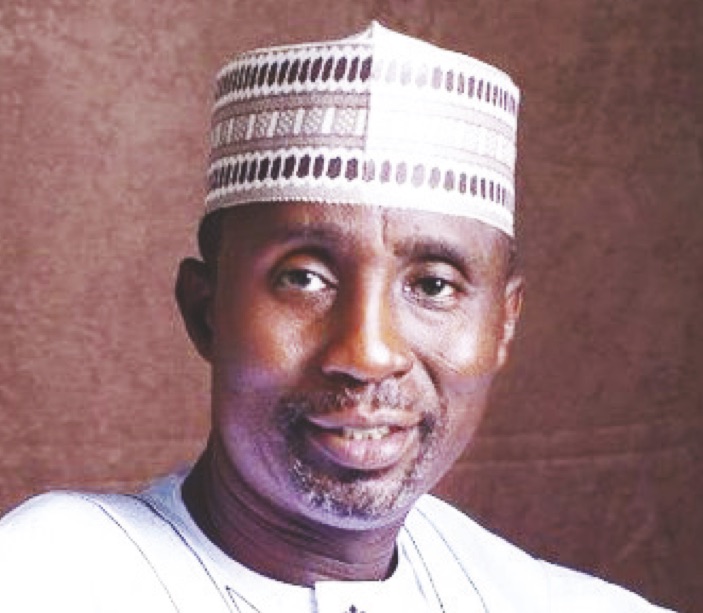
Former president of the Southern Kaduna People’s Union (SOKAPU) Dr. Jonathan Asake, has upbraided the immediate past administration of President Muhammadu Buhari of shielding sponsors and perpetrators of insecurity during his eight-year tenure as President of Nigeria.
In an interview with VINCENT KALU, Asake, candidate of the Labour Party (LP) in the last governorship election in Kaduna State, said the present government should not complain that former President Muhammadu Buhari mismanaged the nation, as the National Party Leader of Buhari’s All Progressives Congress (APC) is now president. He said if the federal allocations to local governments in the North had been applied judiciously, poverty in that region wouldn’t be as scary as it is.
He noted that implementing the Oronsaye Report was a good development, but insisted that institutions must be strengthened and corruption fought to a standstill to enable the implementation of the report achieve meaningful results.
What is your opinion on the state of the nation?
It appears that things are getting worse every day for the common person in Nigeria, particularly in the area of daily survival. It is a reality that several families are in distress today; families that used to live normal life. What you call the middle class does not exist anymore; you are either up there or you are completely on the floor. It is very difficult for several families today to meet up with daily requirements of their household in terms of feeding, in terms of meeting up with transportation to pursue daily endeavours of life, in terms of school fess and house rent. Generally, there is suffering in the land.
To cap it, the wave of insecurity continues with daily kidnappings that are going on and banditry attacks in communities and terrorists invasion of communities. This culminates into total suffering by Nigerians.
What brought all these that you have just enumerated?
There are so many factors. I’m from Kaduna State, precisely from the southern part of the state. I can speak for what has given rise to all these in my own area, and then it can be generalised because it is the same thing that binds everybody.
Firstly, there was nothing done visibly to curb the state of insecurity in the eight years of Muhammadu Buhari. Nigeria is mostly an agrarian society, where people engage in agriculture and majority of the people are farmers. During this period, Boko Haram, Fulani herdsmen, bandits, kidnappers or whatever they are called in their various areas of operation in the country, stopped several farmers from going to their farms. I know a lot of people that retired and resigned from work and went in to farming and they were killed in their farms and nothing has been done about it. What does it entail? It means that all the economic indices or factors that we know theoretically that, if farmers were still going to their farms there is enough food produce, it would still not affect the life of average Nigerians as it is today. Now that farmers have been stopped from going to the farm, there is scarcity of food, and it is affecting everybody. Today, you can’t go two kilometres into the forest to farm, you would be killed or kidnapped and ransom would be paid; everything you have ever gathered in your life, your family, your community would be taken away to pay for your freedom. These hoodlums kidnap innocent people into the forest and stay there and collect huge ransom and take it to the bank and no trace is made.
The food produced generally has reduced and that portends a lot of hunger for the whole nation. What has brought this is insecurity, which has not been dealt with, especially in the eight years of Buhari’s administration. There was visibly nothing that was being done. In fact, what I saw at that time as the leader of my people was that the government shielded the perpetrators and sponsors of the insecurity in the country and that is why even when those sponsors of terrorism were nabbed in far UAE, Nigerians insisted that their names must be mentioned in this country, but no mention was made up this today.
The second factor is leadership. I have observed overtime the kind of leaders that we have today is a reflection of the institution that produced them; we have very weak institutions, like the Independent National Electoral Commission (INEC). We are in a democracy; we can only have leaders when they come out to contest for an election. Since nobody contests as an independent candidate; you can only contest on a political party platform. The ways and manners the political parties produce their candidates also is a reflection of the kind of leaders that would be thrown or appointed, and yet when we have those candidates that are thrown up, the INEC now becomes the umpire to decide for the general voters. We all know what happened in the last election and what has been happening. INEC consistently has not stood its ground to ensure that the votes of the Nigerians people reflect and produce leaders ultimately.
Where INEC has failed, Nigerians have always waited for the judiciary to do its own part. In the last exercise, we all saw it that the judiciary as if in connivance with INEC has done the same thing to disenfranchise Nigerians. So, where do we turn to? We don’t have a leadership that is responsive to the plight of the Nigerian people; that is sensitive to the plight of the Nigerian people, and then we have what we are having today.
With this insecurity, we need leaders that would be responsive and proactive enough to curb it. I must give it to this administration, there are attempts to fight insecurity much better; and their intention is much better than the last administration because we can see results, and I’m hoping that they continue like this.
Once we are able to curb insecurity, then the present crop of leaders, irrespective of how they emerged, must be ready to reform our national institutions and must be ready to restructure this country because the lack of restructuring of Nigeria is actually the cause of what we are going through. People have lost their human dignity. Leadership and insecurity have put us to where we are today.
INEC recently released the 2023 general elections report and praised itself for performing very well. What do you make of that report?
Who scored them? That is the irony; you cannot be a judge in your own case. We all know those who contested the last election – PDP led by Atiku, APC led by Tinubu and LP led by Obi. These were the prominent candidates for the election. We know how Nigerians rose up and they said they wanted a positive change because they all heard the messages of the three candidates. It has never happened in the history of this country that common Nigerians would come together and said they wanted a democratic change and they made that statement, and a party with a candidate that was unknown rose to the status of a mega party. I’m talking about the Labour Party and its candidate, Peter Obi. Nigerians made their statement, but we all know what happened with INEC announcing the result by 4am, when people were still sleeping. Even the Bible says, ‘the thief cometh in the night’, and the mandate was taken like a thief in the night. We already knew what happened when the Electoral Act was being amended to ensure that there is a direct transmission of results to a central server, and Nigerians were assured that it would happen. But during that election, it was not the case anymore, and today the world is seeing that Nigerians are being disenfranchised in broad daylight. You can never expect to have leaders that would have the moral capacity to do the right thing. I pray that things will change.
The present government is blaming the Buhari government for the woes in the economy, just like Buhari blamed the PDP. What do you make of such?
The blame game will have to continue. As I said earlier, as long as we have not allowed the system to function well the way it was set up to function, the blame game will continue, whether it is the party taking over from another party or the same party succeeding itself like it is today.
If this present administration is blaming the last one; they were part and parcel of the same administration. In fact, the current president was referred as the leader of the party in the last administration and that was government of Nigeria then under APC.
So, if he is the leader of the APC and things went wrong, he was seeing them; he was part of them, he participated in it and if he kept quiet while the wrongs were perpetrated because he wanted to benefit from it, as he said , ‘it was his turn’. So, he is the president today. If he kept quiet while the wrong thing was being done, while evil was being perpetrated against Nigeria because he wanted to personally benefit to be president, he shouldn’t complain.
Now that he is the president, there are things he is seeing that went wrong, he has only two options – either to come out and confess to Nigerians, and say, I got it wrong, or I was part of this, but I’m ready to reform, and he courageously reforms the system or, he would be held by the chains of cowardice and guilt because he was part of them or he would keep quiet over the evil that was perpetrated and is still being perpetrated.
For instance, for the first time in the history of Nigeria, since independence, there was no time that we have had a federal cabinet – ministers, and some heads of parastatals, that were there for eight years. There was no scorecard, there was no assessment of their tenure, but they were there for eight years because they were loyalists of the president. This is what happened during the Buhari administration, and you couldn’t see any meaningful achievements in those ministries and parastatals. There was monumental corruption. The present administration must be ready to retrieve the stolen wealth of Nigerians, and then we will know that they are serious.
They cannot only be crying that the past administration caused this; they should also tell us what they are ready to do with the wrongs committed by the past administration, whether you are ready to punish them irrespective of whoever that was involved. That is what the rule of law is all about; that the law is not a respecter of any person or offices. So if he is to ensure the rule of law, he must bring to book all those people who stole the Nigerian resources and thrown this country into this kind of agony that we are going through today. He must bring them to book so that we know that he is serious, and not crying.
You said restructuring of the country is the only way to move the country forward, but most core northern leaders say they don’t know what it is all about. Can you define it in a way that everybody would understand?
I’m a northerner. Let me define one aspect of restructuring for them. In 1987, the old Kaduna State was divided into two – Katsina and the present Kaduna states. Then, there were 14 local governments in the old Kaduna State, and these LGs were divided equally, seven to Katsina and seven to Kaduna. Kaduna has by far more land mass than Katsina. Kaduna State is about 46,000 square kilometres, and by population, it is estimated to be about 10 million, the third in the country. But today, there are 33 LGs in Katsina, a state, which is by far less in land mass and population than Kaduna that has only 23 LGs, a difference of 11 LGs. The reason is because there is revenue at the centre, where all the 36 states go to collect revenue that they don’t know where it is coming from – the oil money. They collect it for every local government. Kaduna States collect for their 23 local governments and Katsina collects for their 33 local governments.
If local governments were responsibilities of their states, they would not have created more local governments in Katsina more than Kaduna, but out of political reasons, Katsina has more LGs than Kaduna.
A restructured Nigeria would ensure that you can create any number of local governments in your states but you must take care of them so that they would be viable.
The same thing goes for Kano State. Kano and Jigawa were together. Today, Kano has 44 local governments. The land mass of Kano is about 20,000 square kilometres, less than Southern Kaduna, which is 26,000 square kilometres. Kano claims that in terms of population, it is second to Lagos, but we have never had a real census in this country. After Kano metropolis, which other big town is in that state? Today, Kano has 44 local governments and Jigawa has 28 local governments. If you put the two together, you have 72 local governments, while the entire South East has 95 LGs.
The people that conspired to put more local governments for the North collect these resources and they don’t use them for their people. That is why there is more poverty in the North today that even gave rise to the insecurity we are talking about today that in other parts of the country. If these resources were applied judiciously for their people, we would not be where we are today, especially in the North. Go and see the scary poverty in the region.
Each state goes to the centre to collect oil revenue for itself and its local governments. A restructured Nigeria will correct those anomalies. If anyone says he doesn’t understand restructuring, they are pretending because they are beneficiaries of the present fraudulent structure, just like we have been having the fuel subsidy fraud. Nobody understands the subsidy thing, but a lot of petro dollars have been sunk into that fraud. Many Nigerians didn’t know about this. A restructured Nigeria will correct the anomaly. That is one aspect of restructuring we have been talking about.
What is your opinion on the Oronsaye Report?
In whatever way one looks at the implementation of the Oronsaye Report, whether these agencies, parastatals are still together or they are separated as recommended by the report, the most important thing is that we must have institutions that are strong; with strong structures. If the institutions are still very weak the way they are, whether you merge them or you separate them, corruption will still be with them and it will still not work, and the report will be meaningless.
If you now take the agencies and put them under one department or under one ministry, but you still have Nigerians that are used to corruption to man them, nothing new will happen; corruption will still continue.
What we need now is to strengthen our institutions and the leadership must be determined to make our institutions strong and wield the stick on corrupt officials. Once that is not done, whether we merge the MDAs or separate them, it would still be the same thing.
But there are the fears of job losses over the implementation of the report?
The fear of job losses would have to be there. Like I said, if the institutions are made strong, they lose job, but you create jobs in another way. If they just lose jobs and you go and create more corruption somewhere, then that is the reason they are afraid. People will lose jobs, but if you know that they are losing jobs, and you create more jobs in another efficient manner, then it is acceptable. But it will be unfortunate if people will lose their jobs and the system would still not work because of more corruption.
Some people argue that the president is using this report to divert attention from the economic hardship in the country. What is your take on this?
Nigerians will always doubt until proved otherwise. It is true that the Oronsaye Report made far recommendations about reforms in public institutions, and so, what is diverting attention if he is implementing the report? Let us wait and see.
People should be looking at the real issues that I’m talking about; that our institutions are very weak. Whether you separate them or put them together, as long as they are not strong enough to check on the excesses of corruption that is eating up this country, then we still have a long way to go. But if the implementation by the president is aimed at strengthening our institution, so be it.
Tinubu has mooted the idea of a state police as a move to tackle the security challenges. What is you view on this?
We have been talking about the State Police for long because of the state of insecurity in the country. When you have a state police, it means that every locality will have people that are recruited to take care of policing that environment, and you don’t have to wait for the federal police or the Inspector General of Police to give instruction that would go down to the Commissioner of Police before a situation is addressed.
The people that would be recruited within a particular state will be people that know that area. It is not like taking a man from Akwa Ibom within the federal police to Borno State to go and tackle insecurity created by Boko Haram in that area, when you have people that know the terrain and know the people that are creating the problem. State police is long overdue.
But, there is the fear of governors using it to intimidate or hound political opponents or enemies?
That is why we talk about living under the rule of law and if the law takes it cause, then that fear would not be there. When you have a nation that does not go by the rule of law; that people can live above the law, then the people will live above every other thing. But when there is the rule of law and there is no person that is above it in the land and the law can take its course on anybody, it means that even with the state police, people can challenge it in the law court if the governor wants to use it to his own advantage. Governors, local government chairmen and even heads of some agencies and parastatals can always create advantage of the office they are occupying to the detriment of others because we don’t have respect for the rule of law, but it is only when we adhere to the rule of law that we can check some of these excesses.