Follow Us on Google
• Battle for ballot intensifies, parties outline strategies to woo voters
By Omoniyi Salaudeen
As political parties gear up for the 2027 general election, today marks a critical double deadline. It is both the final day of the Independent National Electoral Commission’s (INEC) Continuous Voter Registration (CVR) and the close of the nationwide claims and objections window for scrutinising the voter register.
The final numbers that emerge will determine far more than voter eligibility; they will shape the political narrative ahead of 2027, setting the incumbent’s reform agenda against an increasingly mobilised electorate demanding change. After historic voter apathy in 2023, where turnout dropped below 27 per cent, all eyes are on whether this cycle’s unprecedented awareness campaigns will produce a sanitised register and a level of civic participation that money cannot buy.

For months, a quiet mobilisation has been underway across the country. Pro-democracy groups, labour unions, and civic organisations have flooded the field to drive registration and Permanent Voter Card (PVC) collection. As a result, the battle for 2027 is shifting from who shouts the loudest to who actually turns out. For the millions of Nigerians who sat out the last election cycle, this is the moment to alter that trajectory. The stakes could not be higher. A larger, more accurate register paired with strong turnout reduces the influence of vote-buying and gives elected leaders a genuine mandate. Conversely, low turnout risks repeating the familiar pattern of elite selection.
Beyond the administrative process, this final register serves as the first real test of political strength ahead of 2027.
Ultimately, Nigeria’s political future will be written not in campaign offices, but in the final count of citizens eligible and ready to vote.
Electoral numbers and map dynamics
Kano State recorded the highest figure in the newly completed voter registration exercise nationwide with 330,906 completed registrations, representing 8.55 per cent of the new national total, while Lagos State added 181,254, or 4.69 per cent. Delta State followed closely with 166,895, representing 4.31 per cent, with Edo State adding 156,150 and Ebonyi State trailing behind at 146,507. Despite these additions, Lagos State retains the largest single voter bloc overall at 7.06 million voters, with Kano close behind at 5.92 million. These figures carry significant strategic implications compared to previous general elections.
Crucially, the North-West, led by Kano, and the South-West, led by Lagos, remain Nigeria’s decisive vote banks. Section 134 of the Nigerian Constitution mandates that a presidential candidate must secure not only a plurality of votes but also at least 25 per cent of the votes cast in two-thirds of the 36 states and the Federal Capital Territory. Any party that fails to build strong, cross-regional coalitions across both the Kano-Kaduna axis and the Lagos-Oyo axis will find it nearly impossible to meet this statutory benchmark.
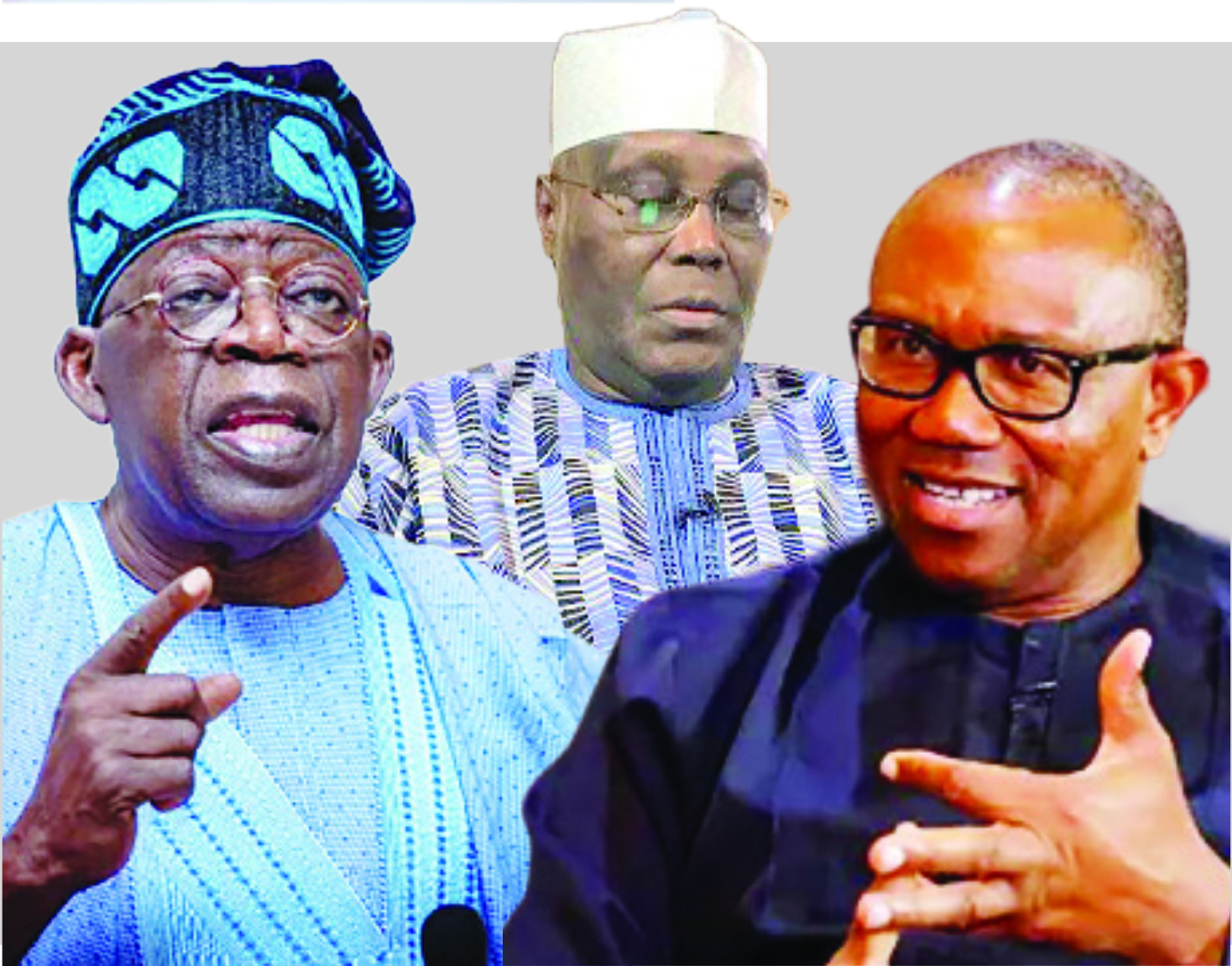
In the 2023 cycle, presidential contests were essentially a three-horse race between the All Progressives Congress (APC), the Peoples Democratic Party (PDP) and the Labour Party. However, rising political awareness and major political realignments—exemplified by new opposition coalitions and tickets like Atiku Abubakar running under the African Democratic Congress (ADC) alongside Rotimi Amaechi, and Peter Obi running under the Nigeria Democratic Congress (NDC) alongside Rabiu Kwankwaso—mean high voter bases in Kano and Lagos no longer guarantee a single party will sweep those states. High registration numbers in places like Kano, Lagos, and Delta mean very little unless political parties resolve voter apathy and convert registrations into actual PVC collection and polling unit turnout.
Strategic implications for major parties and candidates
Other News
For President Bola Tinubu and the ruling APC, the registration data presents a dual challenge of defending core South-West strongholds while stemming potential erosion in the North-West. The incumbent administration’s strategy hinges on leveraging state machinery, structural reach, and economic reform messaging.
Pushing back against opposition scepticism, Chief Henry Ajomale, a close associate of President Tinubu and former Chairman of the Lagos State chapter of the APC, expressed strong confidence that voters will turn out to back the administration. He argued that the opposition enters this election cycle fractured, lacking internal cohesion, clear strategy, or viable secrets to defeat the ruling party. In 2023, he noted, opposition momentum relied heavily on temporary factors, such as weaponising religion and capitalising on the fallout from local grievances. However, Ajomale maintained that those tactics would not work again because voters recognise the fair representation under this administration and appreciate the long-term benefits of the president’s economic structural repairs. Pointing to over 31 governors standing firmly behind the president and key security gains in states like Borno, Kaduna, Yobe, and Adamawa, Ajomale shared optimism for higher voter turnout in 2027, asserting that citizens will vote to sustain progress rather than stage a protest vote.
“In 2023, opposition momentum relied heavily on temporary factors such as weaponising the Muslim-Muslim ticket narrative and mobilising voters to sleep in churches across Lagos to vote against us, alongside the lingering political fallout from #EndSARS.
“However, those tactics will not work again. The Christian community can see that representation has been fair under this administration, and voters who were previously misled will not repeat that choice. With over 31 governors standing firmly behind the president, it is clear his leadership is endorsed across the country.
“President Tinubu inherited a severe economic burden from previous administrations. Had the leadership been given to someone incapable, the nation’s hardship would be far worse today. As these deep structural repairs take full effect, Nigeria will enter a new era of growth. Voters recognise this progress, and I am confident they will vote to sustain it.”
He expressed optimism about the prospect of a larger turnout of voters in 2027.“This time around, I believe we will achieve much better results than in 2023 because voters are far more politically conscious, and many appreciate the long-term benefits of the president’s economic reforms. As security continues to improve, voter turnout will naturally follow.
“Significant security gains have already been made. Key areas in states like Borno (Maiduguri), Kaduna, Yobe, and Adamawa have been liberated from insurgents and kidnappers. As security forces tackle remaining threats in places like Kwara before the election, people will feel safe enough to come out and vote without fear of attack.
“While registration figures do not automatically translate into votes, I remain optimistic. The opposition claims that high turnout will be a vote of protest against the administration, but from my perspective, citizens will turn out to support the government because of the positive outcomes of President Tinubu’s economic policies,” Ajomale enthused.
Conversely, opposition leaders view the expanding register and economic hardship as their main path to victory. Tunji Shelle, a chieftain of the ADC in Lagos, echoed the sentiment that widespread frustration with the current administration will drive an unprecedented turnout. Shelle noted that citizens can barely afford basic meals or transportation, forcing voters to organise themselves to demand accountability at the ballot box. He emphasised that his personal surveys reveal a vast majority of voters have already made up their minds against the incumbent government, adding that aggrieved citizens struggling to survive will naturally hold the administration responsible. For opposition parties, Shelle insisted, the core task is ensuring that INEC maintains transparency while parties mobilise these aggrieved citizens to safeguard the register against manipulation.
“There will definitely be a greater voter turnout in the upcoming election because people are frustrated with the current administration. Citizens can barely afford basic meals or simple transportation. Everyone is complaining, so voters are organising themselves to come out in large numbers and make a real difference in the outcome.
“My hope is that the voters’ register won’t be manipulated. I have conducted a personal survey and found that eight out of ten people do not plan to vote for the incumbent president. While some still tell me this administration is doing well, the vast majority have already made up their minds.
“You cannot expect people who are struggling to survive not to feel aggrieved by the government responsible for their hardship. As long as INEC does its job transparently, political parties will do theirs by mobilising citizens to back their candidates and win this election,” Shelle posited.
For the NDC joint ticket combining Peter Obi’s nationwide appeal with Rabiu Kwankwaso’s formidable Kwankwasiyya movement, mobilisation is the central focus. Tanko Yunusa, National Coordinator of the Obidient Movement, outlined the NDC’s ambitious strategy to target a 60 per cent turnout of registered voters. Yunusa stressed that the NDC is actively embarking on nationwide advocacy to familiarise the electorate with their new platform, logo, and party symbol. Reaching across youth, elders, and technocrats, the movement aims to reverse the voter disenfranchisement and logistical issues seen in previous cycles. However, Yunusa warned that security agencies must step up to curb voter intimidation and violence, citing lessons from recent off-season elections like Osun State, where security forces needed to show greater capacity in arresting and prosecuting those who deny citizens their right to vote.
His word: “We are expecting something very different from the low voter turnout of previous elections. In this upcoming election, the Nigerian people are eager for change, which presents a major opportunity for them to come out and vote. In the last election, there were significant challenges regarding voters being denied their voter cards in certain parts of the country. Ultimately, the responsibility falls back on INEC. We are targeting a turnout of about 60 per cent of registered voters. If we can achieve that collectively, the results will far better represent the Nigerian people. As a party, the NDC is embarking on nationwide advocacy.“
As a new platform, we are actively mobilising so people can recognise our logo, understand what we stand for, and clearly know the platform on which Peter Obi is running. We are reaching across the board—to the youth, elders, and technocrats alike. This remains a major task for all of us. Many of our young supporters are already on the ground, carrying the flag and building awareness around our party’s symbol.
“To curb the threat of violence, security agencies need to be proactive and step up. What we witnessed in the recent Osun State election was not encouraging. Security agencies must demonstrate their capacity by arresting and prosecuting those involved in these treacherous crimes against the state—because anyone who denies citizens their right to vote is acting directly against the nation’s interest.”
Demographics, civic advocacy, and electoral reality
Demographic data reveals that over 70 per cent of new registrants during recent CVR cycles are youth between the ages of 18 and 34, alongside student populations. This generational shift is forcing campaign strategies to pivot toward digital platforms, economic reform messaging, and job creation policies over traditional patronage structures. Candidates are increasingly forced to engage directly on social platforms, policy town halls, and micro-targeted digital media rather than relying solely on traditional rallies and local brokers.
Highlighting this civic resurgence, Chekwas Okorie, Convener of the Igbo Agenda Dialogue (IAD), maintained optimism that voter participation in 2027 will far exceed the 2023 figures. Okorie argued that pro-democracy organisations, unions, and non-partisan groups have entered the arena precisely because low turnout produces poor leadership recruitment and leaves small voter pools vulnerable to vote-buying. When millions turn out, he noted, no amount of money can buy enough votes to alter the outcome. Recalling that only about 2.2 million out of 11.5 million registered voters in the South-East voted in 2023, Okorie described how the IAD stepped in to rally disillusioned youth to register, vote, and own the process. Pointing to the recent Osun off-season governorship election—where voter turnout crossed 50 per cent, Okorie suggested that extrapolating such participation nationally would give the 2027 winner an indisputable mandate.
Yet, election day turnout ultimately depends on converting registrations into collected Permanent Voter Cards. The persistent gap in PVC collection remains a key structural hurdle.
To address this, Okorie urged INEC to publish the names of registered voters who have not yet collected their PVCs, just as it publishes the general voters’ register. Such transparency would allow civic groups and political parties to identify wards with high volumes of uncollected cards and assist frustrated citizens in retrieving them before election day.
Speaking with Sunday Sun in a telephone conversation, he said: “The level of political awareness being driven by pro-democracy organisations, unions and groups that ordinarily stayed out of politics has increased considerably. They have entered the arena because low turnout produces poor leadership recruitment and makes the few who vote vulnerable to vote-buying. When few people vote, your money can go around. When millions turn out, no amount of money can buy enough votes to determine the outcome.“Even before this wave, I voluntarily disengaged from partisan politics and formed a non-partisan group, the Igbo Agenda Dialogue (IAD). My observation was that many Igbo people, especially young people, had resigned from Nigerian politics. The agitation for Biafra showed how disillusioned that demographic had become.
“That apathy showed in the numbers. Of 11.5 million registered voters in the South-East according to INEC for the 2023 election, only about 2.2 million voted for all presidential candidates combined. That was scandalous compared to previous elections. So I stepped aside from partisan activities to push a simple message: register, vote, and own the process. Many people aligned with me, and that was how IAD began.
“By the time we called for voter registration, we had recorded real gains in getting first-time registrants to sign up. Other groups did the same nationwide.“We are now seeing that effort translate to turnout. In the recent Osun off-season election, about 1.1 million people voted — over 50 per cent of registered voters. Compare that to the 27 per cent national turnout in 2023. If that Osun model is extrapolated nationally, 2027 could see a significantly higher participation rate.
“Anybody who wins with that kind of mass participation can legitimately say Nigerians have spoken. That is our message: if you don’t vote, you allow someone else to choose who governs you. You may end up with leaders you do not want.
“From our field experience, we are not stopping at registration. Between now and January, the work is to get people to come out, cast their votes, and defend them.
“INEC can also help by publishing the names of registered voters who have not collected their PVCs, just as it publishes the voters’ register. That way, citizens and parties can identify wards and polling units with large numbers of uncollected cards and help people retrieve them. Many gave up after frustration at collection centres. Publishing the list will encourage them to go back before the election.”
Even then, INEC’s growing reliance on technology for registration and voter management faces on-going scrutiny. Persistent technical glitches during online registration have frustrated users, while the commission has had to issue public warnings regarding fake CVR registration portals circulating on social media.
As the country looks toward 2027, two key questions hang in the balance: Is technology truly making Nigerian elections more credible, or simply introducing a new class of electoral challenges? And can political parties and civic actors successfully convert this historic expansion of the voter register into actual votes on election day?
The mandate of the margin
As the portal closes on Continuous Voter Registration and the final register takes shape, Nigeria stands at a pivotal electoral watershed. The expanded voter rolls are far more than a routine administrative inventory; they represent a fundamental recalculation of power dynamics across the nation’s political landscape. For the ruling APC, the challenge lies in converting economic reform narratives into tangible electoral trust, ensuring that core strongholds in the South-West and North-West withstand the undercurrents of economic dissatisfaction.
With Lagos remaining the premier voter engine at over seven million voters, the APC cannot afford to treat its home base as secure. The influx of new registrants in urban centres requires the ruling party to convince an economically pressured electorate that current policy pain will yield long-term stability. Furthermore, with Kano leading the new CVR surge, the APC’s northern campaign must aggressively counter opposition influence across the Kano-Kaduna-Sokoto corridor to secure the vital 25 per cent spread across northern states.
For opposition alliances like the ADC and NDC, the task is equally formidable: they must translate widespread socio-economic discontent into structural ground games capable of mobilising first-time youth registrants, protecting votes, and achieving statutory compliance across at least 24 states. Yet, the ultimate test of the 2027 general election will not occur on paper, but at the polling units. A large register offers the promise of democratised power, but an uncollected card remains a dead ballot. If the massive registration surge among young citizens fails to bridge the gap into physical PVC collection and election-day turnout, Nigeria risks repeating the cycle of elite preservation driven by low participation.
Conversely, if civic organisations, political movements, and electoral authorities succeed in driving turnout toward historic benchmarks, the sheer volume of participation will neutralise systemic vote-buying and force candidates to govern with genuine accountability.
Institutional integrity remains the critical backbone of this entire architecture. INEC’s handling of technological infrastructure, card distribution transparency, and operational logistics will dictate whether public confidence expands or erodes. Likewise, the neutrality and decisive action of security agencies in preventing intimidation will determine whether voters feel safe enough to assert their democratic rights.
In the final estimation, 2027 will be defined not by the rhetoric delivered from campaign podiums or the size of party war chests, but by the determination of millions of Nigerians to turn their registered names into active votes. The trajectory of the nation’s democratic future rests squarely on who shows up to claim the mandate.