Follow Us on Google

By Vincent Kalu
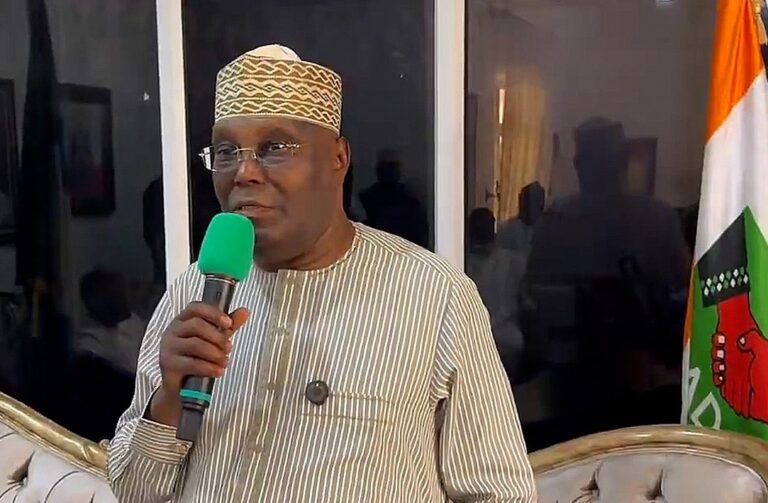
For the Peoples Democratic Party (PDP) presidential candidate and former Vice President, Atiku Abubakar, his journey to the presidency, which is his fourth attempt, invariably would depend on whom he chooses as his running mate.
Currently, pressures are being mounted on him from various quarters, but if he kowtows, he may consign himself to political oblivion.
His main opponent, Bola Ahmed Tinubu, a political behemoth, who is out to become the president, which has been his lifetime ambition, is going to fight to make his dream come to fruition.
The situation is dicey for the PDP candidate, but his choice of a running mate would add a great fillip for the pendulum to sway in his direction.
In line with the party’s principle, since the presidential candidate is from the North, his running mate must come from the South. There are three zones in the South: Southeast, South-south and Southwest. Of these three, the Southwest is not in consideration because the region had produced President Obasanjo, who ruled from 1999 to 2007.
Even now, the current Vice President, Prof Yemi Osinbajo, though from another party, is from the same zone. So, the chances of the vice president coming from this zone again are ruled out.
Former President Goodluck Jonathan, who reigned as president from 2010 to 2015, is from the South-south. Therefore, this zone has also produced a vice president.
The Southeast is the zone that has literally laid its life for the PDP right from its formation till date and had believed that 2023 should be pay its back time by the party, for its support all these years.
Historically, the Southeast has contributed more than any other zone in the life of the PDP. Members of numerous organisations, including the groups known as G-18 and G-34 with former Vice President, the late Dr Alex Ekwueme, playing a leading role, founded the main opposition party in August 1998.
Earlier in 1998, the G-18 and G-34 had openly opposed the plans of the military leader at the time, Gen. Sani Abacha, to continue his rule. Following Abacha’s death in June 1998, the government announced that democratic elections would be held in the following year, thus ending the 16 years of military rule.
In preparation for the elections, political parties were formed, including the PDP. Dr Ekwueme was the first party chairman and laid the foundation for the victory of PDP in 1999.
Despite failing in 1999 and 2023 presidential elections, the late elder statesman supported the party till he died. It is in view of his roles and those of other statesmen from the Southeast that many believe that Atiku would pick a running mate from the zone because cumulatively, people of the zone have shown more commitment and loyalty to the party than any other.
Not only in PDP have the Igbo made sacrifices. In 1998, towards the build up of this present dispensation, former Abia State governor, and immediate past Minister of Science, Technology and Innovation, Dr Ogbonnaya Onu, picked the presidential ticket of the All Peoples Party (APP), but he was prevailed upon to drop his ambition for Chief Olu Falae because the mood at that time was to pacify the Southwest over the annulled June 12 election.
In the same vein, Dr Ekwueme, who was tipped to be the presidential candidate, was manoeuvered out to give victory at the Jos convention of the party to former military Head of State, Chief Olusegun Obasanjo, who was just released from prison.
In this dispensation, Southeast has made tremendous contributions for its stability.
During the election, while the Southwest rejected Obasanjo, the Southeast gave him the highest percentage of votes without bearing any grudge that their son, Dr Ekwueme, who laboured so hard for the party didn’t pick the ticket.
The region steadily stuck with the PDP even when other parties, like APP and All Nigeria Peoples Party (ANPP) fielded Southeast vice presidential candidates in 2003 and 2007.
Going by statistics of percentage votes cast, the Southeast has given the PDP more votes than any other zone. Even outside the Southeast, the result of the 2019 presidential election between President Muhammadu Buhari and Atiku Abubakar showed that in the Southwest, Buhari polled 580, 814 votes to beat Atiku, who got 448, 016 votes in the keenly contested election. While Buhari won in 15 local government areas of Lagos, Atiku won in five councils, heavily populated by Southeast residents.
If Atiku and his handlers are strategic, and on ground with political realities, they don’t have any other option than to pick his running mate from the Southeast.
The vice presidential slot would go a along way to pacifying the Southeast which was given the short end of the stick after their unalloyed support for the party. The region has not produced either the president or the vice president since the current democratic dispensation.
One good thing that goes for the zone is that, it has in high number individuals who are competent and have high electoral values, with mass or cult followership.
Some of them, whose names are frequently mentioned, are:
Chimaroke Nnamani
One of the leading names being mentioned is the former governor of Enugu State and Senator representing Enugu East, Senator Chimaroke Nnamani. A medical doctor, he has the popularity, exposure and wealth of experience to complement the PDP candidate.
Dr Nnamani’s first foray in national politics was his election as the National President of the Nigerian Medical Students’ Association (NIMSA). He was elected Governor of Enugu State and re-elected for a second term in the 2003 Enugu State gubernatorial election.
His eight years tenure witnessed many groundbreaking projects, including the sprawling new permanent campus of the Enugu State University of Science and Technology (ESUT), the Enugu State University Teaching Hospital and College of Medicine at Parklane, Enugu, the Enugu Campus of the Nigerian Law School, the Ebeano underpass road, dualisation of Rangers Avenue and Chime Avenue, opening of a new route linking Nza Street and Chime Avenue in Enugu, the new State Judiciary headquarters, commencement of the construction of International Conference Centre project, the Enugu State Building in Abuja, among others.
He was first elected to the Senate of the Federal Republic of Nigeria representing the Enugu East Senatorial District and served from 2007 to 2011. He re-contested for the seat in the April 2011 elections; this time on the platform of the People Democratic Change (PDC) after former Governor Sullivan Chime forced him out of the PDP.
He lost the election in controversial circumstances. He vied for the same seat again in the 2015 elections and was widely projected to win then, but to the consternation of the populace, his main challenger was surprisingly declared the winner, this time provoking spontaneous mass protests that rocked the capital city of Enugu for days.
But following overtures from the Enugu State chapter of the PDP, he again returned to the party in 2017. Ahead of the 2019 general election, he rested mounting speculations over his political future when he picked the senatorial nomination form of the party for Enugu East Senatorial District and won at the election. The former governor also recently picked the Senate ticket of his party ahead of the 2023 general elections.
Nnamani is a household name in the Southeast and beyond. When he was governor, he ran a lecture series that took him across Nigeria. His signature phrase “To God be the Glory” became an acceptable refrain in Nigeria that wherever anybody said that, Nnamani is remembered.
Nnamani also earned the name “Ebeano” (where we are) because of his political family called “Ebeano.” He is so popular that whichever state in Southeast he enters will be shut down, as people will be hailing him “Ebeano” and dancing in the street. He is a likeable and charming personality, highly cerebral and extremely popular.
Nnamani’s Ebeano political family is formidable. Since 1999, this political bloc has produced all elected leaders in Enugu State till date. Former Governor Chime, current Governor Ifeanyi Ugwuanyi, former Senate President Ken Nnamani, former Deputy Senate President, Ike Ekweremadu etc, are all products of Ebeano political family, including the Enugu PDP governorship candidate for next year’s election.
In view of his rich credentials, many see Nnamani as eminently positioned to serve as a running mate to Atiku Abubakar.
Ike Ekweremadu
In the permutations over those that could be considered as running mate to Atiku is also Senator Ekweremadu. As a professor, he has attained the zenith of academic excellence and in politics, he remains one of the shining stars in the Fourth Republic.
Having built a great political resume at the grassroots, he was appointed the Chief of Staff, Enugu State Government House and subsequently the Secretary to the Government of Enugu State.
In 2003, Ekweremadu, for the first time, contested in the Senatorial elections and won. He was elected a Senator to represent Enugu West Senatorial District on the platform of PDP.
It is worthy to note that he was re-elected in the 2007 elections, and also in 2011 senatorial elections.
While in the Senate, he was elected the Deputy President of the Senate in 2007, a position he retained in 2011.
In the 2015 senatorial elections, he again contested and was re-elected and again adopted as the deputy president of the Senate. However, his quest to become the PDP governorship candidate for 2023 failed as he pulled out based on the fact that the odds were against him.
Anyim Pius Anyim
The Ebonyi State-born former Senate president who contested in the last primaries with Atiku is also one of the names being mentioned even though he was quoted to have said categorically before the primaries that he would not serve as vice presidential candidate to anyone who emerges in the PDP. Many, however, see him as one of the brightest politicians who may catch the attention of Atiku and the opposition party.
Anyim served as the president of Nigerian Senate and was the immediate-past Secretary to the Government of the Federation (SGF).
He was elected as senator on the platform of the PDP in 1999 for the Ebonyi South Constituency and was appointed Senate President in August 2000. He did not re-contest for the position in 2003 and never sought for any elective position since then until his recent quest to pick PDP’s presidential ticket.