Follow Us on Google
From Olanrewaju Lawal, Birnin Kebbi
Up North, the Argungu Fishing Festival, Argungu, Kebbi State, is a festival like none. It is gifted with a sense of competition, cohesion and culture, a hybrid of factors that makes it a thrilling delight every other year.
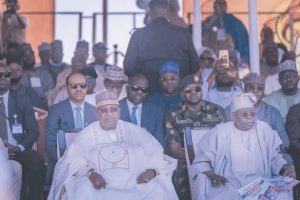
Unlike previous years, this year’s festival was profound. There were thousands of fishermen from across Nigeria and beyond. There was also a rainbow of dignitaries including President Bola Tinubu.
As the festival activities began to unfold, new friends were made, business deals were struck, yet the big question in the minds of many remained: “Who would catch the biggest fish? Would he emerge from among the natives or come from afar?” No one could say!
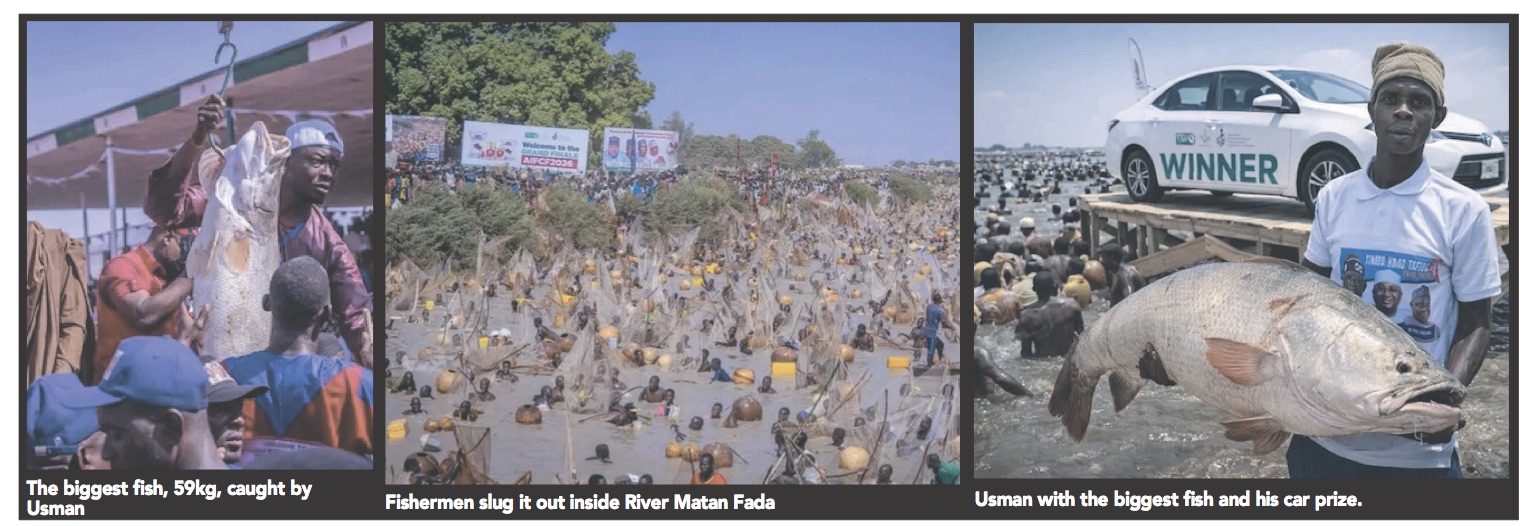
The grand finale came on February 14, 2026. That day, thousands of fishermen, alongside their calabashes and fishing nets, converged at the banks of River Matan Fada.
They ran barefoot and dived into the river at the flag off of the contest. The spectacle was exciting as the competition was indeed intense. But in the end, it was a victory for the homeboys.
Abubakar Usman, a fisherman from Maiyama, Kebbi State, emerged the winner. His net caught the biggest fish, weighing 59kg. He was rewarded with two cars, N1m and Hajj seats. Second place went to Abdullahi Garba of Argungu town, who caught a fish of 40kg while Dalansu Dankani from Jega and Rabiu Dauda from Augie shared the third position, having both caught fishes that weighed 30 kgs.
Emir of Argungu, Muhammad Samaila Mera, said the festival was worth celebrating but reasoned that the history of the festival was more significant than the fishing festivity itself: “The festival emerged on the ashes of a dispute between the Kabi Kingdom and the Sokoto Caliphate.
“The festival became internationalised when Sultan Sadam Muazu paid a visit to Kabi Kingdom in 1934. A visit that marked an end to the hostility between the two kingdoms. The British who were around at that time, noticed the positive side of the festival and legislated on it to happen annually, until peace was fully restored between the two kingdoms.
“At the end of the civil war in 1970 also, when Nigeria was trying to reconcile Nigerians, the festival was initiated as a symbol of reconciliation and unity. The government then looked at the antecedent of the Argungu fishing festival and realised that it was once used, over 100 years ago, to heal the wounds of war.
“They decided to bring Nigerians from the North and their brothers from the East together. So, they invited our fishermen from the East, their swimmers, their divers to compete with their counterparts from the North and it was very successful.
Other News
“The following year, it was staged again. Finally, the Federal Government decided to build a village in Argungu to host the fishermen from the East in a bid to further cement the peace and reconciliation initiated at the end of the civil war.
“It is a great and important festival. And I think, anything that could be used to heal the wounds of war and reconcile warring people is something that we must encourage and sustain.
“It is not all about catching fish. There is a history behind it and that history is what we should keep alive and continue to reconcile our people.”
Tinubu admitted that the festival brought together people of different backgrounds, nations and beliefs in the spirit of friendship and healthy competition: “It showcases our heritage and projects Nigeria in a positive light to the rest of the world.
“I commend the organisers, and I reaffirm my commitment to peace, empowerment, food security and infrastructural development of the nation.” He described the festival as a testament to the return of stability and normalcy in Kebbi State: “This festival has endured for 83 years and stands as a powerful symbol of unity, resilience and peaceful coexistence among our people.
“The organisation, security arrangement, and internal outlook of the event demonstrate what is possible when leadership is purposeful and inclusive.
“A socio-cultural event like this can only thrive and become a tourism attraction where the security atmosphere is conducive. I am pleased to note that significant progress has been made in combating insecurity across Kebbi and other parts of our nation.
“We are still working very hard through coordinated efforts between the Federal Government, state governments and security agencies. We have men and women in uniform who are putting their lives on the line to safeguard our sovereignty and maintain our peace.
“The relative peace we are witnessing today in this region is not accidental. It is the result of sustained investment in security, intelligence gathering and community engagement.
“I assure you that the fight against insecurity of any kind, including banditry and insurgency, will be won. Our farmers, including the fishermen, traders and families, will be able to go about their lives without fear or injury. This festival is a testament to the return of stability and normalcy.
“We will continue to support it and encourage it. Our traditional leaders, particularly the custodians of this festival, remain at the heart of our national agenda. We are deliberately investing in programmes that empower youth, women, and rural communities.”