Follow Us on Google
By Oluibukun Ajayi
Nigeria has no shortage of experience with climate warnings. The problem is what happens after the warning is issued. A new El Niño event is now firmly established in the Pacific Ocean, and the World Meteorological Organisation says it is expected to strengthen further and persist into early 2027. Current forecasts put the likelihood of its persistence through February 2027 at almost 100 per cent. The organisation also warns that a very strong El Niño can alter rainfall and temperature patterns worldwide, increasing the risk of drought, floods and extreme heat. For Nigeria, however, the message should not be reduced to a simple prediction of drought.
El Niño does not produce the same weather conditions everywhere. Its effects depend on location, season and other climate factors. The Food and Agriculture Organisation notes that El Niño has historically been associated with below-average rainfall across parts of West Africa and the Sahel during July to September, a period that coincides with a major part of the agricultural season. Nigeria, therefore, needs to prepare for a season of greater climate uncertainty, rather than wait for a drought declaration before taking action.
Nigeria is already seeing warning signs
There is good reason to take the warning seriously. NiMet›s 2026 Seasonal Climate Prediction already warned of variable rainfall, prolonged dry spells and warmer-than-normal temperatures across parts of Nigeria. The agency forecast dry spells lasting up to 21 days during parts of the June to August period in several northern and central areas. It also identified parts of Katsina, Zamfara, Kwara, Oyo and Ogun as areas where below normal annual rainfall could occur.
The latest assessment from FAO paints a similarly mixed picture. Rainfall between April and July 2026 was generally close to normal across southern and central areas, supporting the main maize crop. Yet several dry spells between May and July affected crops in Oyo, Kwara, Osun, Ekiti, Ondo and Edo. Satellite observations subsequently showed below-average vegetation conditions in parts of these states, with localised production losses expected.
In northern Nigeria, rainfall was generally adequate through late August, and vegetation conditions were favourable across much of the far north. But dry spells also affected crops in parts of the Middle Belt and in Borno, Yobe, Kebbi, Sokoto, Bauchi, Gombe and Plateau.
This is important. Nigeria does not need to experience one nationwide drought for farmers and consumers to suffer serious consequences. A sequence of dry spells in important farming areas can reduce yields, while excessive rainfall elsewhere can damage crops, roads, markets and rural infrastructure. The risk is therefore not simply too little rain. It is the wrong amount of rain, at the wrong time, in the wrong place.
Agriculture cannot afford another shock
This warning comes at a difficult time for Nigerian agriculture. FAO›s latest country assessment says the prospects for 2026 cereal production remain uncertain. The organisation also reports that rising input costs are putting additional pressure on farmers. Between February and May 2026, the price of NPK fertiliser increased by about 12%, while urea increased by about 43%. Higher fuel costs have also increased transportation and production expenses. At the same time, food inflation remained high. FAO reports that Nigeria›s annual food inflation rate reached 20.3% in July 2026, rising from 8.9% in January.
These figures should concern everyone, not only farmers. When rainfall becomes unreliable, farmers face lower yields. When yields fall, food supply tightens. When production and transport costs rise simultaneously, consumers ultimately pay more.
For poorer households, this is a question of what they can afford to put on the table and not merely an abstract climate discussion. FAO currently projects that 34.7 million people in Nigeria will face high levels of acute food insecurity during 2026. We should therefore be careful not to wait for another major agricultural failure before responding.
Water must become a national priority
The discussion about El Niño also needs to move beyond agriculture. Nigeria has significant water resources, yet access to reliable water remains a challenge for many households, farmers and industries. Rainfall variability makes this challenge even more difficult.
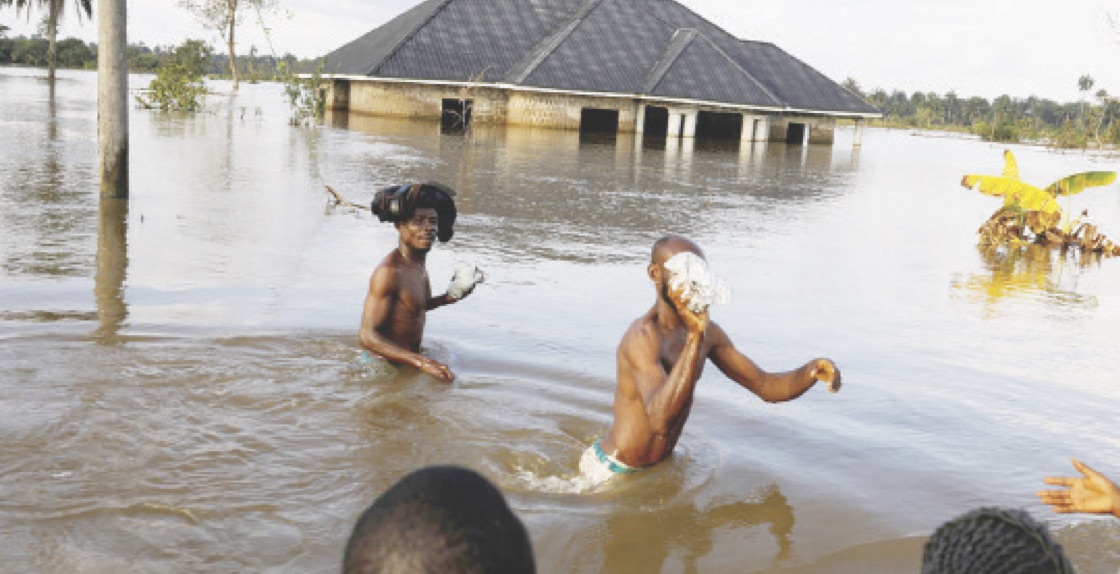
The country needs to ask a basic question: how much of the rainfall we receive is actually captured, stored and put to productive use? Too much rainfall can quickly become destructive floodwater, while communities may face water shortages months later.
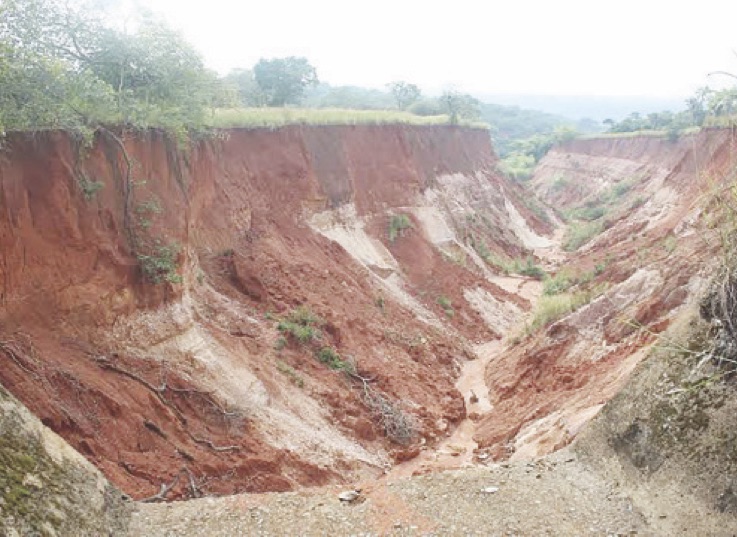
This contradiction should no longer surprise us. Nigeria needs more investment in small and medium-scale water storage, groundwater monitoring, irrigation systems, rainwater harvesting and efficient water distribution. Existing reservoirs and irrigation infrastructure also need better maintenance.
Farmers should not have to choose between depending entirely on rainfall and paying for expensive irrigation. There must be a stronger middle ground based on efficient water management, local storage and reliable climate information.
The warning must reach the farmer
One of Nigeria›s biggest problems is not necessarily the absence of climate information. It is the distance between the information and the person who needs it.
NiMet produces seasonal climate predictions. It is also working to integrate artificial intelligence into forecasting operations and has called for stronger partnerships with state governments to take climate information down to farmers and local communities. This should become a national priority. A farmer in Benue does not need a 50-page climate report. A farmer needs to know when rainfall is likely to start, whether a prolonged dry spell is expected, whether planting should be delayed, which crop variety is more suitable and when irrigation may be necessary. That information should reach farmers through extension officers, radio, mobile phones, cooperatives, community organisations and local government structures. The same principle applies to water managers, livestock owners, disaster management agencies and urban authorities.
Nigeria should act before the crisis
The country should now move from warning to preparation. First, the government should establish clear early-action triggers linked to rainfall, soil moisture, vegetation conditions, reservoir levels, and crop performance. When agreed thresholds are reached, assistance should begin automatically rather than waiting for a formal declaration of disaster.
Second, states should identify their most climate-exposed agricultural areas and prepare local response plans. The needs of a rice farmer in Kebbi will not necessarily be the same as those of a maize farmer in Oyo or a cassava farmer in the southeast.
Third, farmers need timely access to drought-tolerant and early maturing crop varieties, irrigation support and practical weather information. Seed distribution should be based not only on historical production patterns but also on changing rainfall conditions.
Fourth, water infrastructure should be inspected before the next major dry period. Boreholes, irrigation facilities, reservoirs, canals and community water systems should be repaired before they are urgently needed.
Fifth, Nigeria should make greater use of satellite observations and digital agriculture. Vegetation indices, soil moisture estimates, rainfall observations and crop monitoring can help identify agricultural stress before it becomes visible from the ground.
Sixth, the government should protect funding for anticipatory action. FAO and the World Food Programme have already warned that the development of strong El Niño conditions could intensify droughts and floods across several regions and have called for early action to protect vulnerable populations.
We should not wait for failure
There is a temptation to dismiss climate warnings because forecasts can change. That would be a mistake. The fact that a forecast contains uncertainty does not make it useless. It means that decisions should be based on risk, updated information and preparedness.
Indeed, the latest evidence already shows why Nigeria needs such an approach. Some parts of the country have experienced dry spells and crop stress, while other areas have received enough rainfall to support favourable crop development. The same country can experience water shortage in one location and damaging rainfall in another.
That is precisely why a national response based on a single narrative of drought or flood will not work. Nigeria needs a system that continuously monitors the weather, soil, crops, and water resources, and then converts that information into timely local decisions. The technology exists. The scientific expertise exists. The institutions exist. What is needed now is coordination, funding and the political will to act before losses become visible. El Niño will eventually weaken. The next climate shock will eventually come. The real question is whether Nigeria will continue to respond to climate disasters after they occur, or finally learn to act when warnings are sounded. We should not wait until the harvest fails before we start preparing.
• Oluibukun Ajayi is an Associate Professor Of Geoinformation Technology at the Department of Land and Spatial Sciences, Namibia University of Science and Technology. He writes from Windhoek and can be reached via [email protected]. The views expressed in this article are his own and not those of NUST.