Follow Us on Google

Adetutu Folasade-Koyi
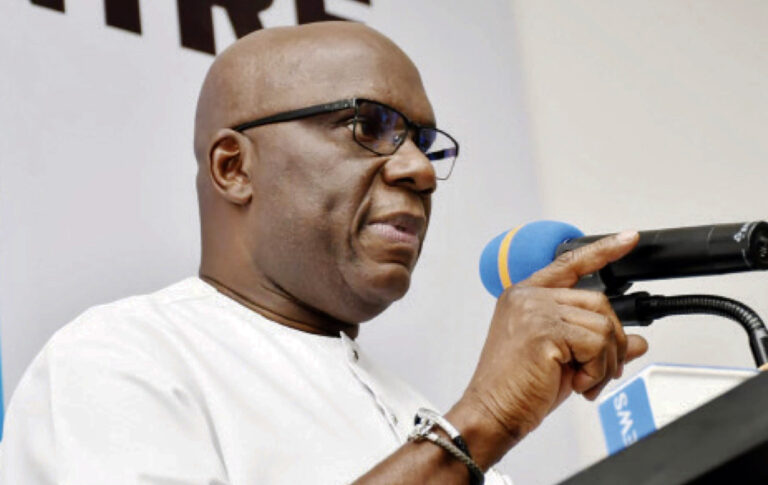
Special Adviser to the President on Niger Delta and Coordinator of the Presidential Amnesty Programme, Prof. Charles Dokubo, in this interview, speaks on how beneficiaries treat PAP as ‘family business’ and how some Fifth Columnists have infiltrated the programme; bearing allegiance to ‘factions’ and how they resist being redeployed from their offices.
What have been your challenges at the Amnesty Programme?
I have been in that place for a year and about eight or nine months; I met the situation and I don’t want to castigate or try to do any harm to anybody or person’s prestige. I met the programme and I started off from where I met it and ever since, I have changed the direction and the trajectory of the programme. I came in at the third phase, that is, the re-integration phase of the Amnesty Programme, where you can train people and provide jobs for them, so they could be humans and also, look for jobs and earn salary instead of depending on the stipend culture that is becoming the Delta system. So, what I tried to do was to carve a niche for the programme. Now, we are just going to train people, give them the equipment to provide jobs for themselves, or to provide a job placement unit in the Amnesty Office so that those who have been trained can look for jobs or we can look for jobs for them and place them in good employment. But, in doing this, I met a lot of challenges; challenges in the sense that graduates don’t even earn up to #50,000. Somebody could stay at home and earn #65,000 and when you get a job of #50,000 for him and they say they don’t want it because they can stay at home and earn #65,000; why must they go out to work? So, there is a missing gap in that narrative because they failed to understand that when you get a job, you are going to progress from the starting point to earn a higher pay; over time. It does not even occur to my people that you can earn twice as much as your initial salary if you stay on the job for some time. This is the saddening thing for me because I believe that this programme cannot be forever. It is very critical that we make it people-centred and ensure we look into the future.
So, what’s the way forward for the programme now?
I have met with the Monitoring and Evaluation (ME) Unit because when the programme started, there was a stand-by ME programme peopled by those who were there at the beginning of the programme and who knew how it all started. But at a particular time, they removed them from the office and I brought them back. I’m now having meetings with them and they have been trying to point out the missing links in the programme. When I sat down with them to review what we had been doing, I became convinced that there is need for a change in the direction of the programme. I have started meetings with some of them who were in the programme and we are trying to point the missing gaps and when I sat with them, I became convinced that there is need for a change in the direction of the programme so that if it is done, it should be done well and also, cut away and reduce the number of portfolio contractors, train the untrained because you know the Amnesty Programme has been bedeviled with a lot of things in the past and when you come into an environment where you have such group of people that have embedded themselves into the system, then, when you try to chart a new path, there is always resistance. It was at the Amnesty Office I first heard of Vendors Association. These were things I met in the office and I am trying to turn them around but I can’t do that again because, in the past, contracts would be awarded and they would not execute them. The changes I have brought to the office, since I took over, issues of 15 percent, 35 percent and all that, we realise some people would take 15 percent and they would just not come to work again! So, if you are awarding a contract, it is not a direct labour contract that will pay, go and source for money and do the contract then, we pay. But, there’s an outcry that we must bring 15 percent because in the past, Amnesty has been like a direct labour organisation. I also ended that. The way forward for me is putting facts on the ground, in the sense that putting structures that will enable our people to be trained to have the required certification so that they can have jobs. If they don’t have jobs and they are totally dependent on the stipend culture, no changes would occur in the Delta and unless we prepare the minds of our people to these changes, any government of any political complex will know we have done a lot for these people. The new focus is on the integration side, building structures so that people can go and get trained and our vocational centers also linked to universities. Universities would be the certification institutes so that they can get job anywhere because you have a recognised certificate from a university in Nigeria.
Why are there still the same number of beneficiaries, 10 years after?
When I took over, we had 30,000 beneficiaries and I am sorry to say that it is still 30,000 after 10 years, so what it means is that nobody died, nobody graduated from the programme because the Amnesty in the Niger Delta is a family business. If someone who is a beneficiary dies, his next of kin gets it and I have seen letters from solicitors telling us, ‘the father has died, the son must take over.’ It’s only in this country that Amnesty is family thing! If an individual is gone, he is gone and he is given his benefits, but, in the Niger Delta, it a different thing! That’s why you can see the contention of power that, this office is ours. We need a new thinking and that was where I keyed into; let’s make a change. If these changes are well thought through, we have trained a lot of people, our success stories, fight against militancy, etc. If you go and display people at the airport that got first class, others will ask are they the only ones that went to universities, why can’t we also get this amnesty and go to universities, but what happened later was that there was a new concept that was referred to as ‘impacted communities.’ Impacted communities were not directly affected by the conflict but because of the conflict, their lives were affected negatively. So, Amnesty is not only providing or taking care of the ex-militants but also people’s lives that have been affected by the conflict. That’s why when you see the numbers that we are still taking care of, it’s frightening but people will not be tired. If you look at the people that have been trained, good certifications and everything, they are more than 10,000 in the programme and…the database has been corrupted, in the sense that there are representatives of various factions in the office that are more committed to the people that brought them in than to the office itself. This is the first place that I saw that you are working for the office and also able to fight the office by using information that your work gives you access to! That was the first thing I saw in the Amnesty Programme. So, how do you rationalise this, how do you try to change things? Some people were trained by Amnesty, given job by Amnesty and have worked for more than five years, and when you move them to a different position, there is a fight! I came in with a new idea and concept that we have to eradicate all these shortcomings of the programme; in doing that, our plans, vested interest are being touched, then you will see people coming to protest for nothing. The Amnesty Programme was set to maintain peace and security in the Niger Delta, then, human development, and stipends payment for me is to pay people so that they can be at ease with themselves so they will not affect the structures through which our foreign exchange earnings come through but also, it is to enhance human capital developments; vocational training, in particular, is very important especially training in the oil and gas sectors which is the mainstream of the economy because we always believe we have been sidelined, marginalised by the system between the majority group and the international oil companies; that is what people always say. We intend to create a large pool of educated and certified people that could be employed by the oil companies so they can work and also earn money, and protect what comes out of their communities, work hard and pay taxes. The challenge is; how do you convert people from a particular way of life?That is what I have been going through and that is why you hear people are protesting against Amnesty and sometimes, some of the stories they carry are even false! Some times, we hear stories on the social media that I carried 25 billion on an aeroplane! What that means is that no project would be done if I ever did that and in communities that are calm, if you don’t pay stipends, four or five days after, you will not sleep. The next thing you will hear is: “Oga charles, we never get salaries!”
The fact of the matter is there must be a change and direction in the programme. Let’s look forward to a time, where Amnesty will be only for training our people not giving indolent people money, bussing people for protests! Ask them ‘have you not been paid your stipend for the month’ and they will reply; ‘we have been paid but somebody paid us to come and protest.’
Since I assumed office, as the Central Bank of Nigeria releases money, my office does not have a bank, and there is another aspect of it, that’s why when I look at the budget for school fees, the expenses are increasing; even when it should be decreasing! I looked into it and I found out that before I resumed office, there was a deployment of 700 students in various schools and they did not go through the Amnesty Office. Some staff from the office were taking money from them and putting their names in the project while their names were not in the project. That was why I said the Amnesty Programme is for the Delta but not all Niger Deltans are beneficiaries of the Amnesty Programme. Some people are not even part of the programme. They don’t have the United Nations Code while the initial beneficiaries in the programme have died. To be a beneficiary of the programme, you must be an ex-militant and also, have a UN number. So, the positive side of the programme is that when you build structures, cut down on stipends and when you concentrate on trainings of your people, then, they could go out as most Nigerians and look for jobs because no part of the country has been infested with interventionist agencies like the Niger Delta. What have these interventionist agencies done to transform the lives of the people (because) even the UN does not have the correct number of our people.
With all these, can you proudly say PAP has succeeded?
Let me tell you, I’ve met someone from the university where I used to work; all the graduates are from the Niger Delta states, they’ve done well, the Amnesty Programme has done well. They’ve trained a number of people. Take a look at Afe Babalola University, Ado Ekiti; they have about 12 first class graduates. You can say that they’ve done well.
But, there are also people who have been given this scholarship and gone abroad, and have vowed never to come back to Nigeria and that Amnesty must pay them
This is how it works: If you have a scholarship, like one month, after the first degree and you want an extension , you write to the Office and you could get the grant of the office that you can continue with your studies in Russia, in America, in South Africa, in any part of the world. We have Nigerians who went through that way and, from the initial stage, why must you send someone abroad to go and do HND? why? If you are playing catch-up with Nigerians, it should be structured catch-up process, where they have qualitative education. I wasn’t there at the beginning but, with hindsight, I could say there was faulty deployment of students. How can you send someone to do HND abroad, when you have institutions that award HND in Nigeria? But, if you talk to them they will say ‘oh, this one is not one of us, he is speaking ‘grammar.’ But, this is the fact that we face and my fear, as I will always say, my fear will be that a time will come when the government of the day will say ‘we want a total assessment of the Amnesty Programme because we have sunk money into the programme for 10 years. We have sunk in money, so what is the benefit of this programme and how are you running and drawing it down?’ It’s government expense and government money and government takes the decision. So, for Niger Deltans to be well involved and for other Nigerians to be well involved, so that they will know what the programme really is, even most Nigerians don’t know what the programme is about. It’s only the bad stories they hear; Amnesty took money and all that.
What is the latest development about the Kaigama (Bayelsa) robbery of special intervention projects?
The Nigeria Police Force has already written a report on the robbery. The Police department in charge has written its report and it has been submitted to the inspector General of Police. For more than three months, it has been with the IGP and those who are supposed to have been indicted might have been indicted. I know the case is with the IGP and it’s not within my office to hold onto it. The report was written by the police and has even been sent to the IGP and it’s being taken care of.