Follow Us on Google
From Okwe Obi, Abuja
The Resource Centre for Human Rights & Civic Education has charged the Chair man of Independent National Electoral Commission (INEC), Joash Amupitan, to resign owing to partisanship allegations.
The David Mark-led faction of the Africa Democratic Congress (ADC) had led a protest to INEC headquarters, demanding the removal of Amupitan.
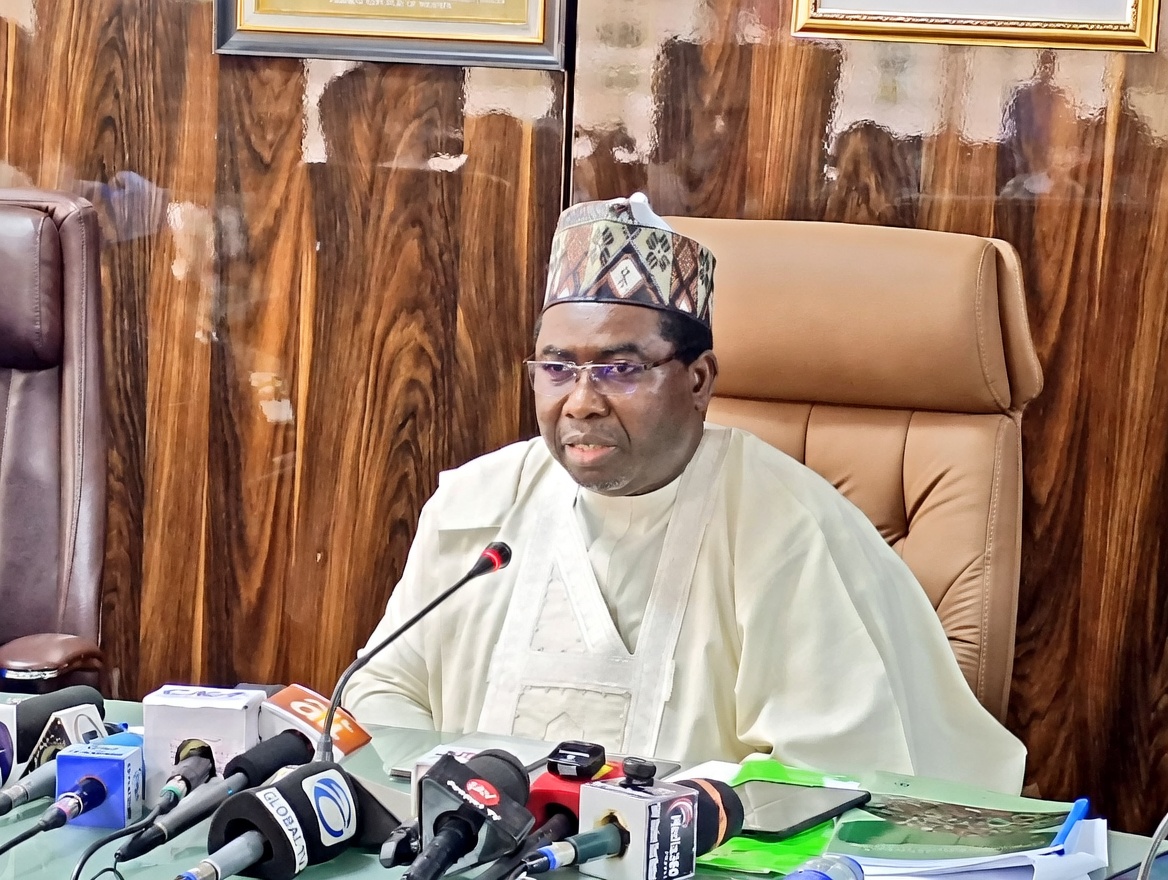
Joining his voice, CHRICED Executive Director, Ibrahim Zikirullahi, in a statement yesterday, said it would be honourable for the INEC chairman to step aside for proper investigation.
He said: “Address growing public concerns regarding the neutrality of the INEC Chairman, Professor Joash Ojo Amupitan, whom various commentators, civil society groups, and sections of the public have raised questions about his perceived closeness to the ruling party, APC.
“These concerns have generated widespread debate about the Commission’s impartiality.
“CHRICED joins millions of Nigerians who believe that, in the interest of preserving the integrity of the electoral process and protecting his own reputation, the INEC Chairman should step aside.”
Also, he called for a comprehensive overhaul of Nigeria’s security architecture amid rising insecurity in the country.
He said the overhaul of the security architecture should prioritise intelligence-driven operations, community-centred strategies, and strict accountability for security failures.
He warned that escalating violence across the country now posed a grave threat to national stability.
Also, he decried the continued killing of Nigerian soldiers in the line of duty, describing the trend as a disturbing reflection of deepening vulnerabilities within the nation’s defence system.
Zikirullahi said the country was facing a full-blown security emergency that demanded immediate and decisive intervention.
He added that large parts of the country have effectively become “ungoverned spaces where armed groups operate with alarming freedom. We gather at a moment when the Nigerian nation is crying out for truth, courage, and principled leadership. This is not a time for silence. It is a time for clarity.
“Nigeria is experiencing a security breakdown so severe that it threatens the very foundations of the republic. Since January 2026, the situation has deteriorated sharply.”
Zikirullahi noted that insurgent groups, including Boko Haram and ISWAP, have sustained coordinated assaults in the North-East, while banditry in the North-West and North-Central has “evolved into a sophisticated criminal enterprise marked by mass kidnappings, village raids, and targeted killings.”
Zikirullahi added that the spread of violence has made insecurity a nationwide concern.
Other News
“No part of the country is insulated from the expanding geography of violence,” he said.
On the killing of Brigadier General Oseni Braimah, Zikirullahi described the incident as “a symbolic rupture” that exposed the fragility of Nigeria’s defence architecture.
“When a senior military officer operating within what should be a fortified command environment is overrun and killed by insurgents, it sends a chilling message about the state of national security.”
He added that the incident “raises urgent questions about leadership, strategy, intelligence coordination, equipment, and political will,” stressing that it must serve as “a national alarm bell.”
Beyond security, CHRICED director raised concerns over what it described as a shrinking civic space, warning that increasing harassment of opposition figures, civil society organisations and journalists could undermine democratic governance.
“Civil society organisations and journalists continue to face a shrinking civic space. This environment stifles accountability and weakens the public’s right to know.”
Zikirullahi also decried the “normalisation of corruption” in public life, warning that the elevation of individuals facing serious allegations to public office undermined the credibility of the state.
“This practice undermines the moral authority of the Nigerian state,” he said, noting that it sends a troubling signal that “integrity is optional, and consequences are negotiable.”
Zikirullahi described the economic situation as dire, with rising inflation, unemployment and poverty levels placing millions of Nigerians under severe strain.
“Parents are skipping meals so their children can eat. Many are withdrawing their children from school because they can no longer afford fees or transportation.”
Zikirullahi added that the worsening economic conditions stand in “stark contradiction to Nigeria’s abundant natural and human resources.”
The CHRICED director also criticised what he termed “extravagance in the midst of misery,” pointing to government spending patterns that appear disconnected from the realities faced by ordinary citizens.
As part of its recommendations, CHRICED urged the Federal Government to increase investment in job creation, education and healthcare, as well as stronger protection of civic freedoms and human rights.
Zikirullahi urged Nigerians to remain actively engaged in the democratic process, warning that the country was at a defining moment.
“Democracy is not a spectator sport. It demands participation, courage, and sacrifice,” he said, quoting the late Abubakar Momoh.
He stressed that the decisions taken at this critical time would shape the future of generations to come.