Follow Us on Google
…33,009 cases recorded in five years
By Lukman Olabiyi
Alimosho, Ikorodu, Eti-Osa, Kosofe and Ikeja Local Government Areas have recorded the highest number of reported adult cases of domestic and sexual violence in Lagos State over the five-year period between September 2021 and July 2026, the state government has disclosed.
The disclosure came as Lagos revealed that its Domestic and Sexual Violence Agency (DSVA) received 33,009 cases of domestic and sexual violence during the period, underscoring the continuing scale of gender-based violence across the state.
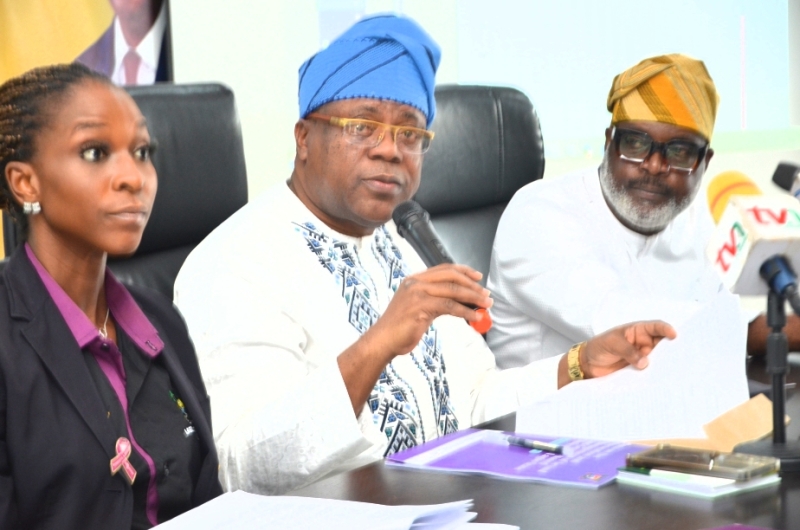
Attorney-General and Commissioner for Justice, Mr Lawal Pedro, SAN, disclosed the figures on Monday at a media parley marking the 2026 Domestic and Sexual Violence Awareness Month in Lagos.
Pedro, who was represented by the Executive Secretary of DSVA, Titilola-Vivour Adeniyi, said the geographical distribution of cases showed that Alimosho, Ikorodu, Eti-Osa, Kosofe and Ikeja recorded the highest number of adult reports.
He explained that the geographical data was not merely intended to rank local government areas, but would help the government identify areas requiring stronger prevention campaigns, community engagement and access to response services.
The figures were compiled from reports received through physical walk-ins and the Agency’s Virtual Referral and Response Service (VRRS).
Domestic violence remained the dominant form of abuse reported to the agency, accounting for 13,515 cases during the period.
Other cases included 1,171 cases of defilement, 797 cases of child abuse and physical assault, 420 rape cases, 428 sexual harassment cases and 100 cases of sexual assault by penetration.
The agency also received reports of 95 incidents of technology-facilitated sexual and gender-based violence involving adults and minors, 323 threats to life, 79 attempted rape cases and 1,861 family-related disputes involving custody, neglect, abduction and child labour.
One of the most disturbing findings was the number of children affected indirectly by violence in their homes.
According to the government, 10,613 children suffered emotional abuse as a result of exposure to domestic violence, even though they may not have been the direct targets of the abuse.
Pedro said the figure demonstrated that the impact of domestic violence extended beyond the immediate victim to children and other members of the household.
He stressed that the government’s response must therefore go beyond dealing with individual incidents to addressing the psychological and emotional consequences of violence.
The concentration of reports in the five leading LGAs, according to the government, provides useful evidence for targeting prevention and response interventions.
Alimosho, which appeared among the leading LGAs for both adult and child-related reports, was followed in the adult category by Ikorodu, Eti-Osa, Kosofe and Ikeja.
For children, the leading LGAs were Alimosho, Eti-Osa, Ikorodu, Kosofe and Ifako-Ijaiye.
The government, however, cautioned that a high number of reports from an area should not automatically be interpreted to mean that violence is necessarily more prevalent there than in other parts of the state.
Rather, reporting figures can also reflect awareness, willingness to report, access to support services, proximity to response agencies and the availability of reporting channels.
Pedro said the government would continue to analyse the geographical and demographic patterns in the data to guide interventions.
Domestic violence accounts for 75.5% of adult assaults
The state said domestic violence accounted for 75.5 per cent of reported assaults among adults, making it by far the most common form of abuse recorded by the agency.
Failure to provide necessaries accounted for 9.1 per cent, while sexual harassment and rape each represented 2.4 per cent.
Cyber harassment or the release of pornographic material accounted for 0.7 per cent, threats to life 0.6 per cent, sexual assault by penetration 0.4 per cent and attempted rape 0.3 per cent.
Among children, the situation was even more striking, with emotional abuse accounting for 82.3 per cent of reported cases.
Defilement represented 8.2 per cent, while physical assault or child abuse accounted for 6.6 per cent.
The agency also found significant psychological consequences among survivors, with 90 per cent reporting experiences including low self-esteem, post-traumatic stress disorder, extreme fear and anxiety.
About five per cent experienced depression severe enough to require medical attention.
33,009 cases in five years
According to Pedro, DSVA recorded 1,075 cases between September and December 2021, followed by 5,929 in 2022, 6,389 in 2023 and 7,882 in 2024.
The agency recorded 7,721 cases in 2025, while 4,013 cases had been reported as of July 2026.
The figures show a decline in reported cases in the most recent period, but the Attorney-General warned against equating a reduction in reports with a corresponding reduction in the actual prevalence of violence.
He said reporting figures could be affected by changes in reporting behaviour, public awareness, access to services and the channels through which survivors seek help.
According to him, the state’s ultimate goal is not simply to reduce the number of cases reported to DSVA, but to reduce the number of people experiencing violence.
“Our ambition is not simply to see fewer cases appearing on our database. Our ambition is to see fewer people experiencing violence in the first place,” Pedro said.
Beyond receiving reports, the state said it had strengthened its response through legal, medical, psychological and protective interventions.
Pedro said 175 survivors received free legal support, while 40 survivors were accommodated at Eko Haven and other safe shelters.
The Clinical Psychology Department provided psychotherapy and counselling to 953 survivors, 267 alleged perpetrators and 304 children.
The agency also carried out 501 rescue operations and provided services to 46 persons with disabilities experiencing different forms of gender-based violence.
On the justice front, DSVA secured 20 restraining orders under the Lagos State Protection Against Domestic Violence Law 2015 and supported the investigation and prosecution of 464 SGBV-related cases.
More than 711 cases were charged to court, while the Directorate of Public Prosecutions of the Ministry of Justice secured over 160 convictions during the period under review.
Pedro said the government would continue to strengthen prevention, early intervention, access to justice and support services across the state.
He urged residents to report cases and support survivors, stressing that ending domestic and sexual violence required collective responsibility from government, families, communities, workplaces and individuals.
As part of activities for the September 2026 Domestic and Sexual Violence Awareness Month, Lagos will intensify sensitisation campaigns across communities, schools, markets, workplaces and public institutions under the theme:“SGBV – IT ENDS WITH US.”